A finished cross stitch may contain hundreds or even thousands of tiny stitches. Some projects take weeks or months to complete, so they deserve better protection than an ordinary plastic bag or cardboard box.
Correct cross stitch storage helps protect fabric and embroidery floss from dust, fading, moisture, insects, permanent creases and yellowing. It is important for completed work, unfinished projects and seasonal decorations such as personalized Christmas stockings.
The best storage method depends on the project’s size, materials, condition and intended use. This guide explains every step in simple language so you can protect your needlework safely.
How to Store Cross Stitch Projects: Quick Answer
For safe long-term storage:
- Make sure the cross stitch is clean and completely dry.
- Remove needles, pins, hoops and anything that may rust or leave marks.
- Avoid folding across stitched areas.
- Place the project between sheets of unbuffered acid-free tissue paper or clean, prewashed cotton muslin.
- Store small and medium projects flat inside an acid-free archival box or a suitable polypropylene or polyethylene box.
- Roll large projects around a protected archival tube instead of folding them.
- Keep the box in a dark, clean and dry interior room with a stable temperature.
- Avoid attics, garages, damp basements, direct sunlight and exterior walls.
- Check the project periodically for moisture, insects, stains and loose threads.
Never place embroidery directly against ordinary cardboard, untreated wood, coloured tissue paper or PVC plastic.
Why Proper Cross Stitch Storage Matters
Fabric and embroidery floss can slowly deteriorate even when a project is not being used.
Common causes of damage include:
- sunlight fading the fabric and thread colours;
- moisture encouraging mould and mildew;
- dust becoming trapped between stitches;
- skin oils turning into yellow or brown marks;
- acidic cardboard discolouring the fabric;
- sharp folds weakening fibres;
- steel needles rusting inside the work;
- heavy objects crushing raised stitches;
- insects feeding on fibres or dirt;
- unstable temperatures accelerating deterioration.
Damage often develops slowly. A project may look perfect when placed in a box but show fading, stains or deep creases several years later.
Good storage reduces these risks and helps preserve a handmade project for future generations.
Decide What Type of Project You Are Storing
Before choosing a storage method, identify what you have.
It may be:
- an unfinished cross stitch project, also called a WIP;
- completed but unwashed embroidery;
- clean, unframed cross stitch;
- a large finished textile;
- framed cross stitch;
- a sewn Christmas stocking;
- a project containing beads, metallic thread or other decorations;
- a vintage or sentimental heirloom.
These projects should not all be treated in the same way. A small cotton design can usually be stored flat, while a large design may need to be rolled. A beaded project needs extra support, and a vintage textile may require professional advice.
Should You Wash Cross Stitch Before Storage?
Do not automatically wash every finished cross stitch.
A modern project stitched with colourfast cotton floss on washable cotton Aida can often be washed safely. Washing may remove dust, washable markings and natural oils transferred from your hands.
However, washing can damage certain materials.
Check Before Washing If the Project Contains:
- hand-dyed fabric or floss;
- silk or wool thread;
- metallic thread;
- non-colourfast embroidery floss;
- beads, sequins or glued decorations;
- painted or printed fabric;
- an unfinished water-soluble stamped design;
- an unknown marking pen;
- vintage or fragile materials.
Always follow the instructions supplied with the pattern, kit, fabric and floss.
If you are unsure whether a colour may bleed, test leftover floss on a clean white cloth before washing the complete project.
Never add fabric conditioner. It can leave a residue on the fibres and is unnecessary for preserving embroidery.
For detailed washing, drying and pressing instructions, read our guide on how to finish and frame cross stitch.
Make Sure the Project Is Completely Dry
Never place damp embroidery in a box.
Moisture trapped inside fabric or packaging can cause:
- mould;
- mildew;
- musty smells;
- colour transfer;
- permanent staining;
- weakened fibres.
Allow washable embroidery to dry completely in a clean, well-ventilated area away from direct sunlight before storing it.
How to Store an Unfinished Cross Stitch Project
An unfinished project may stay in storage for a few days, several months or even years. A little preparation makes it much easier to restart later.
Remove the Needle
Never leave a steel needle inside the fabric.
A needle can:
- rust and leave a permanent orange stain;
- create a hole or pulled thread;
- catch on other stitches;
- cause an injury when you reopen the project.
Place needles in a needle case or secure needle minder.
Remove or Loosen the Hoop
A tightly fitted embroidery hoop may leave stubborn circular creases or distort the fabric.
If you are taking a long break, remove the fabric from the hoop. If you use a frame, reduce the tension before storage when the frame’s instructions allow it.
Avoid Folding the Stitched Area
Place a small project flat whenever possible. If it must be folded, do not make a sharp fold across completed stitches.
Pad the fold gently with unbuffered acid-free tissue paper or clean cotton muslin.
Keep Everything Together
Store the following items in one labelled project box or bag:
- the cross stitch fabric;
- paper chart or printed working copy;
- colour key;
- remaining embroidery floss;
- needle case;
- pattern instructions;
- notes about fabric count and strands;
- the date you paused the project.
Mark your stopping point on a working copy of the chart. Do not write on an original collectible pattern.
If the pattern is digital, save a backup copy in a second secure location so it does not disappear if a phone or computer fails.
Choose a Safe WIP Container
For short-term use, a clean project pouch can keep the materials together.
For longer storage, use:
- a clean cotton or muslin project bag;
- an acid-free document box;
- a suitable polypropylene or polyethylene box;
- an archival portfolio large enough to hold the project flat.
Avoid PVC sleeves, dry-cleaning bags and tightly compressed containers.
How to Store Finished Cross Stitch Flat
Flat storage is the best option for many small and medium unframed projects. It supports the complete textile and reduces stress on the fibres.
What You Need
Prepare:
- a clean, flat working surface;
- unbuffered acid-free tissue paper;
- an acid-free archival box or suitable PP/PE plastic box;
- optional prewashed, unbleached cotton muslin;
- an acid-free label or project record.
Use unbuffered tissue when the project contains wool, silk, uncertain dyes or mixed materials.
Step 1: Inspect the Project
Check the front and back for:
- dust or surface dirt;
- unfinished stitches;
- loose thread ends;
- rusting needles or pins;
- stains;
- signs of mould;
- insects or small holes;
- beads or decorations that need support.
Do not store an actively damp, mouldy or infested project with the rest of your collection.
Step 2: Prepare the Box
Choose a box large enough to hold the embroidery with as few folds as possible.
Line the bottom with acid-free tissue paper or clean, prewashed muslin. The lining should be large enough to fold gently over the project.
Step 3: Place the Cross Stitch Flat
Lay the project flat and smooth it gently. Do not pull or stretch the fabric.
Cover it with another sheet of acid-free tissue or fold the larger lining over the top.
Step 4: Avoid Heavy Stacking
Do not place heavy frames, books or Christmas decorations over the embroidery.
If several flat textiles must share a box:
- place the heaviest item at the bottom;
- separate every project with acid-free tissue;
- do not overfill the box;
- make sure raised stitches and beads are not being crushed.
Step 5: Label the Project
Add a separate archival-quality label containing:
- project name;
- designer or pattern name;
- completion date;
- fabric type and count;
- floss brand;
- stitched name or personalization;
- washing and care information.
Do not attach an adhesive label directly to the embroidery.
How to Roll a Large Cross Stitch Project Safely
Rolling can be useful when a finished project is too large to store flat.
Do not roll fragile embroidery, stiff decorations, loose beads or badly damaged fabric. These projects should remain flat or be assessed by a professional conservator.
Choose the Correct Tube
Use an acid-free archival tube or an inert polyethylene tube.
If you only have an ordinary cardboard tube, the cardboard must not touch the embroidery. Cover it first with a safe barrier such as polyester or polyethylene sheeting and then with unbuffered acid-free tissue or prewashed cotton.
The tube must be longer than the width of the embroidery.
Roll Embroidery with the Stitched Side Out
Embroidery has a raised surface. Rolling it with the stitched side facing outward helps reduce compression of the stitches.
To roll it:
- Place the embroidery face down on a clean surface.
- Smooth the fabric without stretching it.
- Position the protected tube parallel to the fabric threads.
- Place acid-free tissue between the tube and the embroidery.
- Roll slowly and loosely with the stitched side facing outward.
- Continue interleaving with acid-free tissue or clean cotton.
- Cover the complete roll with tissue or prewashed muslin.
- Secure it loosely with clean cotton tape.
Do not secure the roll with rubber bands, adhesive tape or string that may cut into the fabric.
Store the finished roll horizontally with the tube supported at both ends. Do not place heavy objects on top of it.
How to Store a Cross Stitch Christmas Stocking
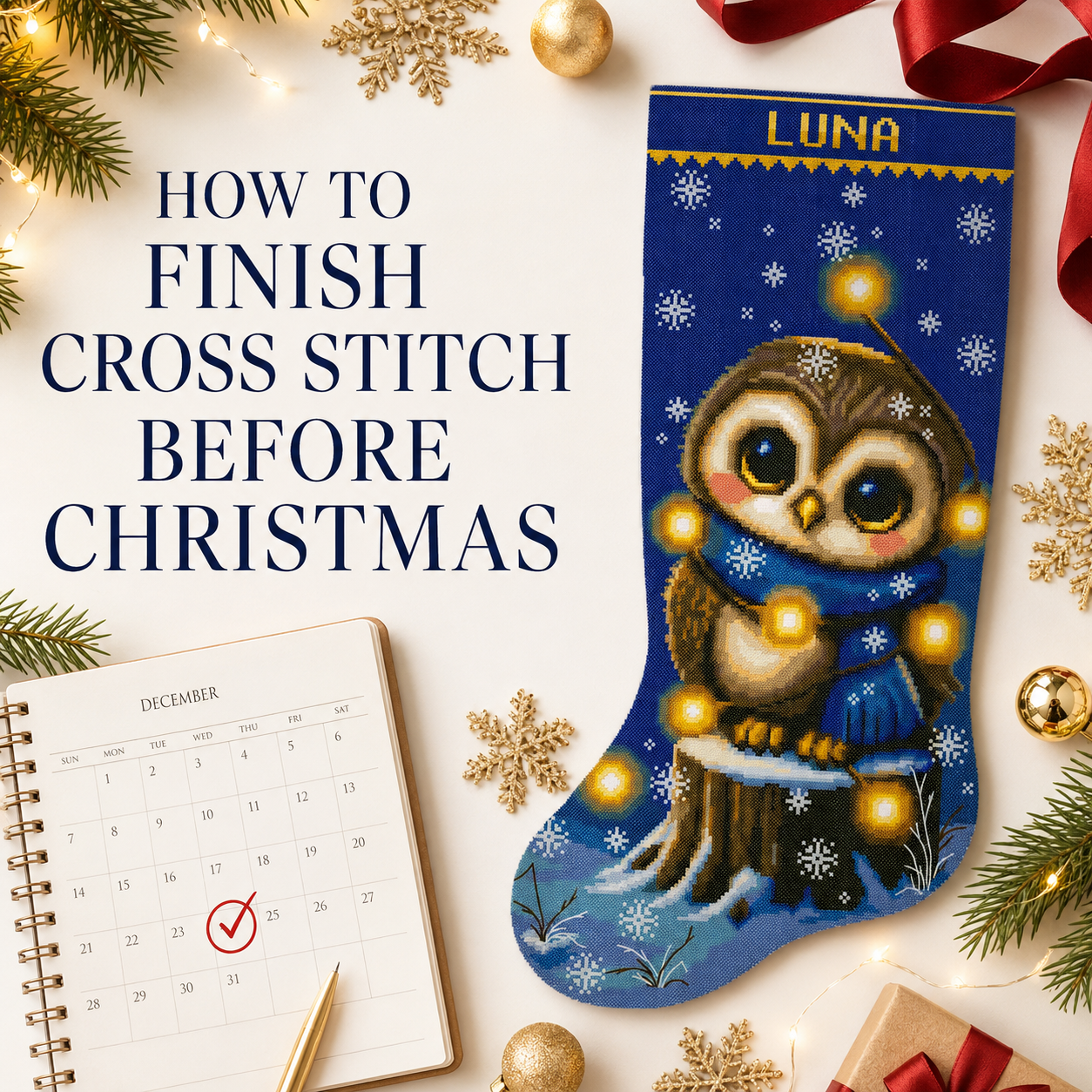
A personalized cross stitch Christmas stocking is displayed for only a few weeks each year. Proper off-season storage protects it from dust, crushed stitches, moisture and permanent folds.
Clean the Stocking Before Storage
After Christmas:
- Empty the stocking completely.
- Remove paper, food, candy and small gifts.
- Check the inside for crumbs and stains.
- Follow the kit’s cleaning instructions if washing is required.
- Make sure every layer is completely dry.
Never store a stocking that smells damp or contains food residue. These can attract insects and encourage mould.
Support the Stocking’s Shape
Lightly fill the inside with crumpled unbuffered acid-free tissue paper. This helps support the toe, heel and cuff without stretching them.
Do not overfill the stocking.
Place additional tissue over:
- the personalized name;
- beads or metallic details;
- raised stitches;
- bows or sewn decorations.
Store the Stocking Horizontally
Place the stocking flat inside a suitable storage box.
Avoid:
- folding across the stitched design;
- folding through the name;
- hanging the stocking from its loop all year;
- placing heavy ornaments on top;
- storing it directly inside ordinary cardboard;
- vacuum-sealing it.
Wrap each handmade stocking separately so buttons, hooks or decorations from another stocking cannot catch the stitches.
For construction and finishing help, follow our tutorial explaining how to finish a cross stitch Christmas stocking.
If you would like to create another family keepsake, explore our personalized Christmas stocking cross stitch patterns.
Prefer to receive the fabric, sorted floss, needles and instructions together? Browse our stamped Christmas stocking cross stitch kits.
How to Protect Framed Cross Stitch
Framed embroidery is stored and displayed differently from loose fabric.
Keep the Stitches Away from the Glass
The embroidery should not press directly against glass or acrylic. A mat or suitable frame spacer creates a safe gap.
Direct contact can:
- flatten the stitches;
- trap moisture;
- cause condensation damage;
- make the fabric adhere to the glazing.
Avoid Direct Sunlight
Sunlight can fade both fabric and embroidery floss. UV-filtering glazing can reduce exposure, but it cannot make direct sunlight completely safe.
Display framed cross stitch:
- away from sunny windows;
- away from strong spotlights;
- away from fireplaces and radiators;
- outside bathrooms and damp kitchens;
- away from condensation-prone exterior walls.
Use Reversible Mounting
Avoid ordinary glue, adhesive board, pressure-sensitive tape and staples.
Reversible methods such as lacing allow the embroidery to be removed later without cutting or damaging it.
If the project is valuable, old or irreplaceable, use a professional framer who has experience with textile conservation.
Best Materials for Cross Stitch Storage
Suitable materials include:
- unbuffered acid-free tissue paper;
- acid-free archival boxes;
- archival-quality support board;
- prewashed, unbleached cotton muslin;
- polypropylene boxes marked PP;
- polyethylene boxes marked PE;
- polyester film used as a protective barrier;
- clean cotton tape;
- archival tubes.
When purchasing supplies, look for words such as:
- acid-free;
- lignin-free;
- archival quality;
- PVC-free;
- unbuffered;
- suitable for textile storage.
“Acid-free” does not always mean that every part of a product is safe. Avoid boxes with strongly coloured interiors, odours, adhesive linings or unknown coatings.
For help choosing fabric, needles, hoops and other supplies, read our guide to the best materials and tools for cross stitching.
Materials to Avoid
Do not place long-term embroidery directly against:
- ordinary cardboard;
- newspaper;
- coloured tissue paper;
- wrapping paper;
- untreated wood;
- cedar chests;
- PVC plastic;
- dry-cleaning bags;
- foam of unknown composition;
- adhesive tape;
- rubber bands;
- glue;
- metal staples or pins.
Avoid mothballs. They contain strong chemicals and should not be placed with handmade textiles.
Lavender and cedar products should also not touch the embroidery. Oils and plant materials may leave stains, odours or particles and are not a substitute for a clean, monitored storage area.
Where Should Cross Stitch Be Stored?
Choose an interior cupboard, drawer or shelf inside the normal living area of your home.
The ideal location is:
- clean;
- dark;
- dry;
- well ventilated;
- protected from water leaks;
- away from temperature extremes;
- inaccessible to pets and insects.
Avoid:
- attics;
- garages;
- damp basements;
- bathrooms;
- garden sheds;
- areas beside radiators;
- shelves in direct sunlight;
- floors under water pipes;
- exterior walls with condensation.
A stable environment is usually more important than trying to achieve one exact temperature. Sudden changes in heat and humidity place extra stress on textile fibres.
How Often Should You Check Stored Cross Stitch?
Inspect stored projects every three to six months and after any water leak, unusually humid period or pest problem.
Look for:
- musty smells;
- condensation;
- yellow or brown spots;
- mould;
- small holes;
- insect casings;
- thread damage;
- rust marks;
- loose beads;
- deep folds;
- colour transfer from paper or fabric.
If a project has been folded, change the position of the folds periodically and pad the new folds with acid-free tissue.
Do not repeatedly handle the embroidery without a reason. Clean, dry hands are normally suitable for modern projects. Remove jewellery that may catch the stitches.
White cotton gloves may be helpful for antique or important textiles, although they can reduce dexterity. Always support the complete fabric when lifting a fragile project.
What to Do If You Find Mould or Insects
Do not place an affected project back with your other textiles.
Instead:
- Isolate it inside a clean container.
- Move it away from the rest of the collection.
- Check nearby boxes and storage areas.
- Identify and correct the moisture or pest problem.
- Avoid brushing active mould around your home.
- Contact a professional textile conservator for an old, valuable or sentimental piece.
Do not apply bleach, insect spray, perfume or strong stain remover to the embroidery.
Home cleaning experiments may permanently set stains, remove colour or weaken the fabric.
Common Cross Stitch Storage Mistakes
Storing the Project While Damp
Even a small amount of trapped moisture can lead to mould and staining.
Leaving the Fabric in a Tight Hoop
Long-term pressure can create difficult creases and distort the fabric.
Leaving a Needle in the Work
Steel needles may rust and leave permanent stains.
Folding Across the Embroidery
Sharp folds crush stitches and weaken the same fabric fibres repeatedly.
Using an Ordinary Cardboard Box
Acids from cardboard can contribute to yellowing and deterioration.
Vacuum-Sealing Embroidery
Compression can flatten stitches, beads and padded parts. A sealed bag may also trap unnoticed moisture.
Storing Stockings with Food or Candy
Crumbs and sweet residue attract insects and may stain the lining or embroidery.
Placing Projects in Direct Sunlight
Fading is permanent. Once a thread colour has faded, it cannot be restored.
Using Strong Fragrances
Perfume, cedar oils, lavender and scented paper may transfer odours or oils to the fabric.
Frequently Asked Questions
Can I store finished cross stitch in a plastic box?
Yes, if the box is clean and made from a suitable stable material such as polypropylene or polyethylene. Line it with unbuffered acid-free tissue or prewashed cotton. Avoid PVC and thin dry-cleaning bags.
Should finished cross stitch be stored flat or rolled?
Flat storage is best for most small and medium projects. Rolling may be suitable for large, flexible embroidery that cannot be stored flat. Fragile, beaded or stiff projects should not be rolled.
Can I fold completed cross stitch?
Avoid folding whenever possible. If folding is unavoidable, do not place a sharp fold through the stitched design. Pad every fold with acid-free tissue and change the fold position periodically.
Should cross stitch be washed before storage?
Only if the materials are washable and cleaning is necessary. Check the fabric, floss and embellishments first. Do not automatically wash hand-dyed, vintage, metallic, silk, wool or beaded work.
Can I leave unfinished cross stitch in a hoop?
A short pause may not cause a problem, but for longer storage it is safer to remove the hoop or reduce the frame tension. This helps prevent permanent marks and distortion.
How do I store a completed Christmas stocking?
Make sure it is clean, empty and completely dry. Support its shape lightly with acid-free tissue, wrap it separately and store it flat without folding the name or stitched design.
Is regular tissue paper safe?
No. Ordinary or coloured tissue may contain acids or dyes. Use unbuffered, acid-free tissue intended for archival storage.
How long can cross stitch be stored?
Well-made embroidery can last for generations when it is protected from light, moisture, pests, dirt, harmful materials and physical damage. Periodic inspection is still necessary.
Preserve the Story Behind Every Stitch
Cross stitch is more than fabric and thread. A personalized name, a special year or a handmade Christmas stocking can become part of a family tradition.
To protect that memory:
- store the project clean and dry;
- support the fabric properly;
- use safe archival materials;
- avoid sunlight and moisture;
- inspect it regularly;
- keep its pattern and project information.
With the right storage method, your embroidery can remain beautiful long after the final stitch is complete.
Explore more practical help in our Christmas Stocking Cross Stitch Guides or begin a new handmade keepsake with our collection of modern cross stitch patterns.