How to Choose the Best Cross Stitch Kit for Beginners: Complete Buying Guide
The best cross stitch kit for beginners is not always the smallest, cheapest, or most colorful kit. It is the kit that matches your experience, gives you clear instructions, includes the materials you need, and offers a design you will feel excited to finish.
A good beginner kit removes unnecessary confusion. You should not have to guess which fabric to buy, how many strands of floss to use, or whether you have enough thread.
This guide explains how to choose a cross stitch kit step by step. You will learn the difference between stamped and counted cross stitch, which fabric count is easiest, what a complete kit should include, and how to avoid buying a project that is too difficult.
If you have never stitched before, begin with our complete cross stitch guide for beginners.
Quick Answer: Which Cross Stitch Kit Should a Beginner Choose?
Use this table to find the right starting option:
| Your Situation | Best Choice |
|---|---|
| You have never tried cross stitch | Stamped cross stitch kit |
| You want guidance printed on the fabric | Stamped kit |
| You want to learn traditional chart reading | Counted cross stitch kit |
| You are unsure which method you will enjoy | 2-in-1 stamped and counted kit |
| You already own fabric, floss, and needles | Digital PDF pattern |
| You are buying a gift for a beginner | Complete physical kit |
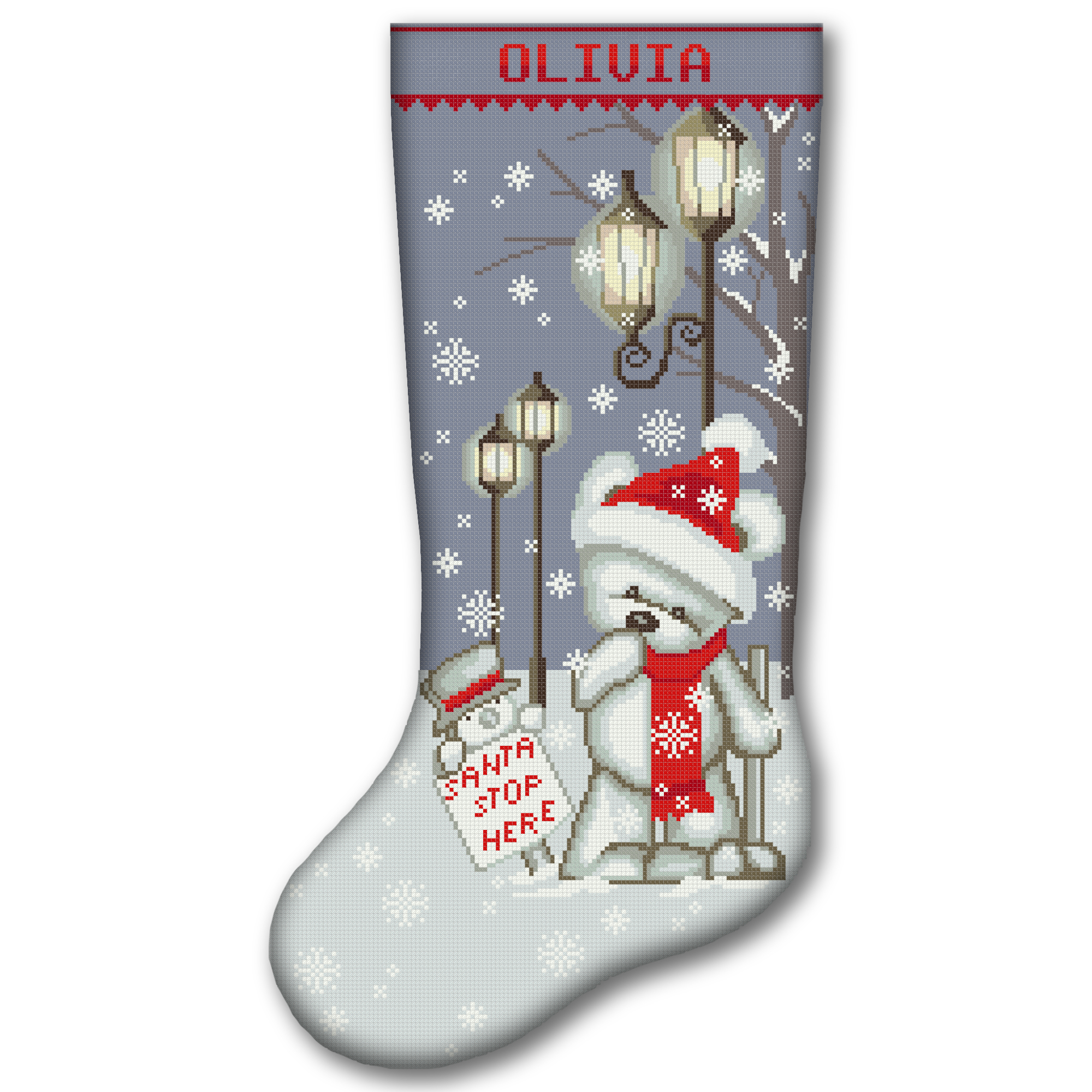
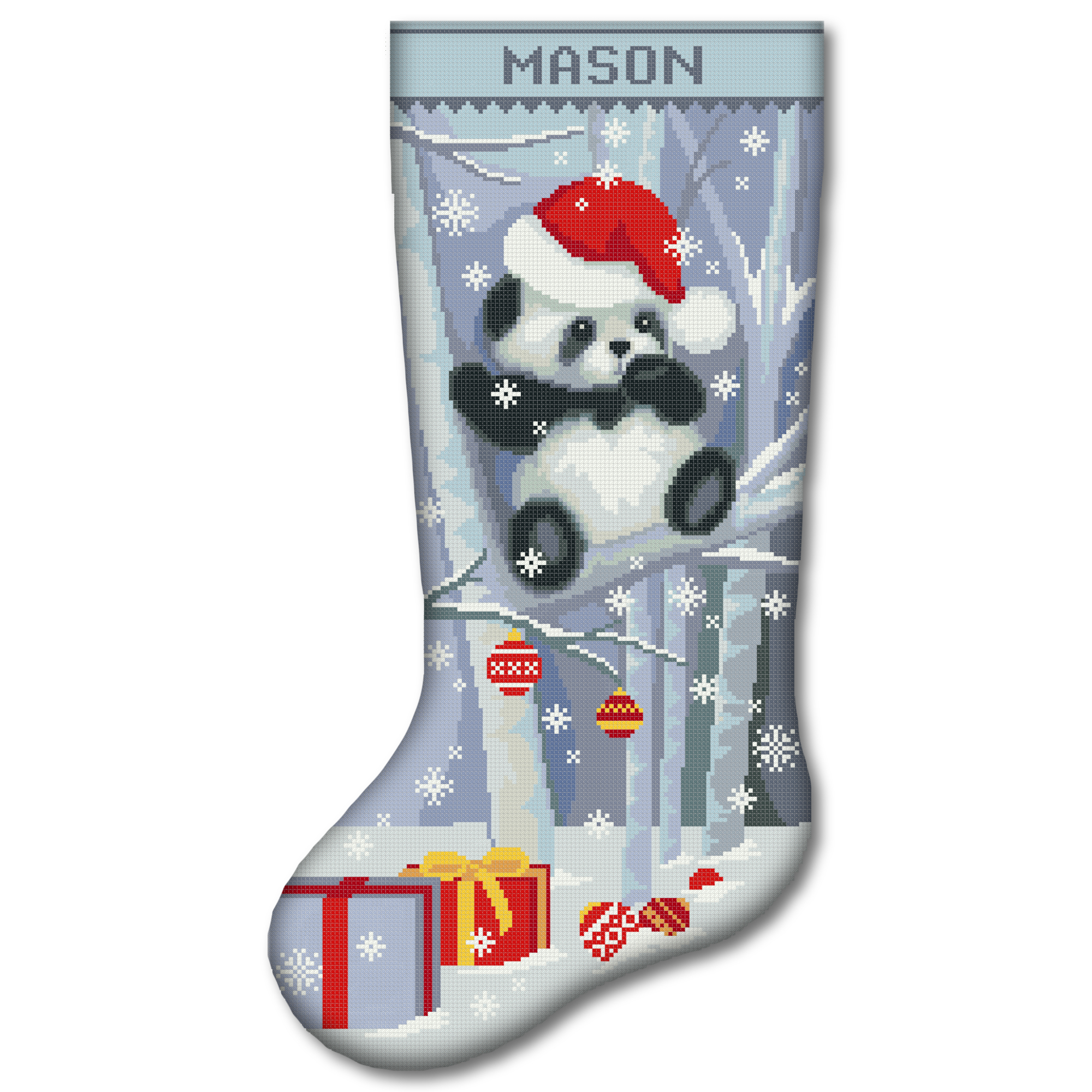
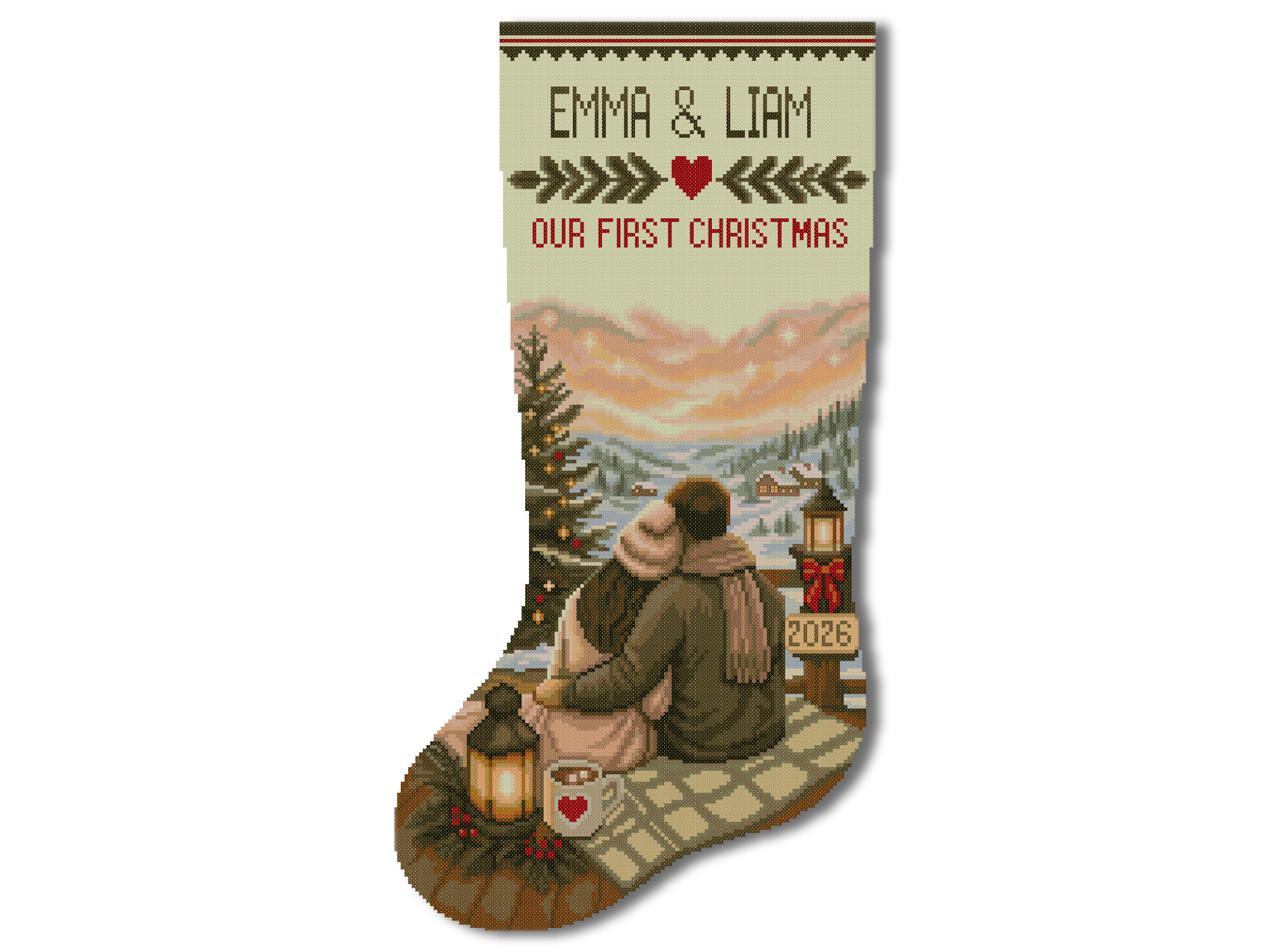
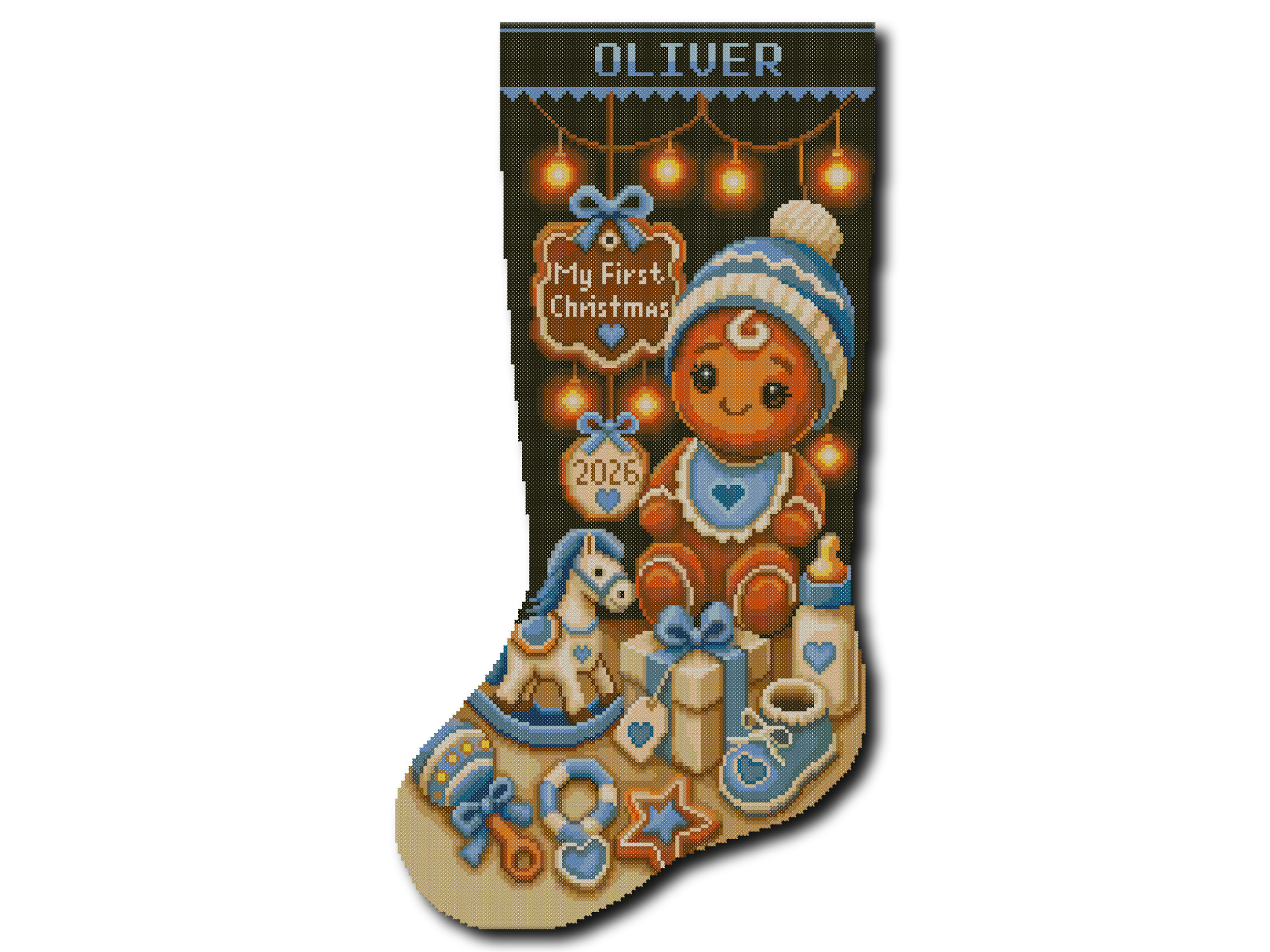
| You want a personalized keepsake | Christmas stocking cross stitch kit |
| You need to finish by a certain date | Smaller design plus a time planner |
For most complete beginners, a stamped or 2-in-1 cross stitch kit is the safest choice.
The printed fabric helps you understand where the stitches go. A 2-in-1 kit gives you stamped fabric for an easier start and blank Aida for the traditional counted method.
What Is a Cross Stitch Kit?
A cross stitch kit is a prepared project containing a design and some or all of the materials required to stitch it.
A basic kit may include:
- cross stitch fabric;
- embroidery floss;
- a needle;
- a printed chart;
- stitching instructions.
A more complete kit may also include:
- extra embroidery floss;
- several needles;
- finishing instructions;
- backing fabric;
- hanging materials;
- a gift box;
- personalization instructions.
Not every product called a “kit” contains everything. Some products include only the pattern, while others omit the hoop, backing fabric, finishing materials, or scissors.
Always read the complete product description before buying.
What Should a Beginner Cross Stitch Kit Include?
At minimum, a good beginner cross stitch kit should include:
- Suitable cross stitch fabric.
- Enough embroidery floss.
- A tapestry needle.
- A clear chart or stamped guide.
- A color and symbol key.
- Beginner-friendly instructions.
- Information about the number of strands to use.
- Finishing information if the project must be sewn or assembled.
The kit description should clearly tell you what is included and what you may need to purchase separately.
Materials That Are Not Always Included
Do not automatically assume the kit contains:
- embroidery hoop or frame;
- scissors;
- fabric marker;
- needle minder;
- stuffing;
- mounting board;
- picture frame;
- sewing machine;
- finishing accessories.
These items may be useful, but they are not included in every kit.
Step 1: Choose Stamped, Counted, or 2-in-1 Cross Stitch
The first decision is how you want to follow the design.
Stamped Cross Stitch
Stamped cross stitch has the design printed directly on the fabric.
You place your stitches over the printed symbols or colors. You do not need to count every square from a blank starting point.
Stamped cross stitch is a good choice for:
- complete beginners;
- people who feel nervous about reading charts;
- stitchers who want a more relaxing project;
- large projects with many colors;
- busy adults who want to stitch without constantly checking a chart;
- gift buyers who do not know the recipient’s experience level.
Stamped does not mean that the finished project is not handmade. You still create every stitch yourself. The printing is simply a guide.
Counted Cross Stitch
Counted cross stitch uses blank fabric and a separate chart.
You find the center, count the fabric squares, read the chart symbols, and place each stitch in the correct position.
Counted cross stitch is a good choice for:
- beginners who want to learn the traditional method;
- stitchers who enjoy following charts;
- people who already understand fabric count;
- crafters who enjoy careful, detailed work;
- anyone who prefers stitching on blank white Aida.
Counted cross stitch requires more concentration. A counting mistake can move part of the design into the wrong position.
2-in-1 Cross Stitch Kits
A 2-in-1 kit gives you both options.
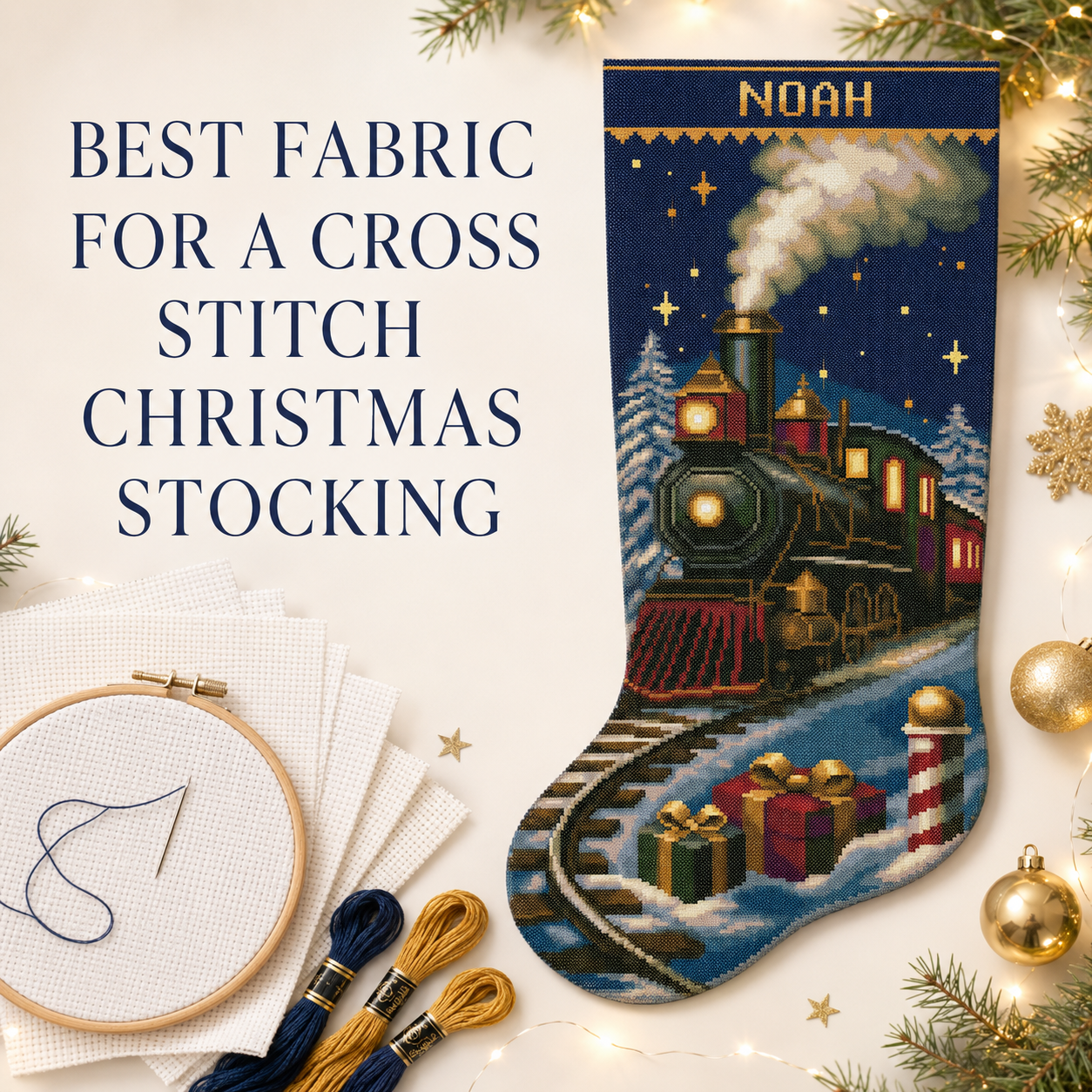
CrossStitchStyleArte 2-in-1 Christmas stocking kits contain stamped fabric for guided stitching and white 14-count Aida for counted cross stitch.
This option is especially useful when:
- you are unsure which method you prefer;
- you want to begin with stamped cross stitch;
- you may want to try counted cross stitch later;
- you are buying a gift;
- two family members prefer different methods;
- you want more flexibility from one kit.
A 2-in-1 kit provides two ways to stitch the design. It is intended to help you choose your preferred method for creating one finished stocking.
For a complete comparison, read Stamped vs Counted Cross Stitch Christmas Stocking Kits.
Stamped vs Counted Cross Stitch: Quick Comparison
| Feature | Stamped Cross Stitch | Counted Cross Stitch |
|---|---|---|
| Fabric | Design printed on fabric | Blank fabric |
| Separate chart | Usually included for reference | Required |
| Counting | Minimal | Required |
| Difficulty for beginners | Easier | More challenging |
| Risk of miscounting | Lower | Higher |
| Traditional experience | Less chart-based | Yes |
| Best for | Guided, relaxing stitching | Detailed chart reading |
| Finished result | Handmade cross stitch | Handmade cross stitch |
Neither method is automatically better. The right choice depends on how you want to stitch.
Step 2: Check the Fabric Count
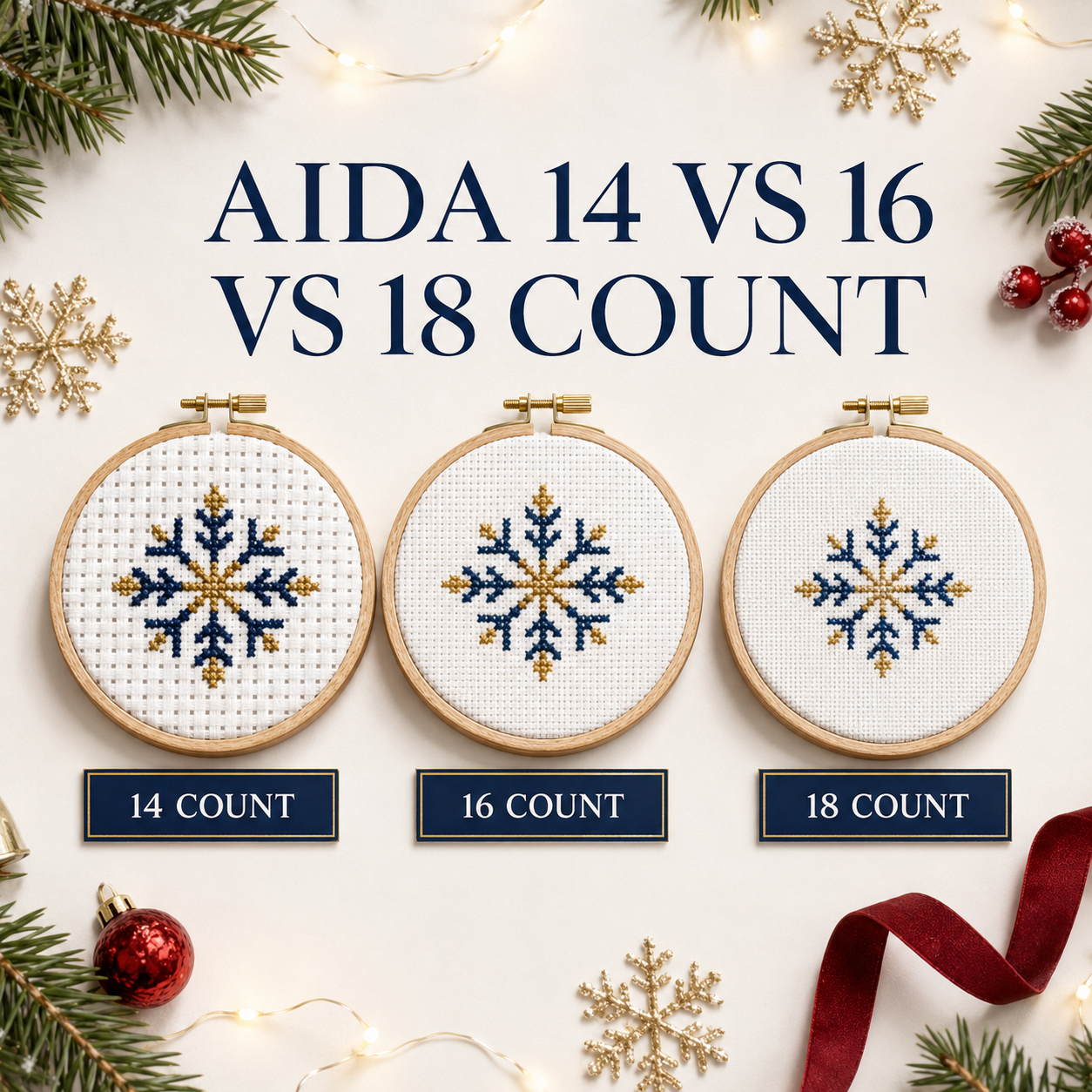
Fabric count tells you how many fabric squares fit into one inch.
A lower number creates larger squares. A higher number creates smaller squares.
| Fabric Count | Stitch Size | Beginner Difficulty |
|---|---|---|
| 11-count Aida | Large | Easy to see |
| 14-count Aida | Medium | Good beginner choice |
| 16-count Aida | Smaller | Moderate |
| 18-count Aida | Fine | More difficult |
| 20-count and higher | Very fine | Better for experienced stitchers |
Is 14-Count Aida Good for Beginners?
Yes. Fourteen-count Aida is one of the most practical fabrics for beginners.
Its squares are:
- large enough to see;
- small enough to create a detailed result;
- easy to use with common tapestry needles;
- suitable for many designs;
- commonly stitched with two strands of floss.
CrossStitchStyleArte 2-in-1 kits include white 14-count Aida for the counted stitching option.
If you are unsure how many strands to place in the needle, use our complete floss strand guide for 11, 14, 16, and 18-count Aida.
When Should a Beginner Avoid Fine Fabric?
Avoid starting with very fine fabric if:
- the holes are difficult for you to see;
- the project contains many fractional stitches;
- you are stitching in poor light;
- you have never used a cross stitch chart;
- you want a fast and relaxing first project.
Your first project should build confidence, not test your eyesight and patience.
Step 3: Look at the Real Difficulty, Not Only the Label
The word “beginner” can mean different things on different product pages.
Do not rely only on a beginner, easy, or intermediate label. Look at the actual design.
A Beginner-Friendly Design Usually Has:
- clear areas of color;
- a manageable number of thread colors;
- limited isolated stitches;
- little or no complicated blending;
- few fractional stitches;
- clear backstitch lines;
- readable symbols;
- good contrast between chart symbols;
- detailed instructions;
- a reasonable finished size.
A More Difficult Design May Have:
- many similar shades;
- large areas of full coverage;
- hundreds of isolated stitches;
- frequent color changes;
- blended threads;
- metallic floss;
- beads;
- extensive backstitch;
- many quarter and three-quarter stitches;
- very fine fabric;
- a large finished size.
A large design is not automatically unsuitable for beginners. It simply requires more time and patience.
A stamped large design may be easier to follow than a smaller counted design with many scattered colors.
Step 4: Check the Project Size
The finished size shown in inches or centimeters does not tell you everything.
Also check:
- the stitch width and height;
- fabric count;
- number of colors;
- percentage of fabric covered with stitches;
- amount of backstitch;
- finishing requirements.
A 10-inch full-coverage design can take much longer than a 14-inch design containing large unstitched areas.
How Long Will the Project Take?
Completion time depends on:
- total stitch count;
- your stitching speed;
- number of color changes;
- backstitch and decorative stitches;
- time available each week;
- mistakes and restitching;
- finishing work.
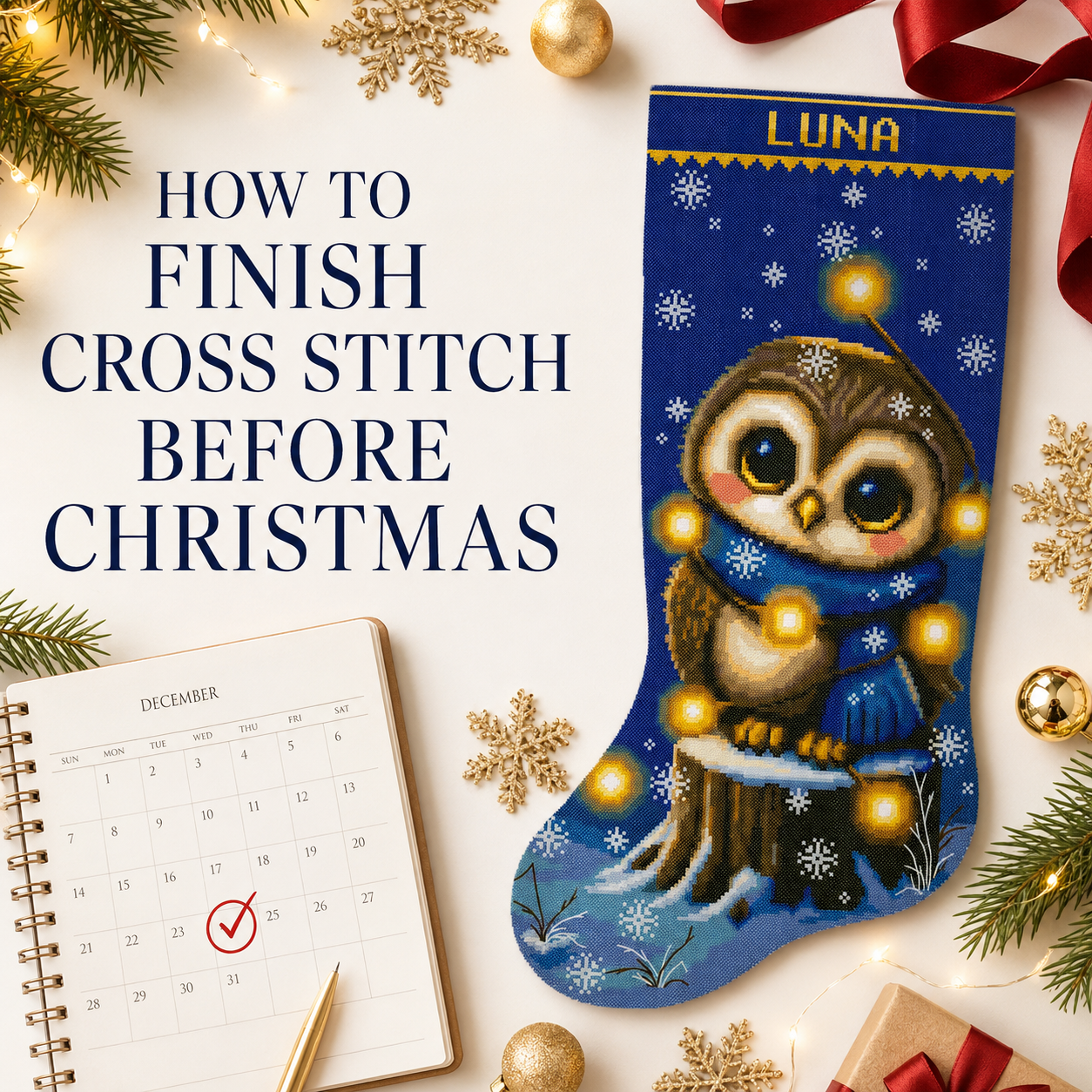
Use the free Cross Stitch Time Planner to estimate the hours required and create a realistic stitching schedule.
This is especially useful for a Christmas stocking, wedding gift, baby gift, or any project with a deadline.
Step 5: Make Sure the Instructions Are Clear
Good materials cannot fix confusing instructions.
A beginner kit should clearly explain:
- how to prepare the fabric;
- how many strands of floss to use;
- how to read the chart or printed symbols;
- where to begin;
- how to make a full cross stitch;
- how to start the thread;
- how to finish the thread;
- how to make backstitch;
- how to wash or care for the work;
- how to complete the final item.
The chart should have symbols that are easy to tell apart. Two nearly identical symbols printed beside each other can cause unnecessary mistakes.
If the product photos show only the finished design but do not show the chart, materials, fabric, or instructions, read the description carefully before purchasing.
Step 6: Check the Embroidery Floss
A complete kit should provide the colors required for the design and enough floss to complete it.
Before buying, check whether the floss is:
- included;
- separated or organized;
- identified by color or symbol;
- matched to the chart;
- supplied with a safety allowance.
Extra thread is helpful because beginners may use more floss while learning. Tangled thread, long tails, mistakes, and repeated starts can increase consumption.
CrossStitchStyleArte 2-in-1 stocking kits include approximately 30% extra embroidery floss to reduce the risk of running out.
You can see the complete kit contents in What Is Included in a 2-in-1 Cross Stitch Christmas Stocking Kit?.
What If You Are Buying a Digital Pattern?
A digital pattern does not normally include physical floss.
Use the free Cross-Stitch Thread Calculator to estimate how many meters and skeins you need.
If you already own floss from another brand, use the DMC, Anchor, Madeira, Cosmo, and Sullivans Floss Converter to find close color matches.
Step 7: Check the Needle and Other Tools
Cross stitch is normally worked with a blunt tapestry needle.
The needle should:
- pass through the fabric holes comfortably;
- have an eye large enough for the floss;
- not stretch the fabric holes;
- not damage or fray the thread.
A kit should include at least one suitable needle. A second needle is useful if the first is lost or damaged.
CrossStitchStyleArte 2-in-1 kits include two needles.
An embroidery hoop may help keep the fabric steady, but it is not included in every kit. Check the product description instead of assuming.
Step 8: Check How the Project Will Be Finished
Many buyers focus only on the embroidery and forget about finishing.
A stitched picture may need:
- a frame;
- backing board;
- mounting materials.
A Christmas stocking may need:
- backing fabric;
- a hanging loop;
- sewing instructions;
- lining or finishing thread;
- space for a personalized name.
If these materials are not included, you will have to find and purchase them separately.
CrossStitchStyleArte Christmas stocking kits are designed as complete projects. Depending on the kit, the contents include backing fabric, finishing instructions, and thread for making the hanging loop or braid.
When you are ready to assemble the stocking, follow our complete beginner guide to cross stitching and finishing a Christmas stocking.
Step 9: Choose a Design You Truly Want to Finish
Difficulty matters, but motivation matters too.
A simple design you do not like may remain unfinished. A larger design connected to someone you love can keep you motivated for months.
Ask yourself:
- Do I like the colors?
- Will I enjoy looking at this design while I stitch?
- Is it intended for me or someone special?
- Will I display or use the finished project?
- Does it match my home or holiday style?
- Will I still care about the design next year?
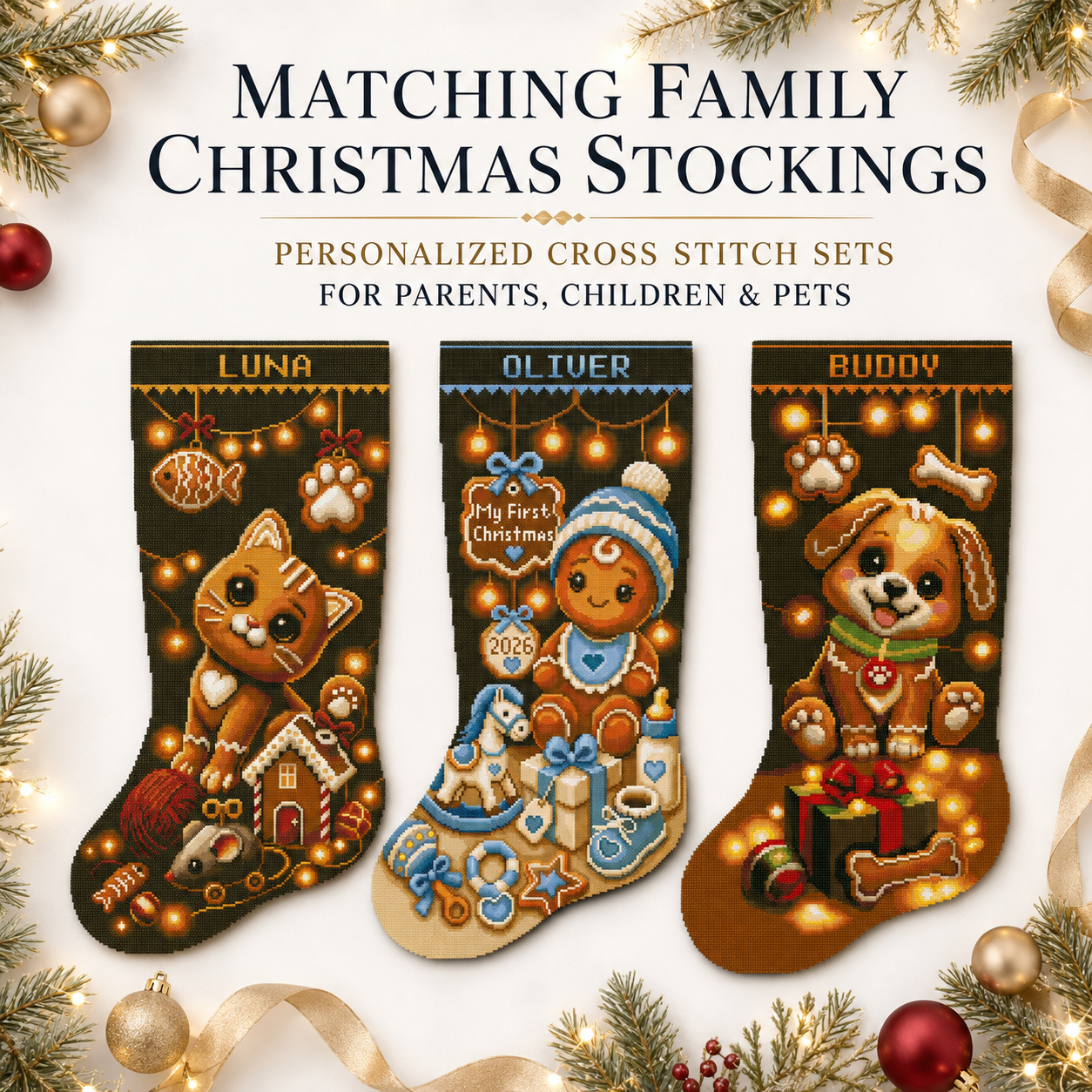
For a personalized Christmas stocking, consider the person who will receive it.
You may choose:
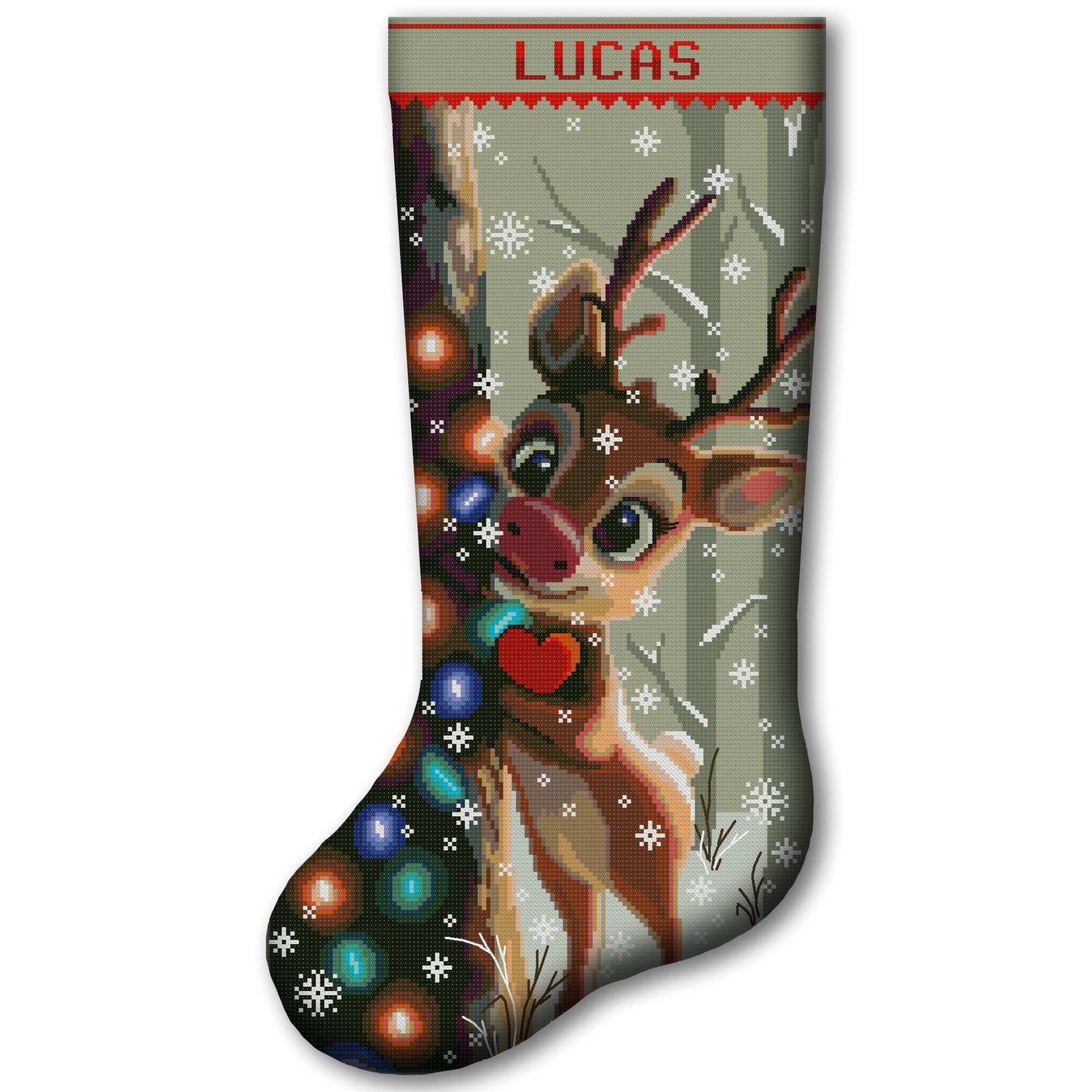
- a reindeer for traditional woodland decor;
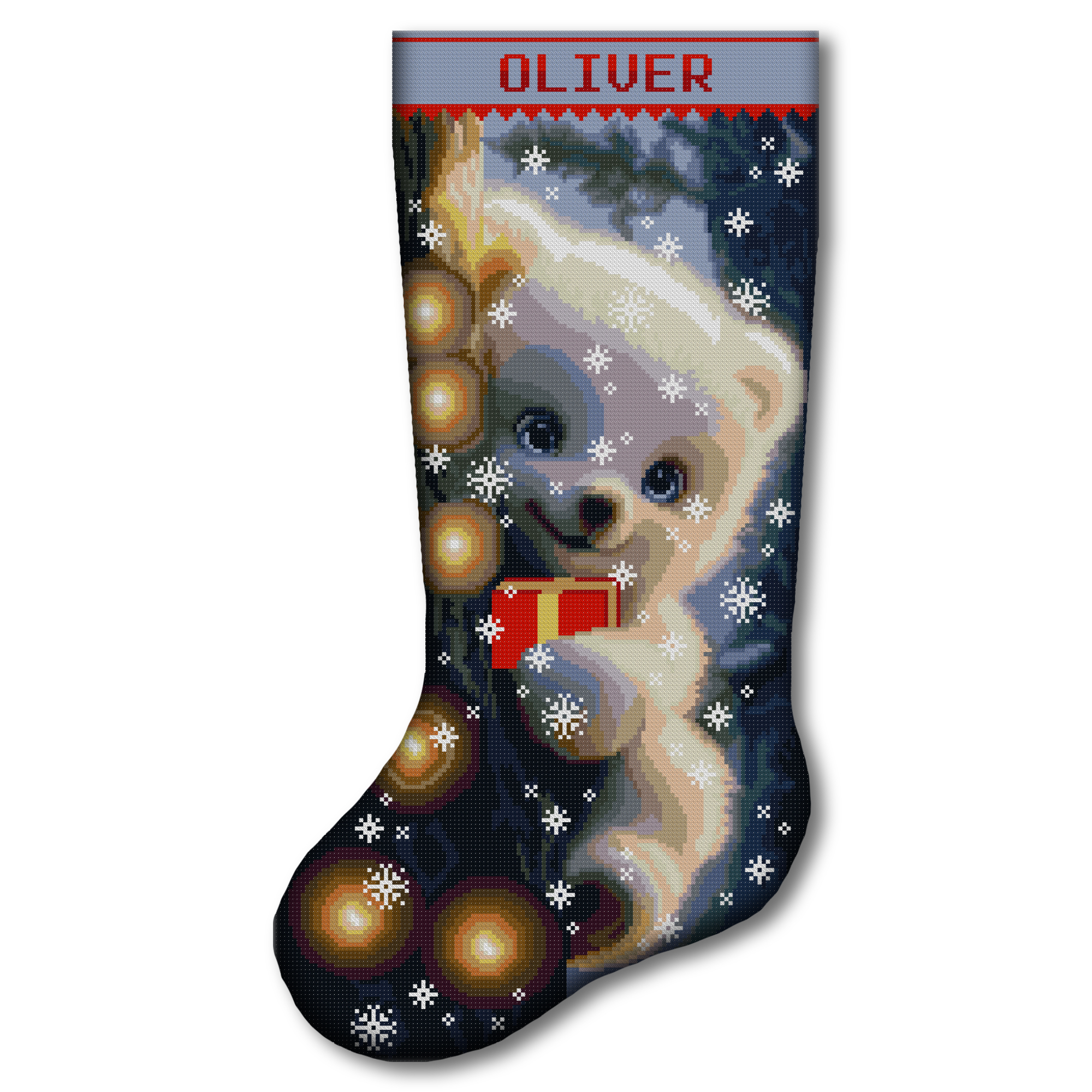
- a polar bear or penguin for a child;
- a fox for a cozy forest theme;
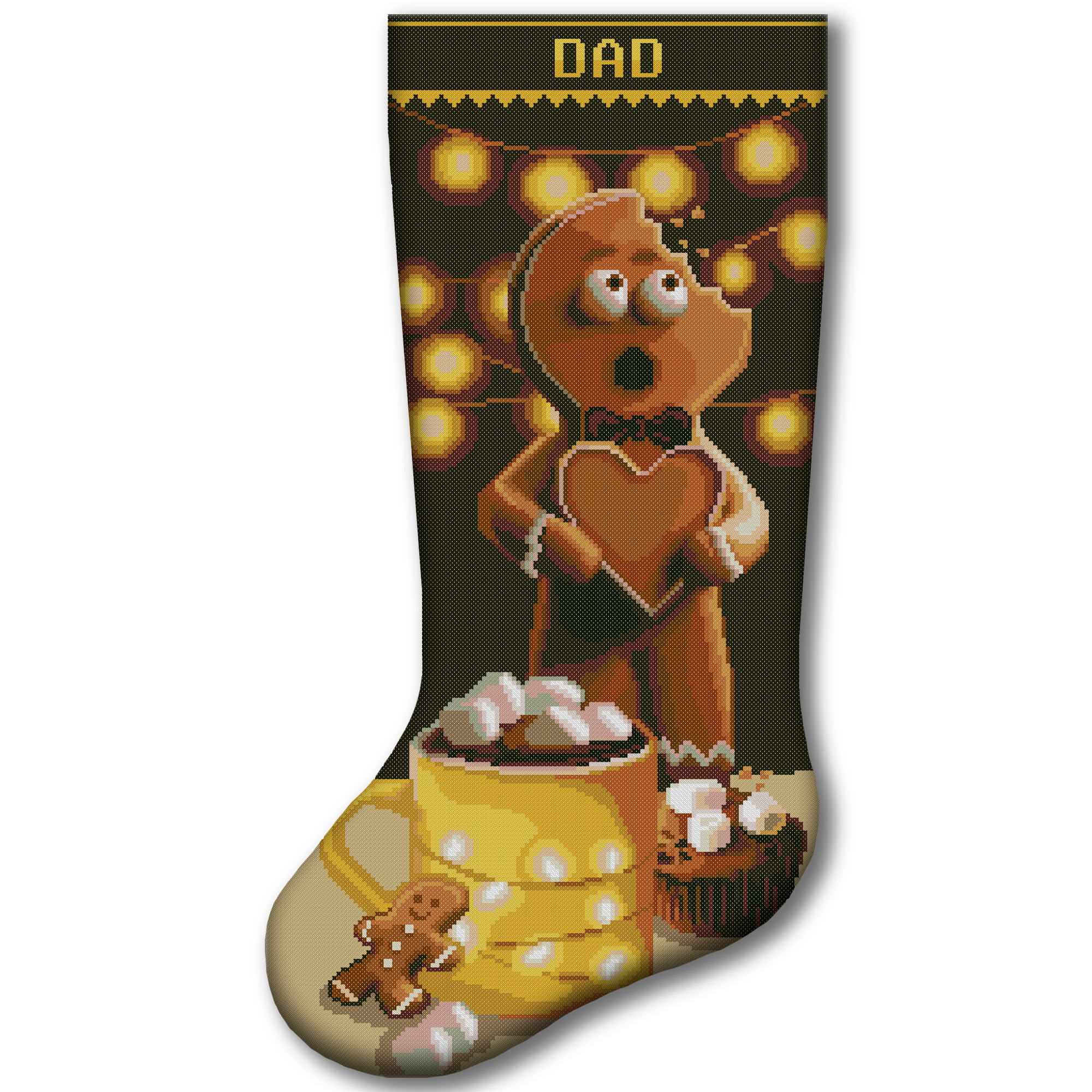
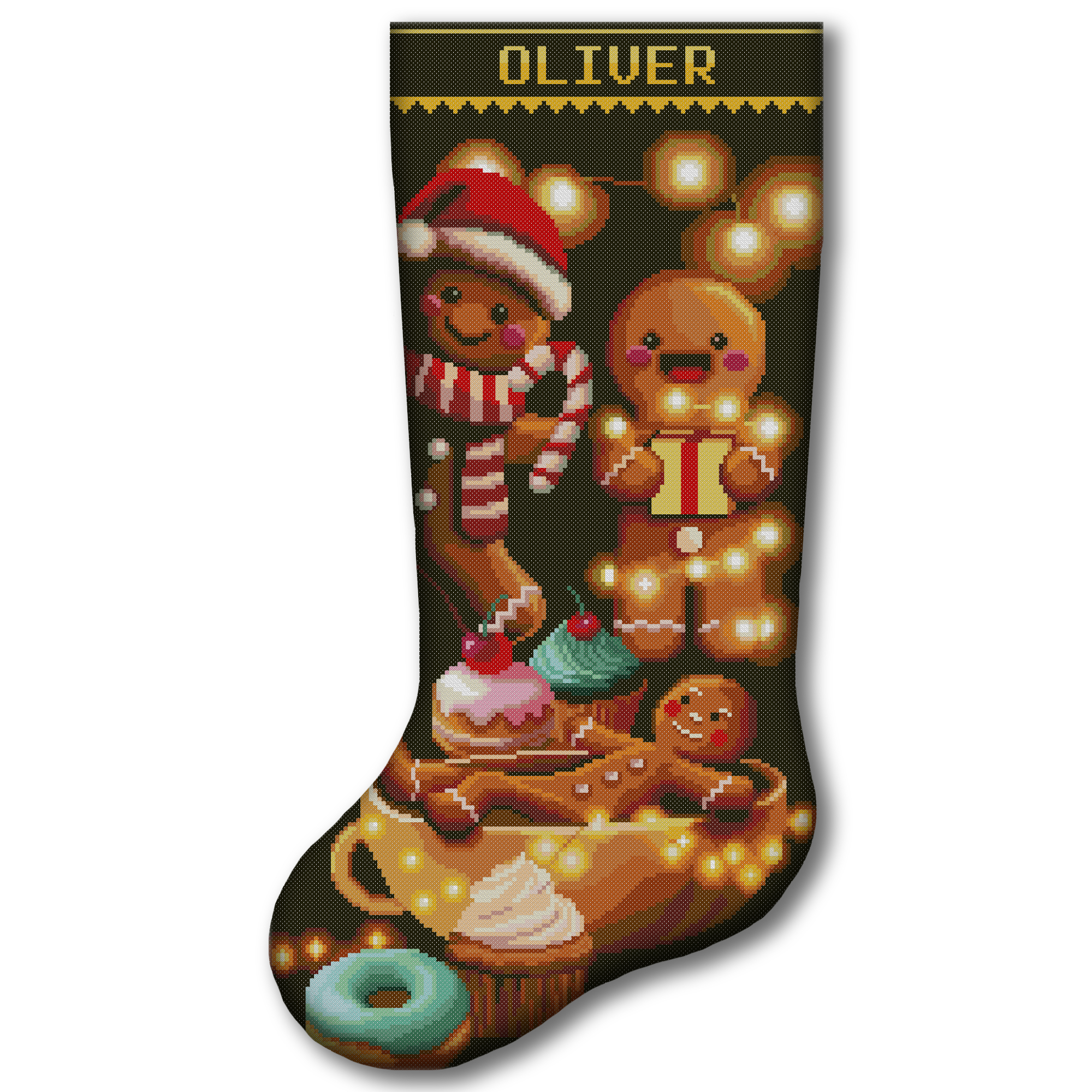
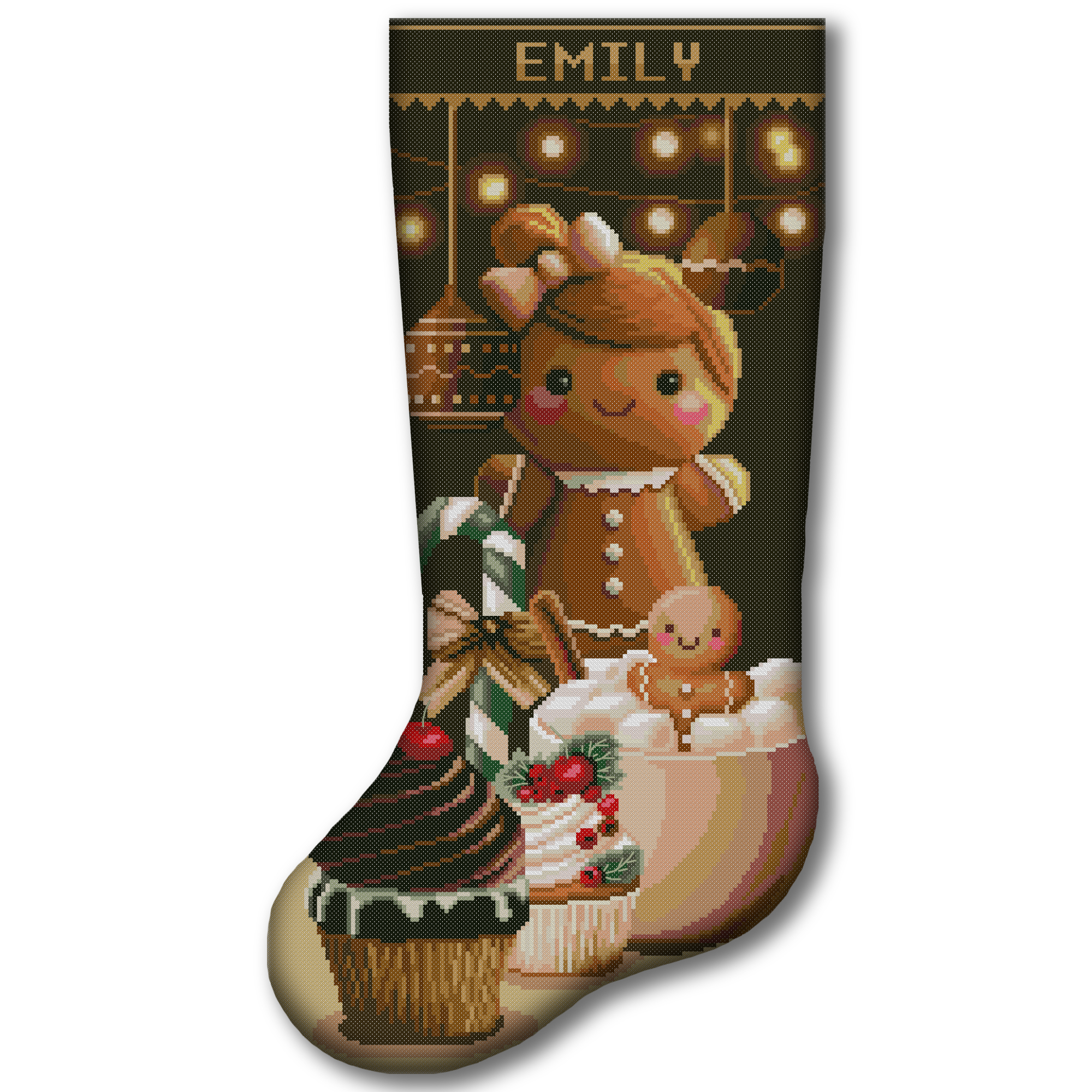
- a gingerbread design for a warm kitchen-inspired Christmas;
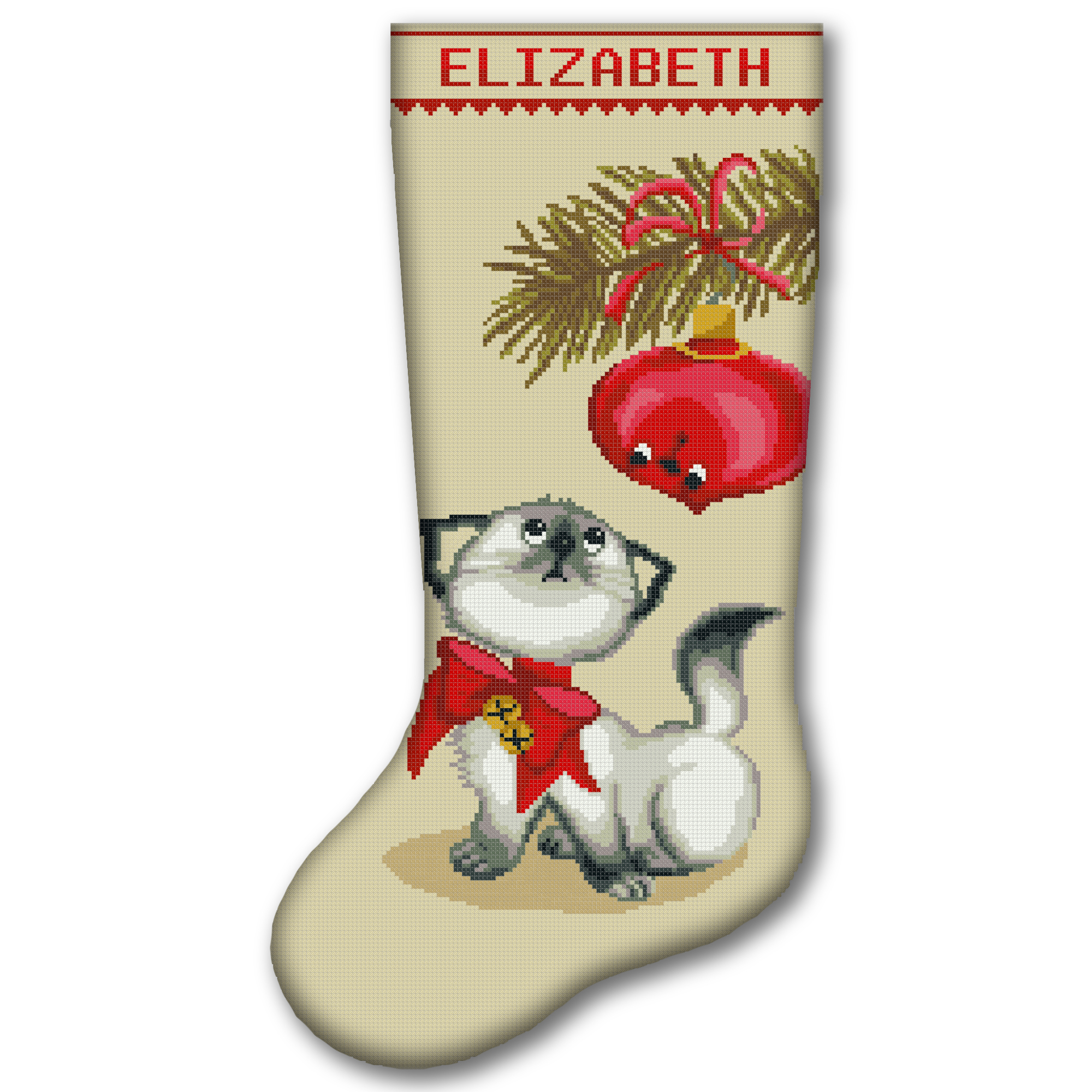
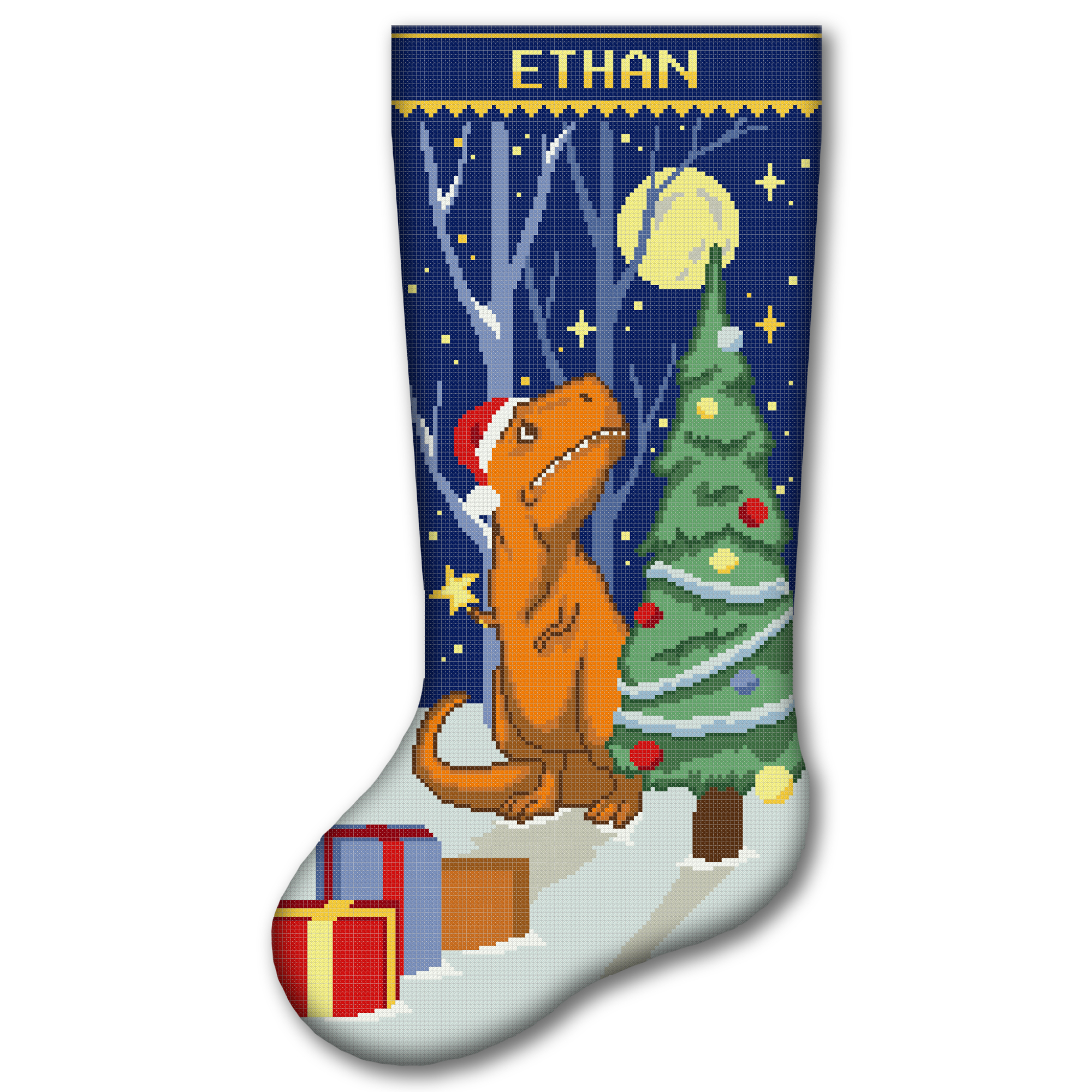
- a cat, bunny, panda, or dinosaur based on the recipient’s interests.
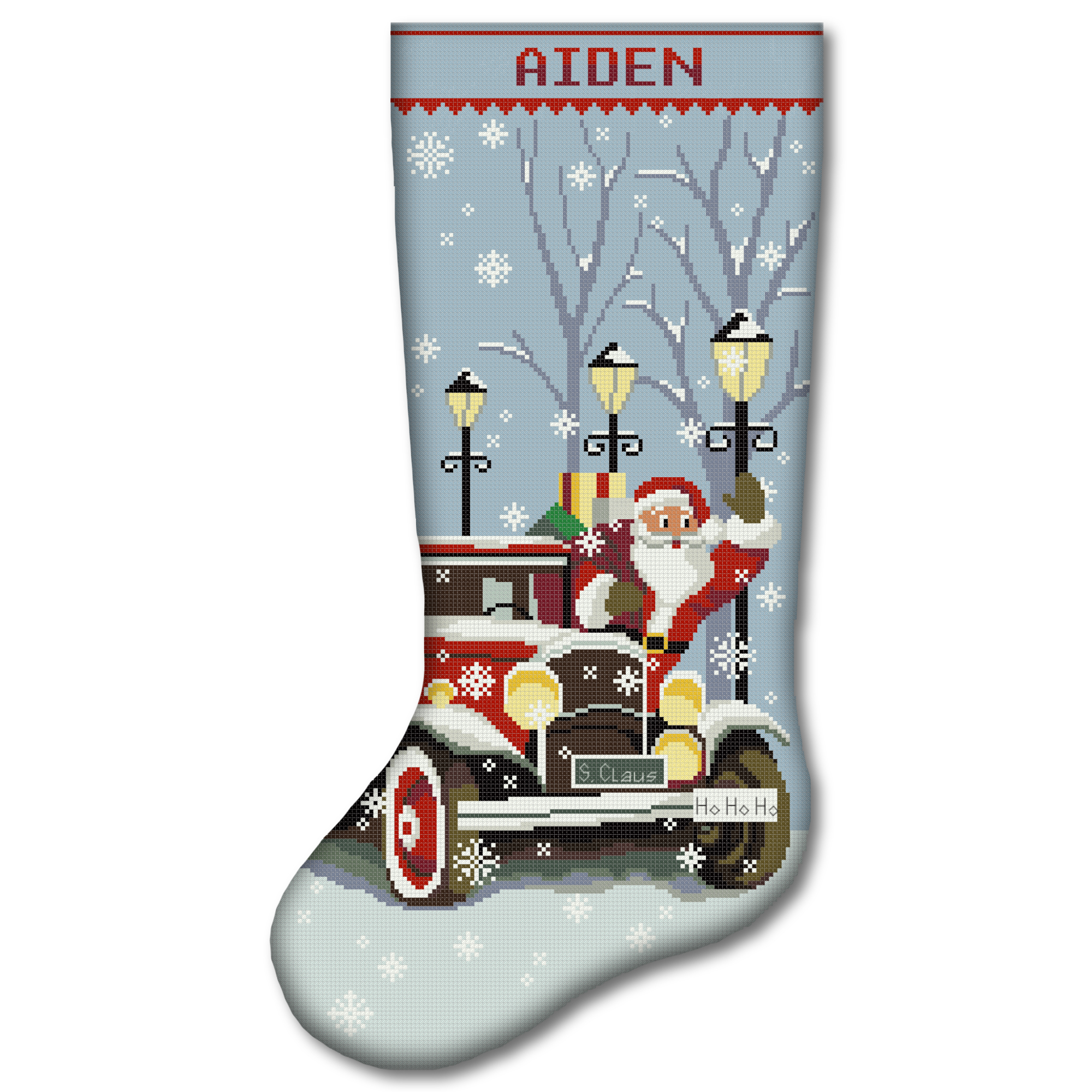
A personalized project has a clear purpose. It is not only something to stitch. It becomes something your family can bring out every year.
Step 10: Decide Between a Physical Kit and a Digital Pattern
A kit and a pattern are not the same product.
Physical Cross Stitch Kit
A physical kit contains the project materials and is shipped to you.
It is the better choice if:
- you are a complete beginner;
- you do not own embroidery supplies;
- you want the colors selected for you;
- you want to begin without shopping for materials;
- you are buying a gift;
- you want a prepared project.
Digital Cross Stitch Pattern
A digital pattern is usually a downloadable PDF containing the chart, color key, and instructions.
It is the better choice if:
- you already own Aida, needles, and floss;
- you prefer choosing your own fabric;
- you want an instant download;
- you enjoy organizing your own supplies;
- you want a lower-cost way to access the design;
- you live in a location where physical shipping is inconvenient.
| Feature | Physical Kit | Digital Pattern |
|---|---|---|
| Fabric included | Usually | No |
| Floss included | Usually | No |
| Needle included | Usually | No |
| Chart included | Yes | Yes |
| Instant access | No, requires shipping | Yes |
| Best for beginners | Yes | If supplies are available |
| Best for gifts | Yes | Less suitable |
| Choice of fabric | Limited to kit contents | Complete freedom |
| Preparation required | Minimal | More preparation |
Browse our digital cross stitch patterns if you already own the materials you need.
Why a Complete Kit Can Be Better Value
The cheapest product is not always the best value.
A very inexpensive kit may require you to purchase:
- extra floss;
- another needle;
- better fabric;
- backing material;
- finishing thread;
- clearer instructions;
- a separate pattern.
Compare the complete cost, not only the first price you see.
A useful way to think about value is:
Kit value = materials + clear instructions + preparation time saved + likelihood of completing the project.
A kit that helps you finish successfully is more valuable than a cheaper project that becomes confusing and remains in a drawer.
Why CrossStitchStyleArte 2-in-1 Kits Work Well for Beginners
CrossStitchStyleArte 2-in-1 Christmas stocking kits are designed to remove the choice between stamped and counted cross stitch.
Each kit includes:
- stamped fabric with the design printed on it;
- white 14-count Aida for counted cross stitch;
- embroidery floss with approximately 30% extra thread;
- two needles;
- printed paper chart;
- stitching instructions;
- finishing instructions;
- backing fabric;
- thread for the hanging loop or braid;
- gift-ready box with a bow.
You can begin with the stamped fabric for a more guided experience or use the white Aida and chart for traditional counted cross stitch.
This makes a 2-in-1 kit useful for:
- beginners;
- returning stitchers;
- gift buyers;
- people who have never tried stamped cross stitch;
- crafters who want freedom to choose.
Explore all 2-in-1 Christmas stocking cross stitch kits.
Which Cross Stitch Kit Is Right for You?
Choose a Stamped Kit for the Easiest Start
A stamped kit is the simplest option when you want the fabric to guide you.
Browse our stamped Christmas stocking cross stitch kits.
A playful option for a cozy holiday project is the Gingerbread Man stamped Christmas stocking kit.
Choose a 2-in-1 Kit for Maximum Flexibility
A 2-in-1 kit is the strongest choice when you want both stamped and counted options.
Examples include:
- 2-in-1 Polar Bear personalized Christmas stocking kit
- 2-in-1 Woodland Fox Christmas stocking kit
- 2-in-1 Gingerbread Girl Christmas stocking kit
Choose a PDF Pattern if You Already Have Supplies
If you already own fabric, floss, and needles, a downloadable pattern gives you more freedom.
You can select your preferred fabric count, thread brand, and stitching method.
Browse all counted cross stitch patterns or begin with a beginner-friendly Reindeer Christmas stocking cross stitch pattern.
Free Tools to Help You Choose and Prepare
Before starting a project, use the CrossStitchStyleArte tools to check the time, fabric, and floss required.
Cross Stitch Time Planner
Use the Cross Stitch Time Planner to estimate how long the project may take and plan a realistic finishing date.
Fabric Size Calculator
If you purchase a digital pattern, use the Cross Stitch Fabric Size Calculator to calculate the required fabric size and margins.
Thread Calculator
Use the Cross-Stitch Thread Calculator to estimate floss length and the number of skeins required.
Floss Usage Calculator
If you already have part of a skein, use the Floss Usage Calculator to check whether your remaining thread may be enough.
Name Centering Tool
For personalized stockings, use the Cross Stitch Name Centering Tool to position a name correctly before stitching.
You can find all these resources on the Free Cross Stitch Calculators and Tools page.
How to Choose a Cross Stitch Kit as a Gift
If you are buying a kit for another person, do not choose only by the picture.
Check:
- the recipient’s experience;
- whether they prefer stamped or counted cross stitch;
- the fabric count;
- the project size;
- the design theme;
- whether all materials are included;
- whether the item can be personalized;
- whether the instructions are suitable for beginners;
- whether the recipient has time to finish it;
- whether the item arrives as a physical kit or digital file.
A 2-in-1 kit is a practical gift when you do not know which stitching method the recipient prefers.
A gift-ready box also makes a physical kit easier to present for Christmas, a birthday, Mother’s Day, or another special occasion.
Choosing a Cross Stitch Kit for a Child
For a child or young beginner, choose:
- larger fabric holes;
- a small or medium design;
- clear color blocks;
- few thread colors;
- simple full cross stitches;
- short instructions;
- an image the child likes;
- a project that can show progress quickly.
Avoid very fine fabric, complicated blends, beads, and large full-coverage designs for a first project.
An adult should supervise the use of needles and scissors.
Check the product’s recommended age before purchasing. A kit marketed for adult beginners is not automatically designed as a children’s kit.
Common Mistakes When Buying a Beginner Cross Stitch Kit
Choosing Only by the Finished Picture
A beautiful design may still contain difficult stitches, dozens of colors, and a very large stitch count.
Check the technical details.
Starting With a Huge Project
A large project can be rewarding, but it may take months.
Use a time calculator and choose a realistic deadline.
Assuming Every Kit Is Complete
Some kits contain only fabric, floss, and a chart. Others do not include finishing materials.
Read the entire contents list.
Confusing a Pattern With a Kit
A digital PDF pattern does not normally include physical supplies.
Make sure you understand what will be delivered.
Ignoring Fabric Count
An 18-count design may be difficult for a complete beginner to see and stitch.
Fourteen-count Aida is usually a more comfortable starting point.
Choosing Counted Cross Stitch for Someone Who Wants Guidance
A person who dislikes counting may enjoy stamped cross stitch much more.
Choose the method that matches the person, not the method someone else says is more traditional.
Ignoring Finishing Materials
Finishing a stocking or other sewn item requires more than completing the crosses.
Check for backing fabric and assembly instructions.
Forgetting to Check Thread Quantity
Running out of one color near the end is frustrating.
Look for extra floss or calculate the required quantity before starting.
Buying the Cheapest Option Without Comparing Contents
A cheap kit can become expensive if several required materials must be purchased separately.
Compare total value.
Beginner Cross Stitch Kit Checklist
Before buying, confirm the following:
- I understand whether the kit is stamped, counted, or 2-in-1.
- The fabric count is suitable for me.
- I can clearly see the chart or printed design.
- The project size is realistic.
- The stitch types match my experience.
- Fabric is included.
- Floss is included.
- The kit provides enough floss or extra floss.
- At least one suitable needle is included.
- The number of strands is explained.
- Beginner instructions are included.
- Finishing instructions are included when required.
- I know whether a hoop or scissors must be purchased separately.
- I understand whether the item is physical or digital.
- I genuinely like the design.
If you can check most or all these boxes, the kit is likely a good match.
Frequently Asked Questions
What is the best cross stitch kit for a complete beginner?
A stamped cross stitch kit is usually the easiest option because the design is printed on the fabric. A 2-in-1 kit is also an excellent choice because it allows the beginner to choose between stamped and counted stitching.
Is stamped cross stitch cheating?
No. You still make every stitch by hand. The printed fabric is a guide, similar to following lines in a coloring book.
Is counted cross stitch too difficult for beginners?
No, but it requires more concentration. Beginners can learn counted cross stitch successfully when the chart is clear, the fabric is easy to see, and the design is not too complicated.
Is 14-count Aida suitable for beginners?
Yes. Fourteen-count Aida provides a good balance between visible holes and detailed results.
What should a beginner cross stitch kit include?
It should include fabric, floss, a needle, a chart or stamped guide, a color key, strand instructions, and clear stitching directions. Projects such as stockings should also include finishing information.
Is a cross stitch kit better than a pattern?
A kit is usually better for a complete beginner because the materials are prepared. A digital pattern is better for someone who already owns fabric, floss, needles, and other supplies.
How long does a beginner cross stitch kit take?
A small design may take several hours. A large Christmas stocking can take weeks or months. Total time depends on stitch count, design complexity, and how often you stitch.
Does a cross stitch kit include a hoop?
Not always. Check the product description. Many kits include the essential stitching materials but not a hoop or scissors.
Can a beginner make a cross stitch Christmas stocking?
Yes. A stamped or 2-in-1 stocking kit can make the process easier to follow. Clear finishing instructions and backing fabric are also important.
Can I personalize a cross stitch stocking with a name?
Yes. Many CrossStitchStyleArte stockings are designed for personalization. Use the free name centering tool to position the name correctly.
Does a 2-in-1 kit make two stockings?
A 2-in-1 kit provides two stitching methods: stamped and counted. It is designed to give you a choice of method for creating one finished stocking.
Are cross stitch kits good gifts?
Yes. A complete kit provides a creative activity and a finished item. Personalized stocking kits can also become meaningful family keepsakes.
Final Recommendation
The best cross stitch kit for beginners should make the first steps easier, not create new problems.
Choose a kit with:
- suitable fabric;
- clear instructions;
- enough floss;
- manageable difficulty;
- a design you love;
- all required finishing materials;
- a stitching method that matches your personality.
Choose stamped cross stitch for the easiest guided experience.
Choose counted cross stitch for the traditional chart-based method.
Choose a 2-in-1 kit when you want both options in one box.
Choose a digital pattern when you already own the required materials.
Most importantly, choose a project you will feel proud to finish.
Find Your First Cross Stitch Project
Ready to begin?
- Shop all CrossStitchStyleArte cross stitch kits
- Explore 2-in-1 stamped and counted Christmas stocking kits
- Browse beginner-friendly stamped stocking kits
- Download counted cross stitch patterns
- Use free cross stitch calculators and planning tools
Choose the design that feels right, prepare your materials, and enjoy creating something personal—one small cross at a time.