Choosing cross stitch fabric can feel confusing when you first see words such as Aida, evenweave, fabric count, over one and over two. The good news is that the basic difference is easy to understand.
Aida has clearly visible squares that show you exactly where each cross stitch belongs. Evenweave has individual fabric threads instead of ready-made squares, so you count those threads before placing a stitch.
For most beginners, 14-count Aida is the easiest place to start. Evenweave is an excellent choice when you want a smoother background, greater flexibility with fractional stitches or a more delicate finished appearance.
Neither fabric is automatically “better.” The right choice depends on your pattern, experience and the result you want to create.
Aida vs Evenweave: Quick Comparison
| Feature | Aida | Evenweave |
|---|---|---|
| Fabric structure | Clearly formed squares with visible holes | Individual, evenly spaced fabric threads |
| Common counts | 11, 14, 16 and 18 count | 25, 28, 32 and 36 count |
| Usual stitching method | One cross per square | Over one or over two fabric threads |
| Beginner difficulty | Usually easiest | Requires more careful counting |
| Finished appearance | Clear, structured and traditional | Smooth, fine and delicate |
| Fractional stitches | Possible, but may require piercing the fabric | Usually easier to position |
| Backstitch | Easy along the main holes | Offers more placement options |
| Best suited to | Beginners, stockings, samplers and full-coverage designs | Samplers, detailed designs and projects with fractional stitches |
What Is Aida Fabric?
Aida is one of the most widely used fabrics for counted cross stitch. Groups of woven threads form a grid of distinct squares. Each square normally holds one full cross stitch.
Because the holes are easy to see, Aida makes it simpler to:
- count stitches;
- follow a printed chart;
- keep stitches the same size;
- notice counting mistakes;
- bring the needle through the correct hole.
Standard Aida is commonly made from cotton. However, specialty Aida fabrics may also contain linen, polyester, rayon or metallic fibres. Always check the fabric description before purchasing it.
Common Aida Counts
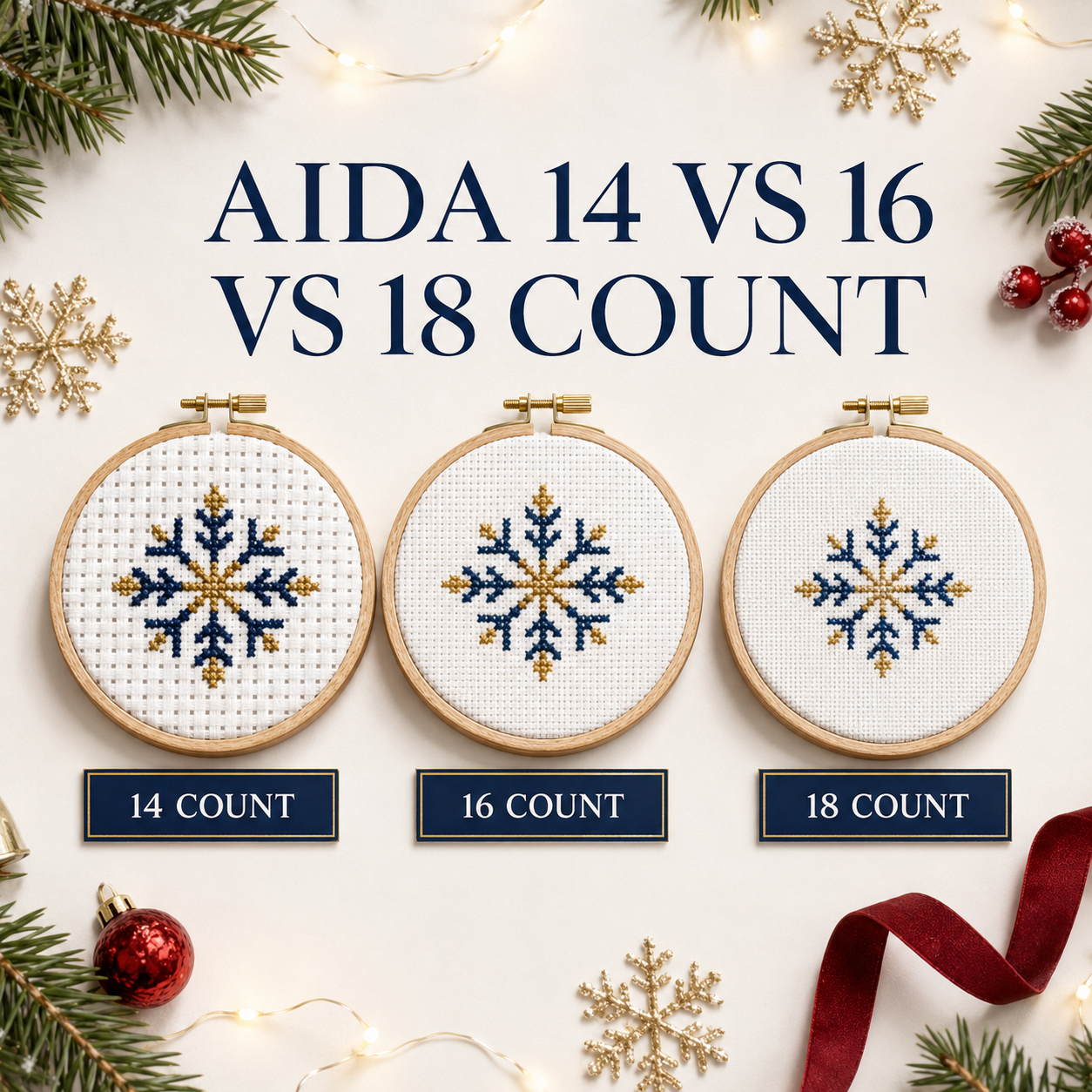
Fabric count tells you how many cross-stitch squares fit into one inch of fabric.
For example:
- 11-count Aida has 11 squares per inch;
- 14-count Aida has 14 squares per inch;
- 16-count Aida has 16 squares per inch;
- 18-count Aida has 18 squares per inch.
A higher fabric count creates smaller stitches and a smaller finished design. A lower count creates larger stitches and a larger finished design.
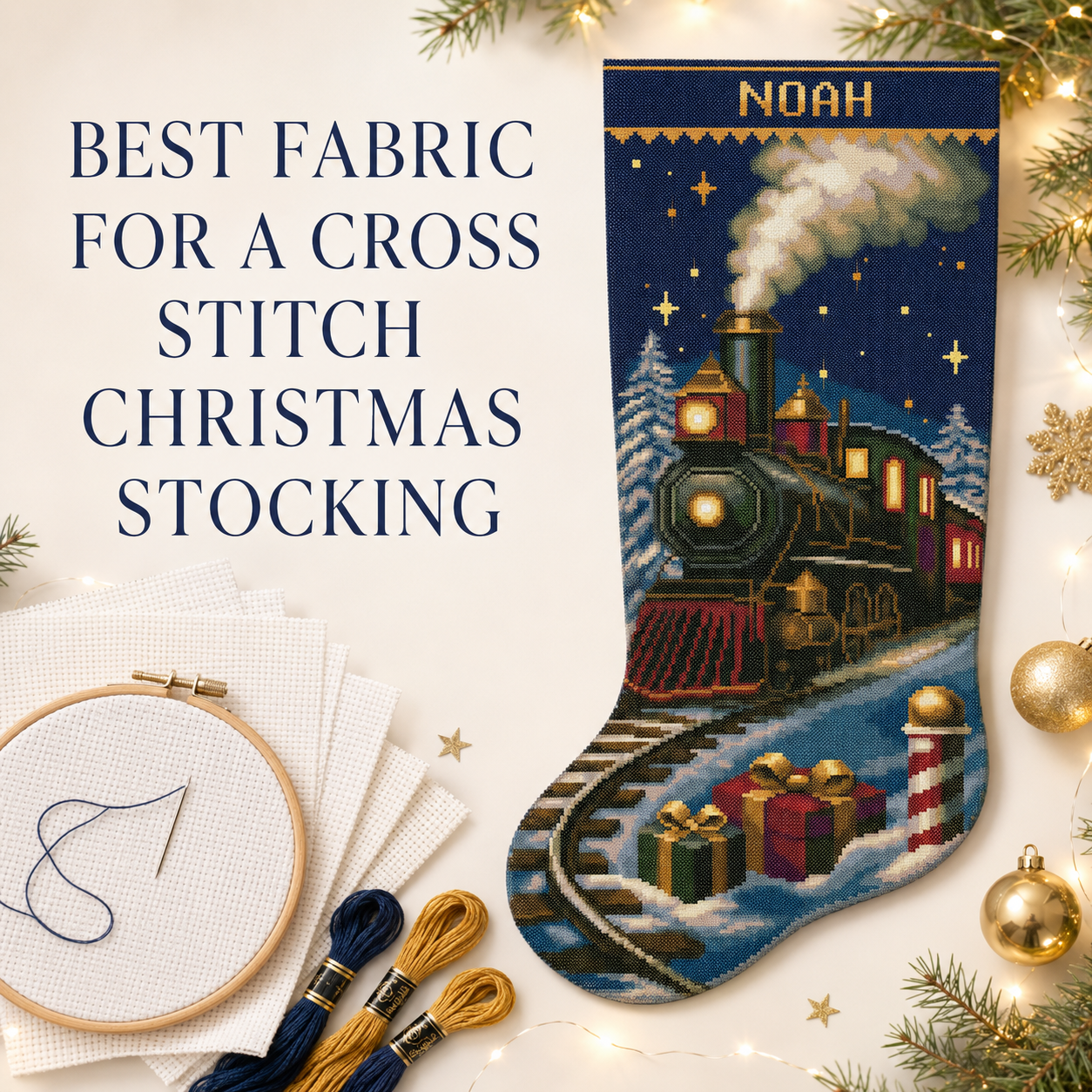
Fourteen-count Aida is popular because its holes are usually easy to see while the stitches still create good detail. It is the fabric used for many CrossStitchStyleArte Christmas stocking patterns and kits.
Advantages of Aida
Aida is a practical choice because it:
- is easy to count;
- is widely available;
- comes in many colours and counts;
- works well for small and large patterns;
- is suitable for both beginners and experienced stitchers;
- can be used with or without a hoop, depending on your preference.
Aida is not limited to simple or block-shaped patterns. It can be used for detailed pictures, full-coverage projects, personalized Christmas stockings and designs with many colours.
Possible Limitations of Aida
The visible grid gives Aida a more structured appearance. Some stitchers prefer a smoother fabric when part of the background will remain unstitched.
Fractional stitches and curved backstitch lines can also require extra care. Sometimes the needle must enter the centre of an Aida square instead of one of its main holes. This is possible, but it is not always as convenient as working on evenweave.
What Is Evenweave Fabric?
Evenweave is woven so that the fabric threads are evenly spaced. Unlike Aida, it does not have clearly formed square blocks. You count individual fabric threads to decide where the needle should enter.
Evenweave can be made from cotton, rayon, modal or a blend of different fibres. Lugana, Monaco and Jobelan are common examples, although their fibre content and texture may differ.
Common Evenweave Counts
Evenweave is commonly available in:
- 25 count;
- 28 count;
- 32 count;
- 36 count.
These numbers describe the fabric threads per inch—not necessarily the number of finished cross stitches per inch.
The final stitch size depends on whether you work over one or over two fabric threads.
Advantages of Evenweave
Evenweave can provide:
- a smooth and refined background;
- more flexibility when positioning fractional stitches;
- easier placement of detailed backstitch;
- the option to stitch over one or over two threads;
- very small stitches for miniature details and lettering.
Evenweave is often used for samplers, ornaments, portraits and designs where the unstitched fabric is an important part of the finished appearance.
Is Evenweave Only for Experienced Stitchers?
No. Evenweave requires more attention than Aida, but a patient beginner can learn to use it.
If you are trying evenweave for the first time:
- Choose 28-count fabric.
- Stitch over two fabric threads.
- Use a light fabric colour.
- Work under good lighting.
- Practise on a small section before beginning your main project.
This produces a stitch size similar to 14-count Aida while helping you learn how to count the fabric threads.
What Do “Over One” and “Over Two” Mean?
These terms describe how many fabric threads one cross stitch covers.
Stitching Over One
When stitching over one, the cross covers one vertical and one horizontal fabric thread.
For example, stitching over one on 28-count evenweave produces 28 very small cross stitches per inch.
This method is useful for:
- miniature designs;
- small lettering;
- detailed faces;
- compact personalized elements.
However, the stitches can be very small, so this method may be difficult for a first project.
Stitching Over Two
When stitching over two, the cross covers two vertical and two horizontal fabric threads.
This makes each cross larger and easier to see.
The simple rule is:
Effective stitch count = fabric thread count ÷ number of threads crossed
Examples:
| Evenweave | Stitching Method | Equivalent Aida Size |
|---|---|---|
| 28 count | Over two | 14-count Aida |
| 32 count | Over two | 16-count Aida |
| 36 count | Over two | 18-count Aida |
Therefore, 28-count evenweave stitched over two is not twice as small as 14-count Aida. Both produce approximately 14 completed cross stitches per inch.
Will the Same Pattern Have the Same Finished Size?
It will have the same finished size when the effective stitch count is the same.
Imagine that a Christmas stocking pattern measures 132 stitches wide and 249 stitches high.
On 14-count Aida, the stitched area will be approximately:
- 9.43 inches wide;
- 17.79 inches high;
- 23.95 cm wide;
- 45.18 cm high.
The same pattern stitched on 28-count evenweave over two will have approximately the same dimensions.
However, if you stitch it over one on 28-count evenweave, the design will be only half as wide and half as high.
Before cutting your fabric, use our free Cross Stitch Fabric Calculator. It calculates the stitched area and adds the margins required around your project.
Remember that a stocking also needs fabric for seams and finishing. Our Cross Stitch Christmas Stocking Size Guide explains how fabric count, dimensions and seam allowance work together.
Which Fabric Is Easier for Beginners?
Aida is generally the easiest cross stitch fabric for beginners.
Choose 14-count Aida if:
- this is your first counted cross stitch project;
- you want large, visible holes;
- you find counting difficult;
- you are stitching a large Christmas stocking;
- you want to reduce the risk of placing stitches in the wrong holes.
Choose evenweave if:
- you are comfortable counting fabric threads;
- your design contains many fractional stitches;
- you want a smoother background;
- you want to stitch small lettering over one;
- you prefer a finer, more delicate appearance.
Your experience level is not the only factor. Eyesight, lighting, the colour of the fabric and the size of the project also matter.
A confident beginner may enjoy 28-count evenweave over two. An experienced stitcher may still choose 14-count Aida because it is comfortable and perfectly suited to the project.
Which Fabric Is Better for a Cross Stitch Christmas Stocking?
For a first cross stitch Christmas stocking, 14-count Aida is usually the safest choice.
A stocking is a large project, so the clear squares make it easier to:
- follow the chart;
- count long sections;
- correct mistakes;
- stitch names and dates;
- maintain a comfortable pace.
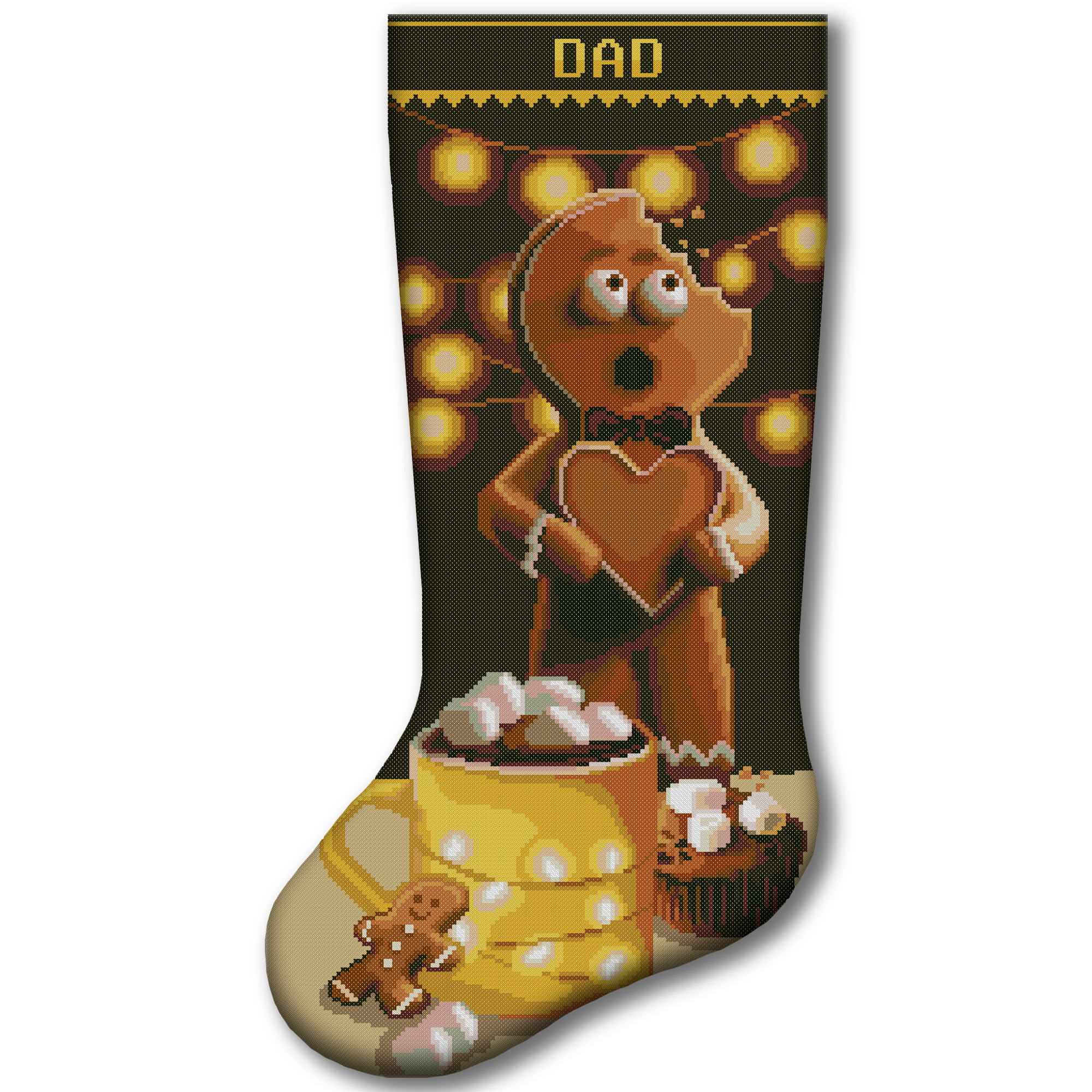
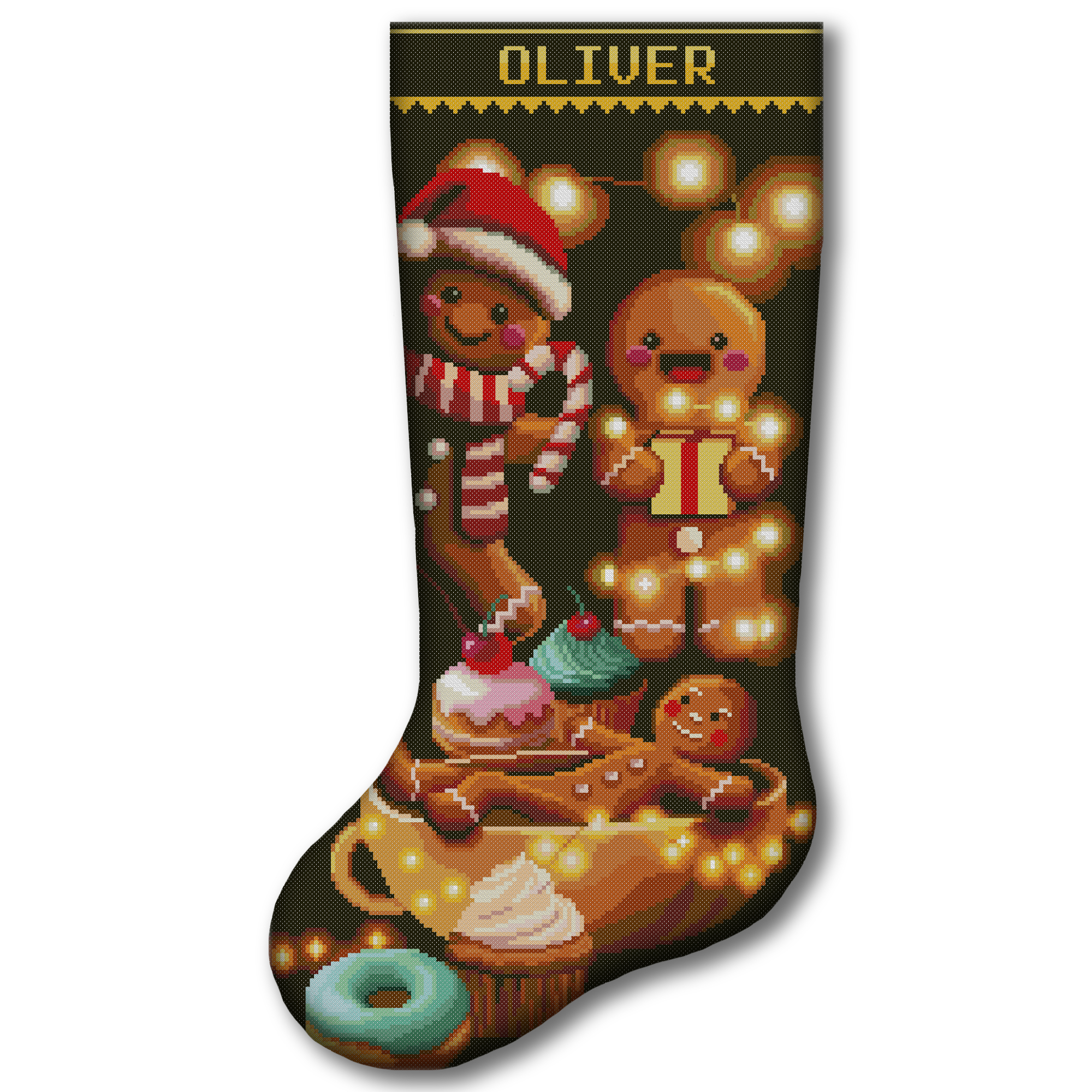
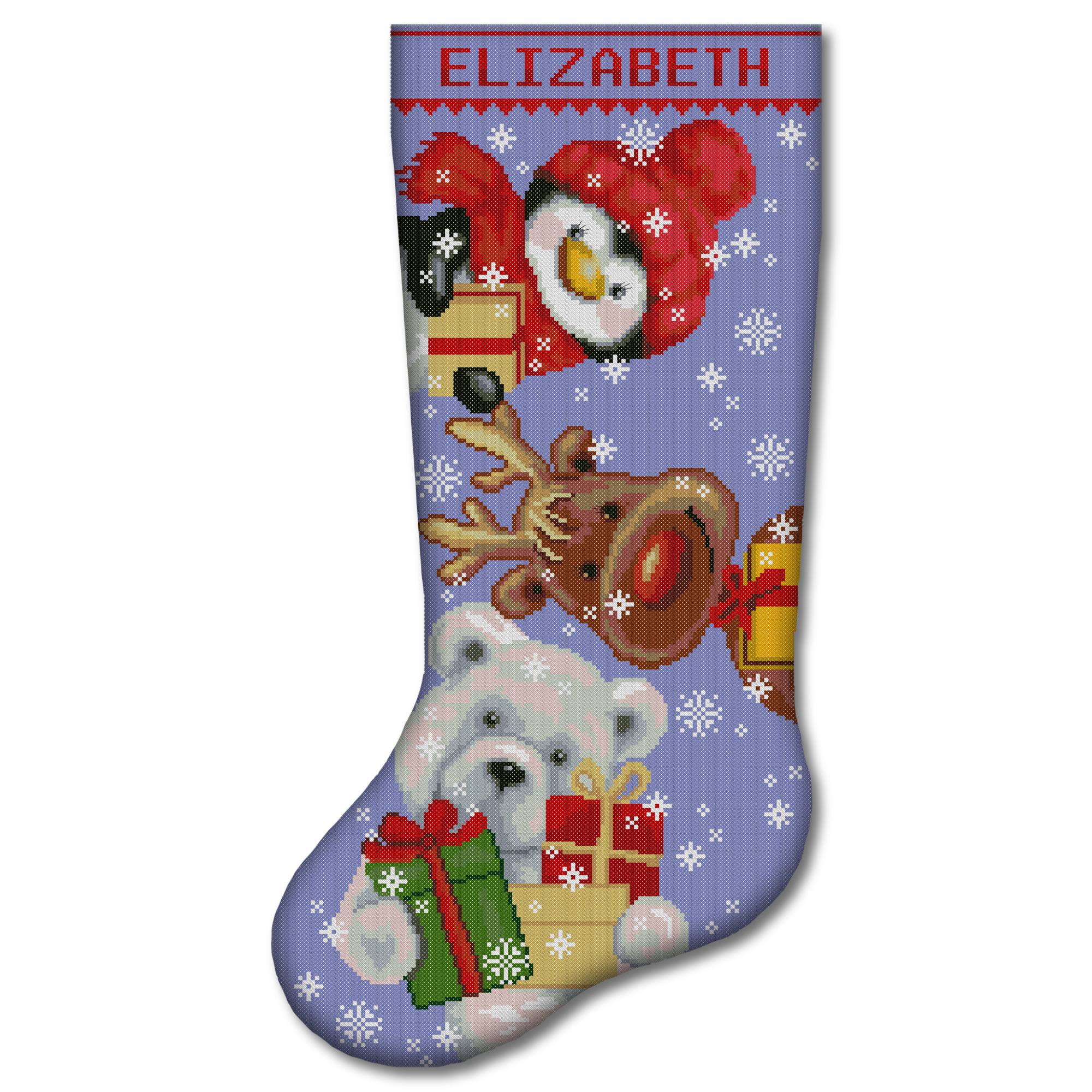
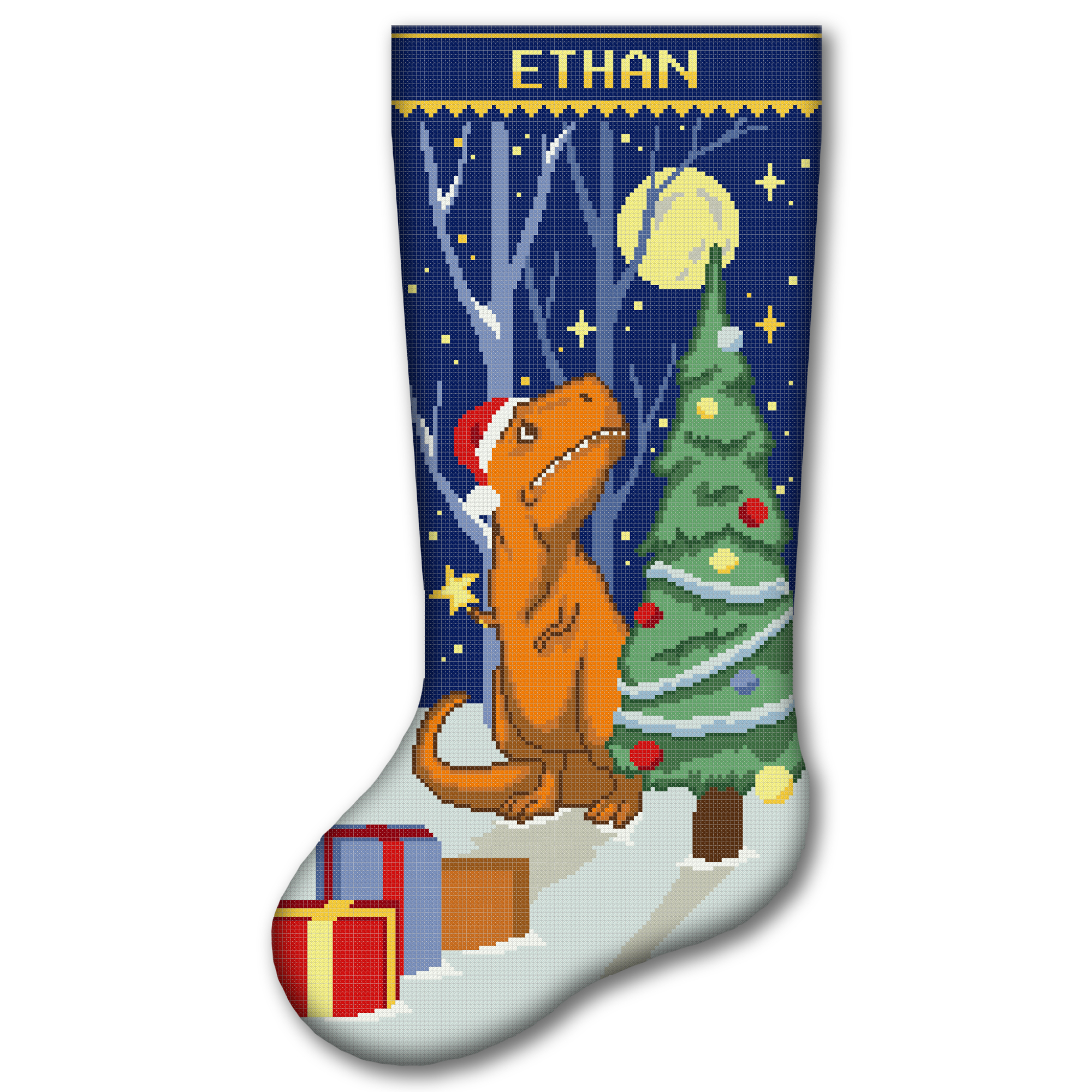
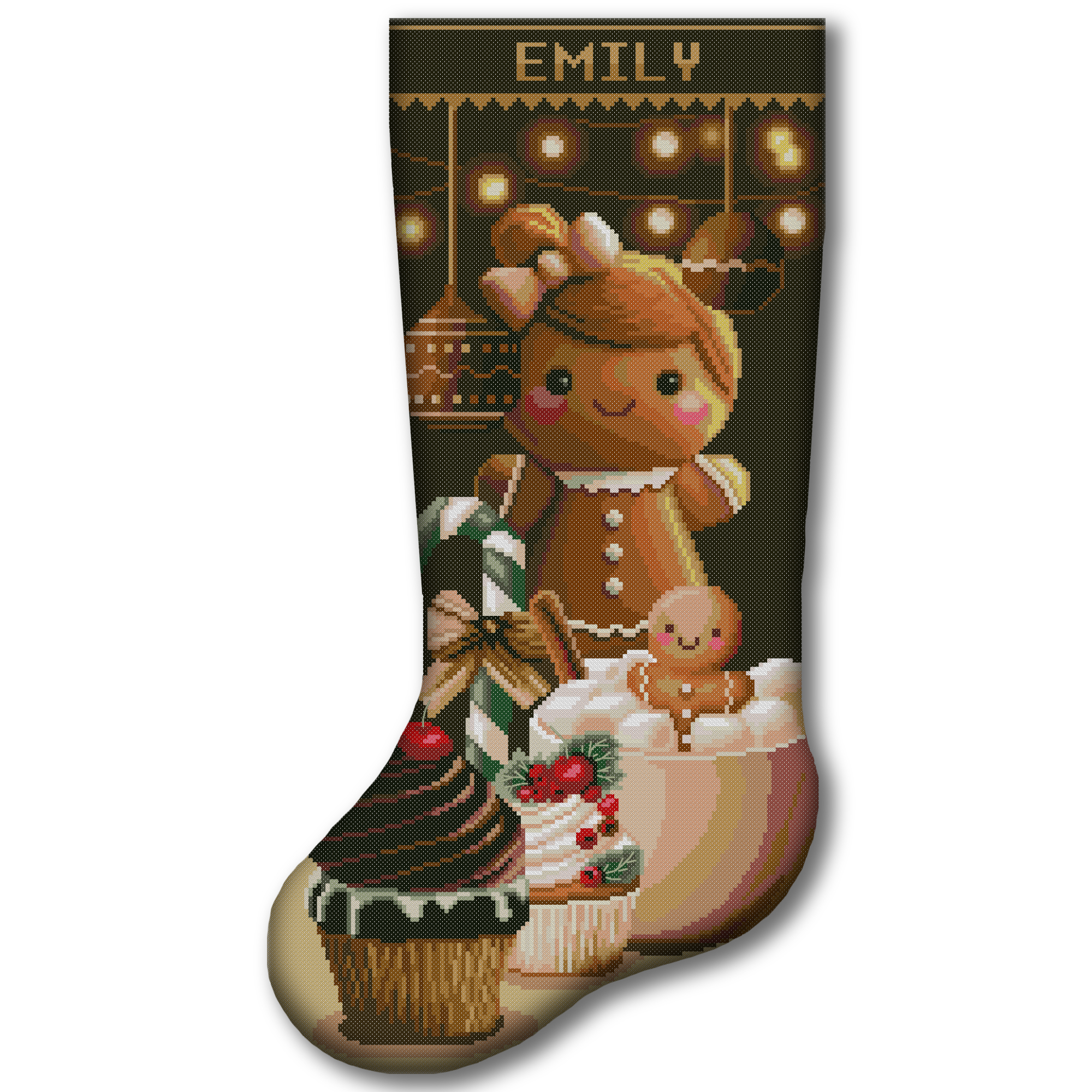
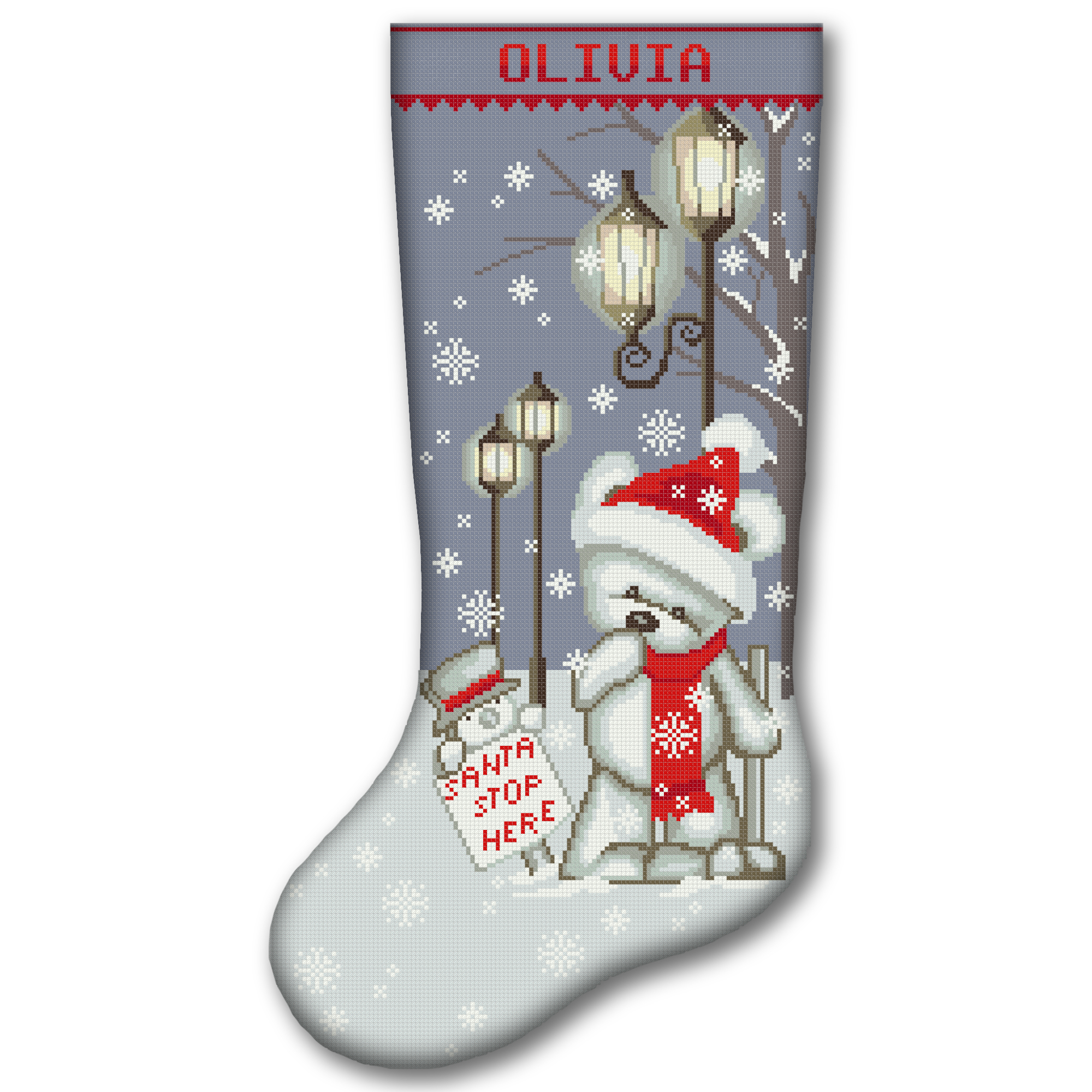
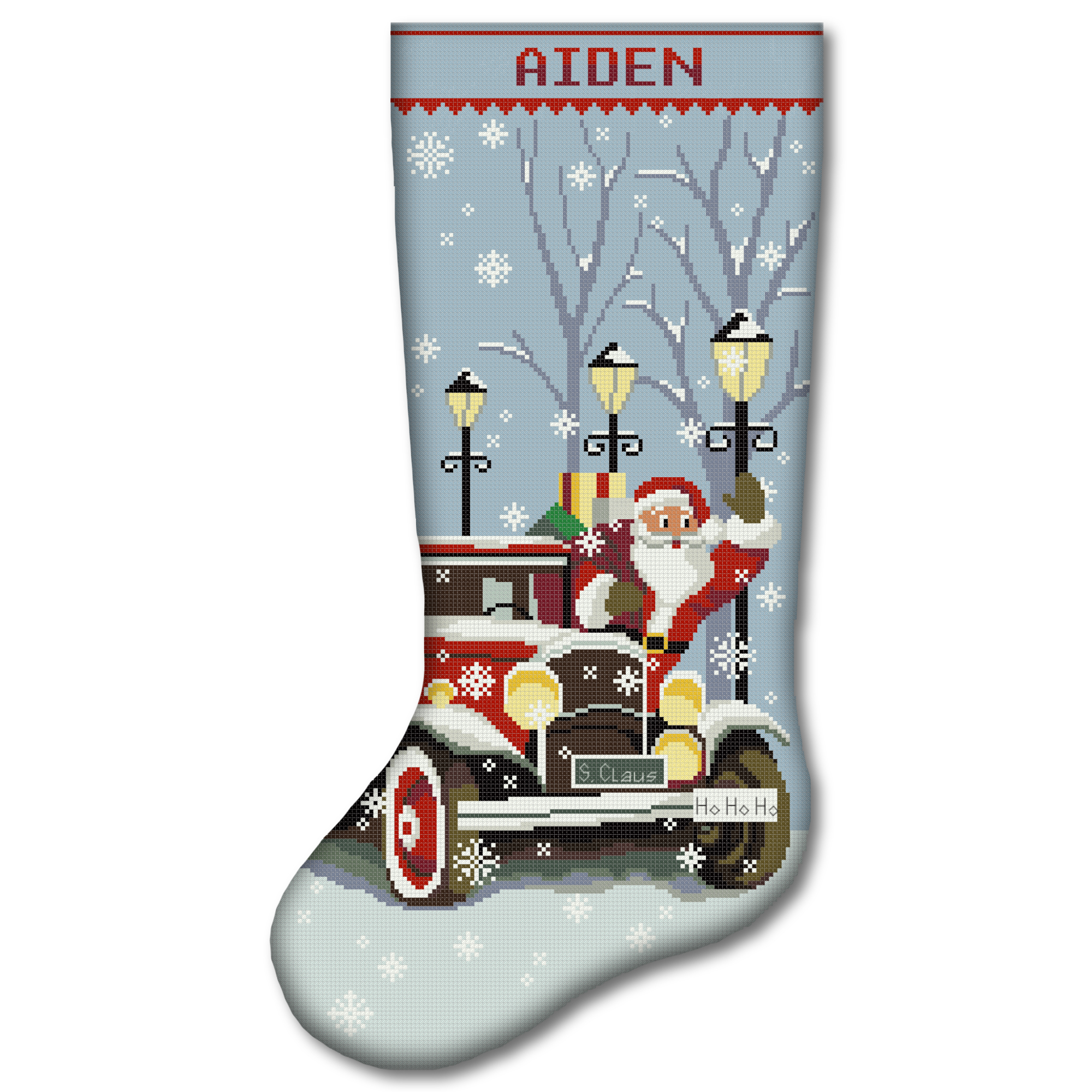
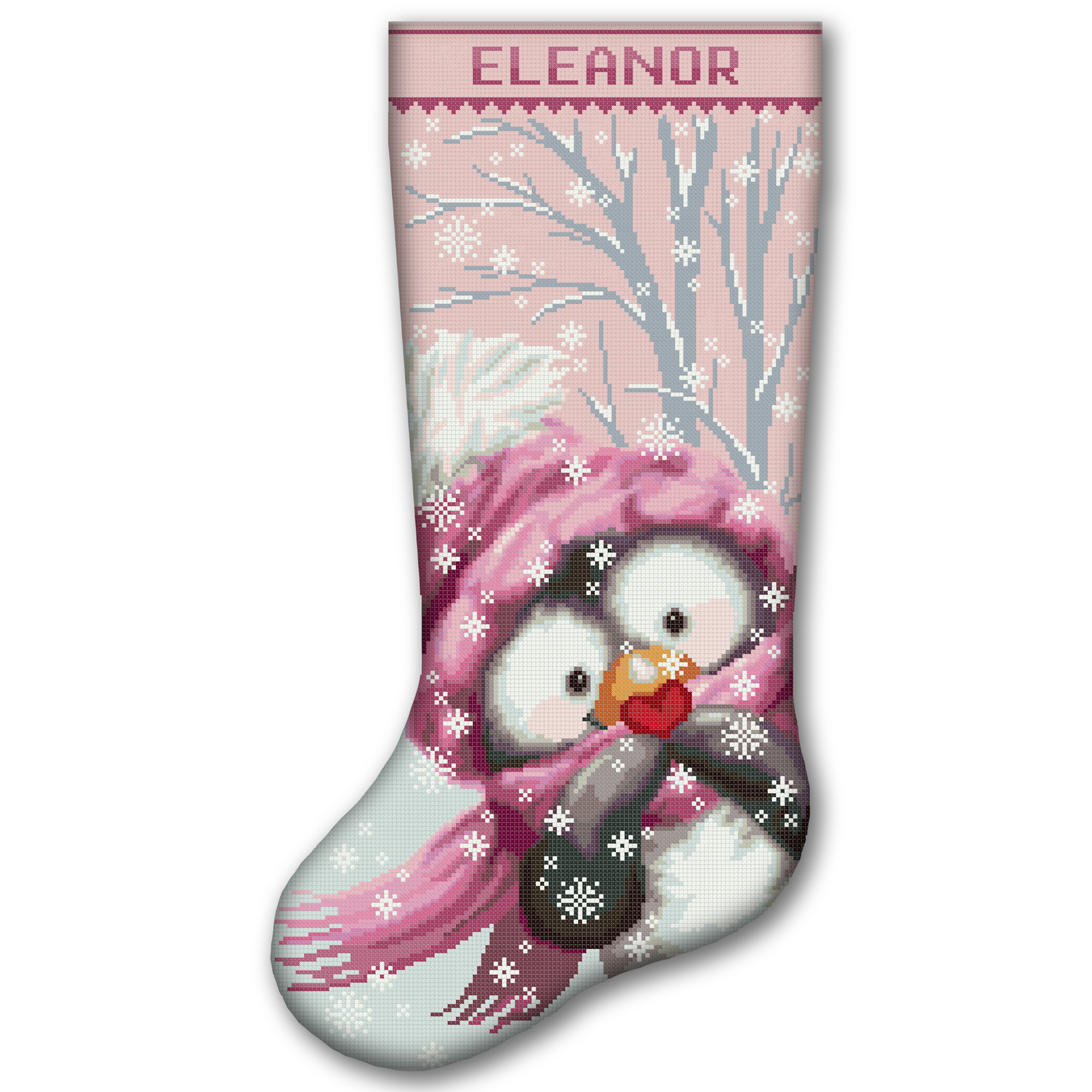
Most CrossStitchStyleArte digital stocking patterns are designed for 14-count Aida. If you replace it with 28-count evenweave stitched over two, the stitched design should remain approximately the same size. However, you must still add the correct seam allowance and make sure the replacement fabric is suitable for sewing and finishing.
Always read the pattern information before changing fabric.
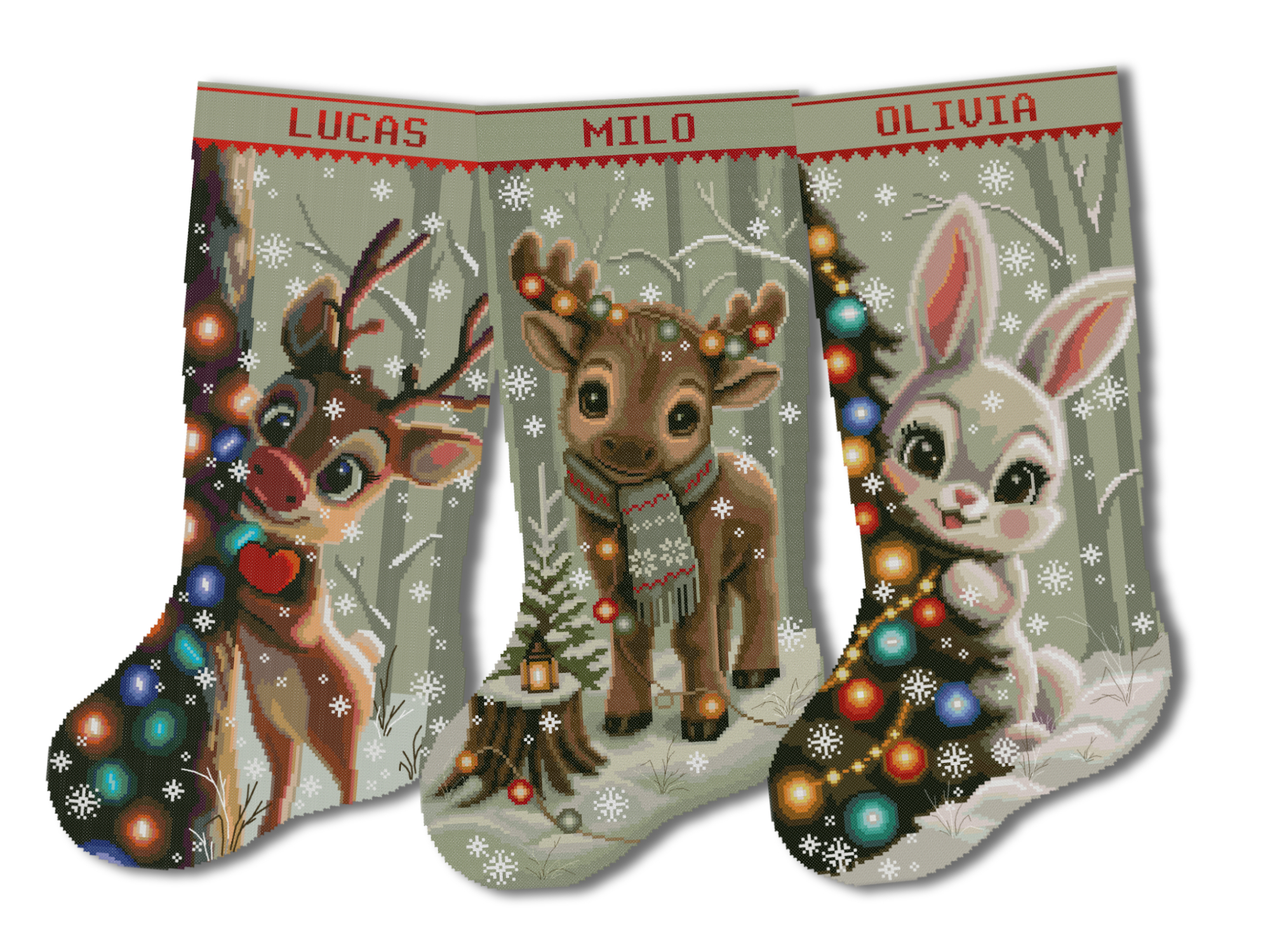
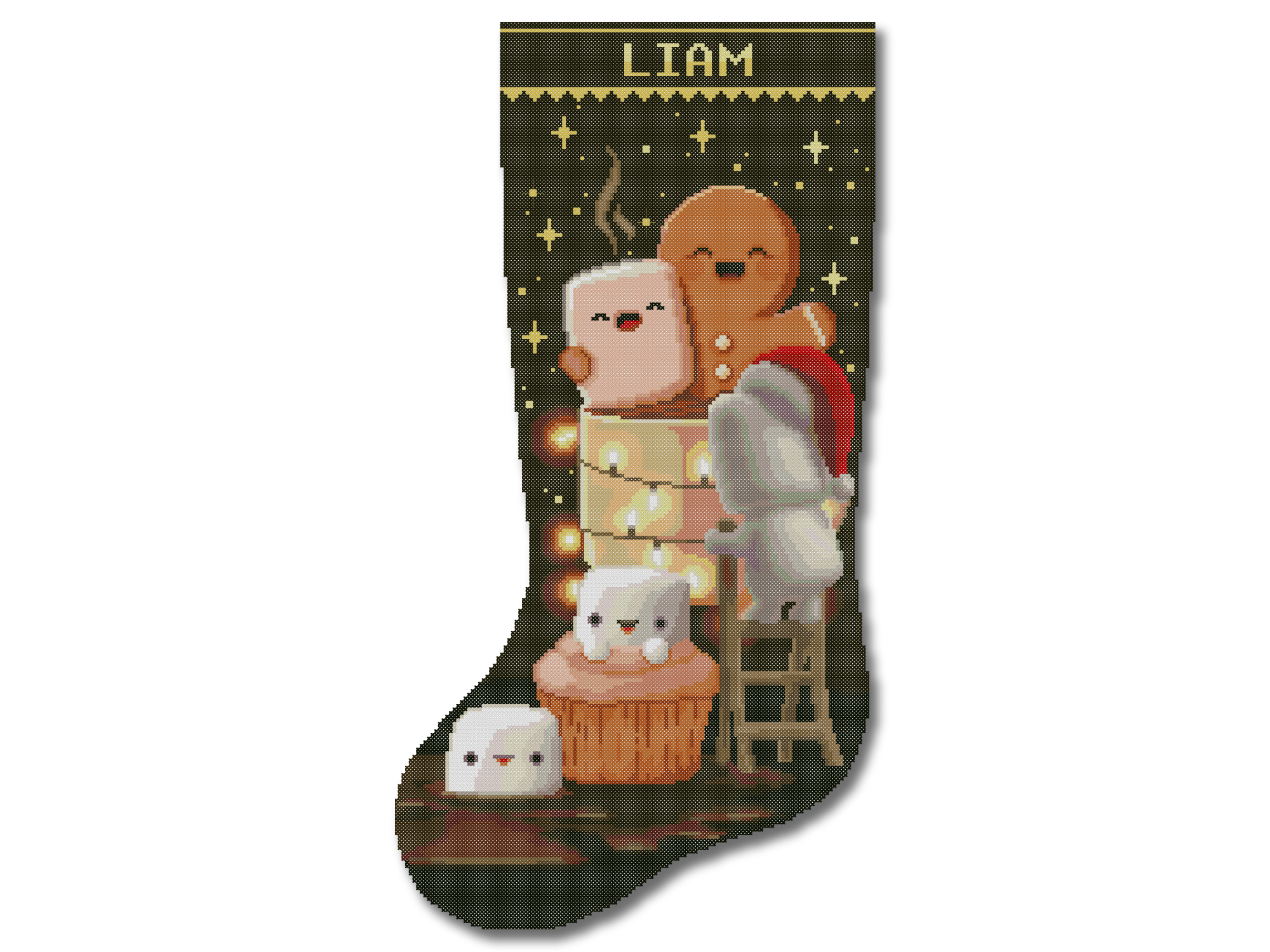
If you want to choose your own fabric and floss, explore our personalized Christmas stocking cross stitch patterns.
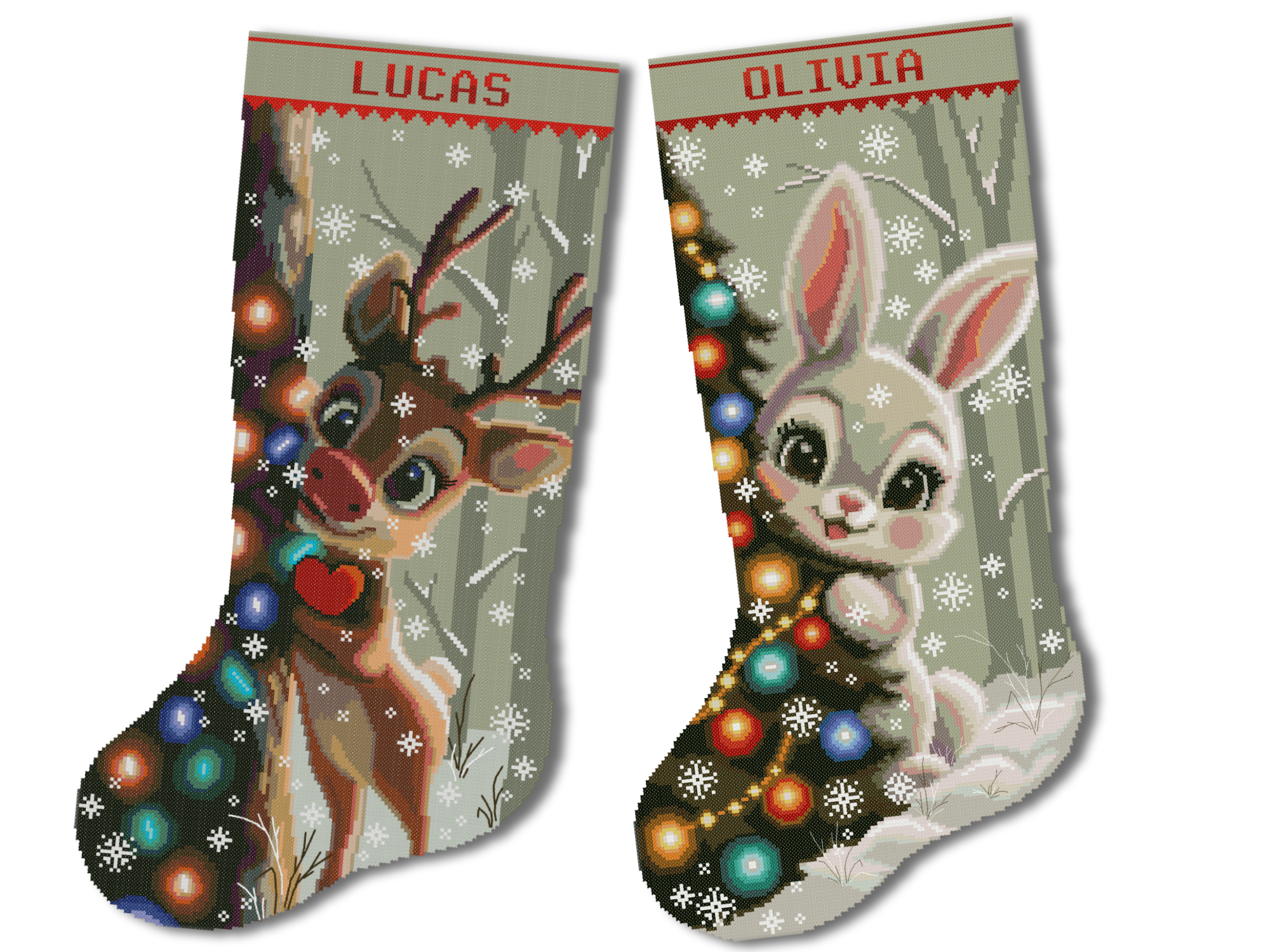
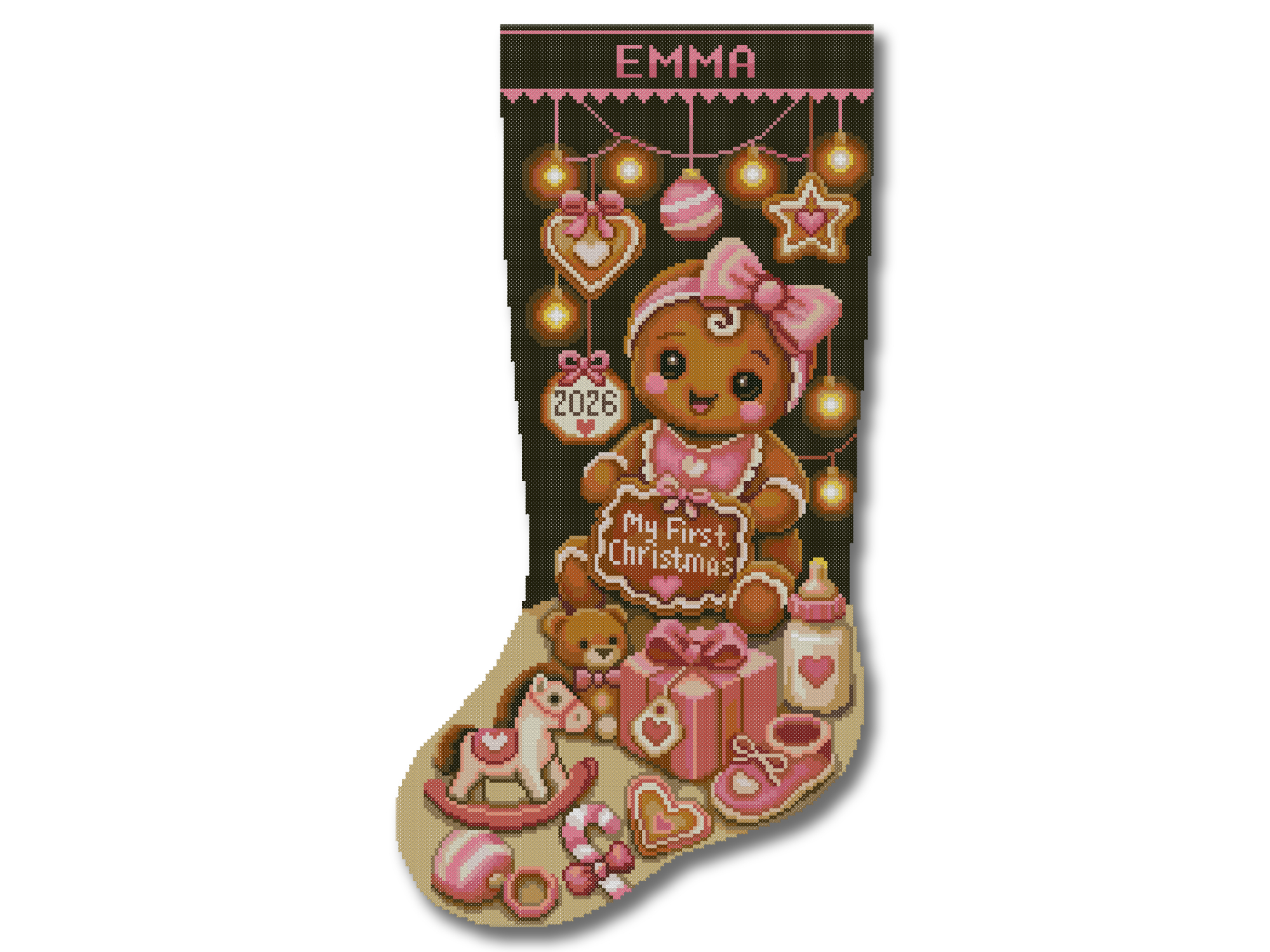

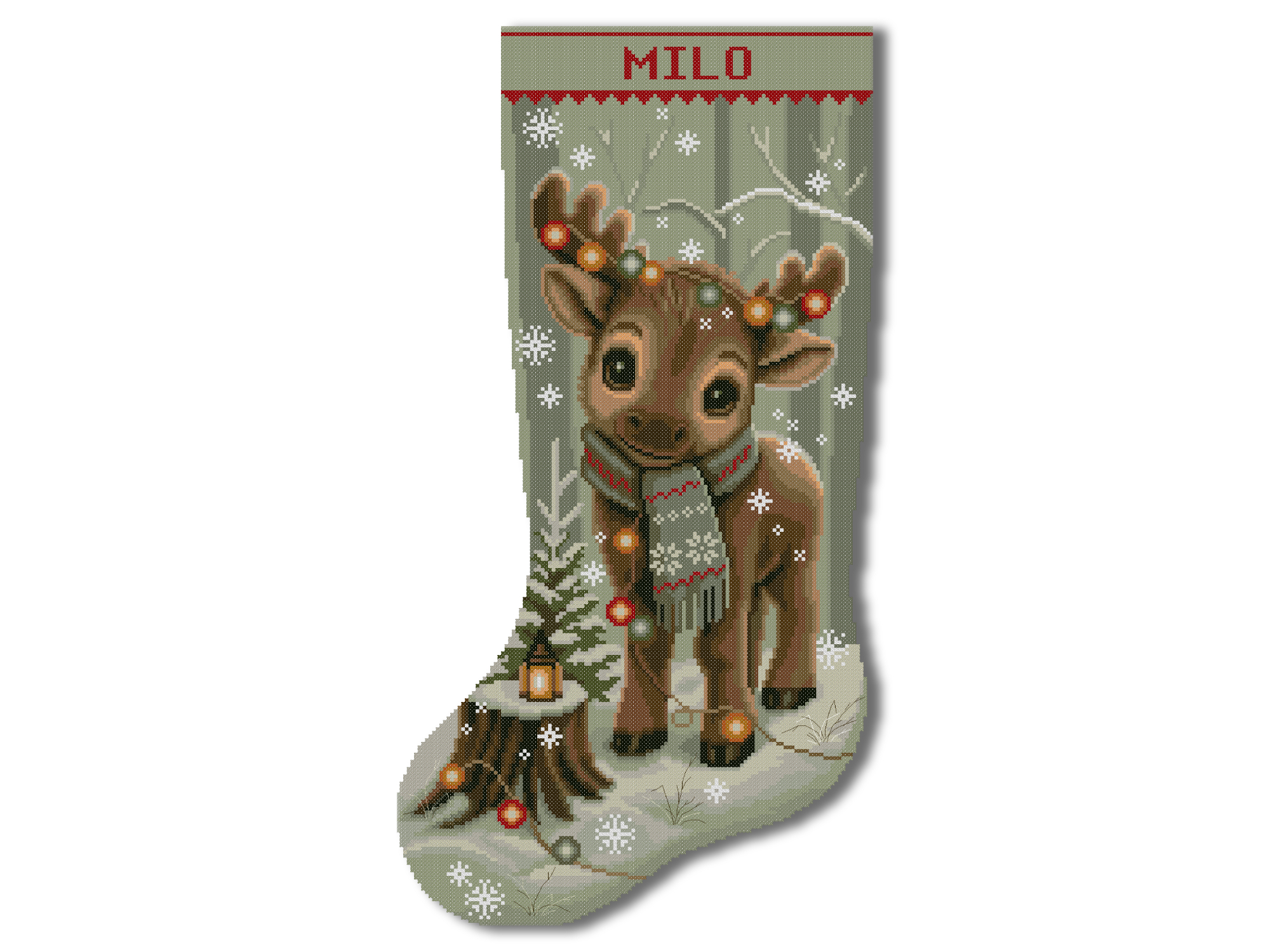
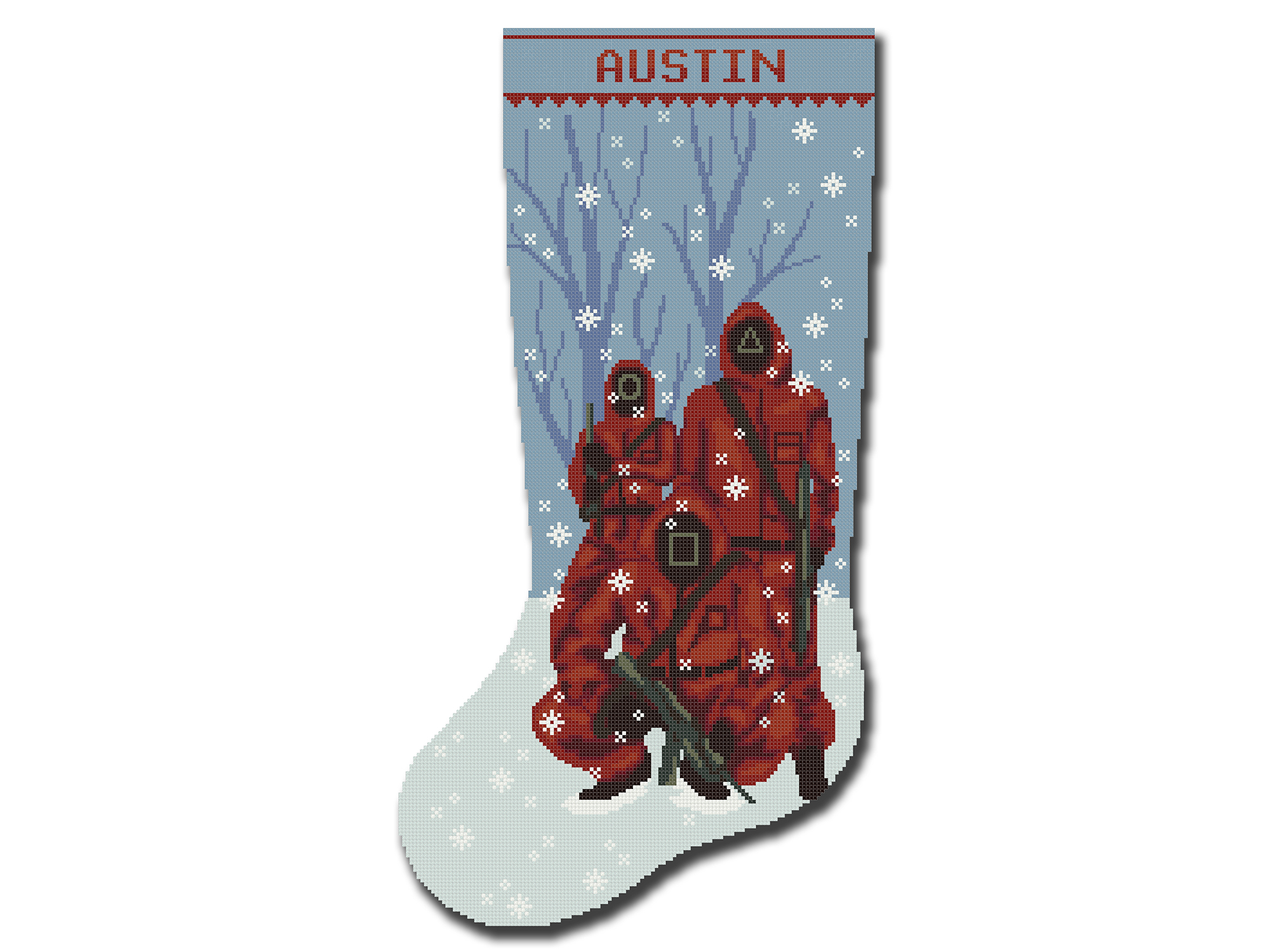


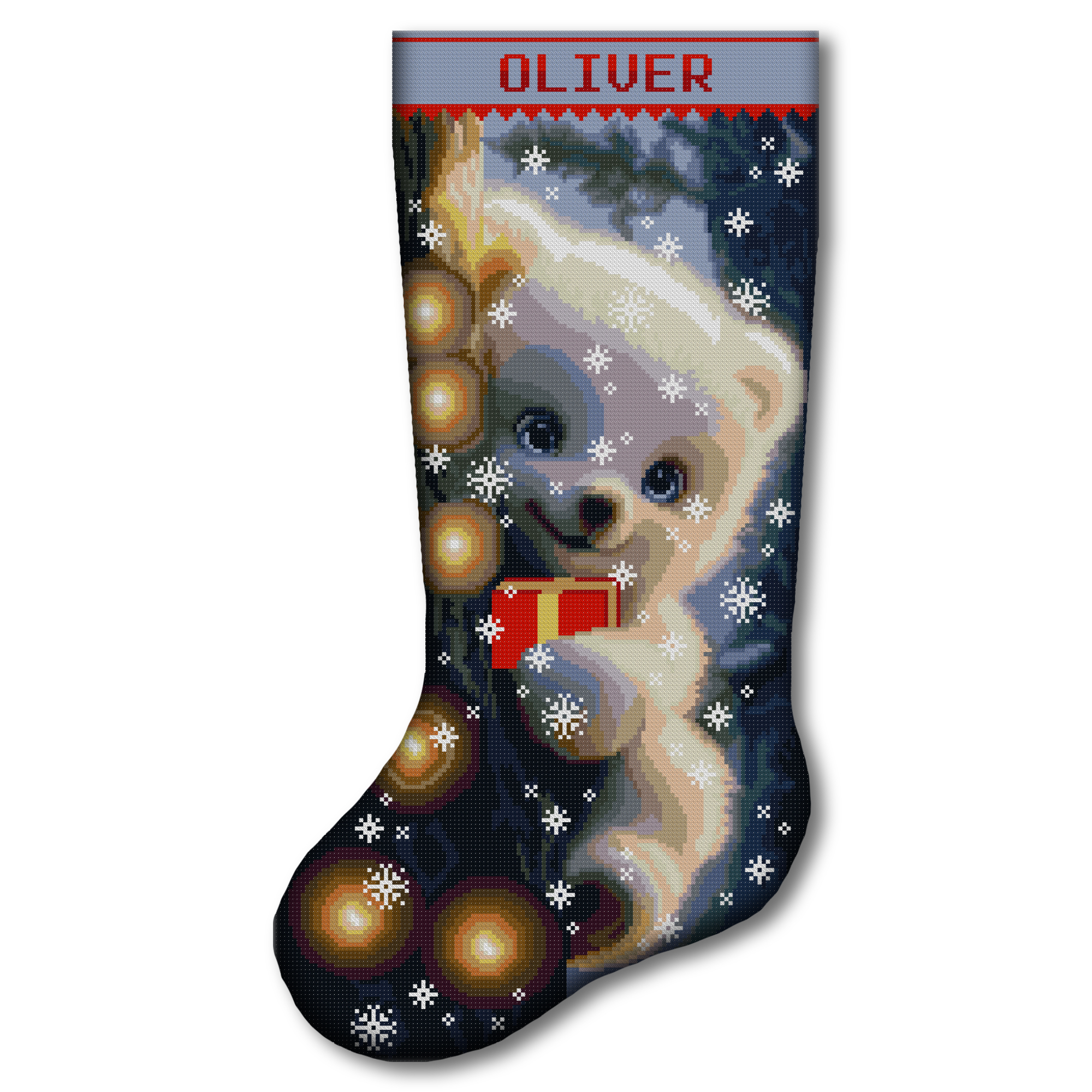
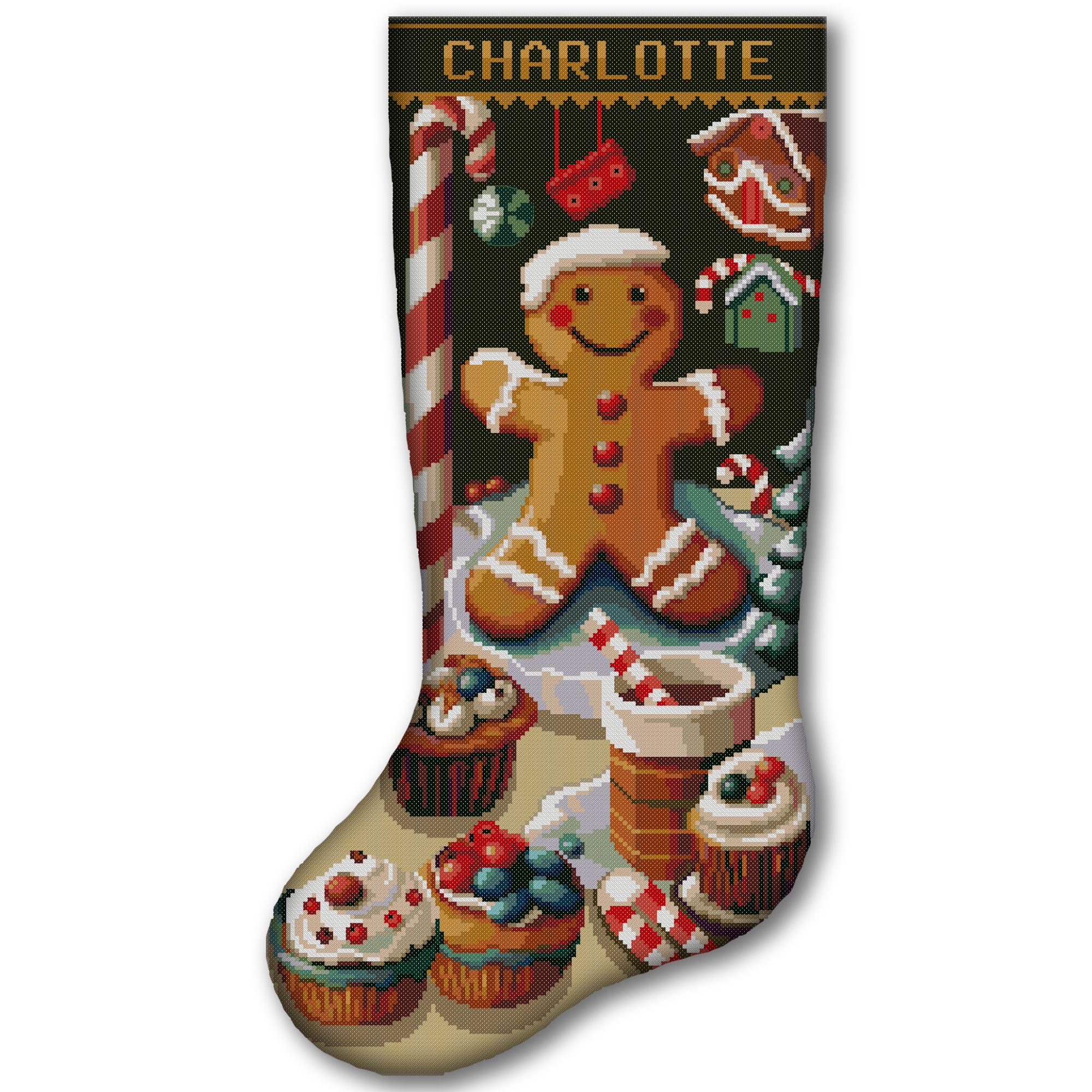
If you prefer to receive the fabric, threads, needles and instructions together, browse our stamped Christmas stocking cross stitch kits.
Fractional Stitches on Aida and Evenweave
Fractional stitches include quarter stitches, three-quarter stitches and half stitches.
They are often used to create:
- smoother curves;
- facial features;
- small details;
- rounded shapes;
- softer edges.
On evenweave, more fabric intersections are available, so fractional stitches are usually easier to position.
On Aida, a fractional stitch may require the needle to pierce the centre of a fabric block. Use a sharp embroidery needle only when necessary and follow the chart carefully.
Do not choose evenweave only because your pattern contains a few fractional stitches. Aida can still work. The difference is mainly convenience and stitch placement.
Backstitch on Aida and Evenweave
Backstitch creates outlines, letters, faces and fine decorative details.
Aida works very well for backstitch that follows the main grid holes. Evenweave offers more placement points, which can make curves and short diagonal lines appear smoother.
Always follow the backstitch lines shown on your pattern rather than guessing where they should go.
If you have never used this stitch, follow our step-by-step backstitch guide.
How Many Strands of Floss Should You Use?
The correct number of strands depends on:
- the effective fabric count;
- the thread brand;
- the desired coverage;
- the pattern instructions;
- your personal stitching tension.
Two strands of six-strand embroidery floss are common on 14-count Aida and 28-count evenweave stitched over two. However, this is not a universal rule.
Always check the pattern key first. Our complete guide to floss strands and Aida counts provides additional examples.
Does Fabric Colour Matter?
Yes. Fabric colour changes both the appearance of the design and the stitching experience.
Light-coloured fabric usually makes the holes easier to see. Dark fabric can create dramatic contrast, but it may require stronger lighting or a light-coloured surface behind the work.
Before starting:
- Place several floss colours on the fabric.
- Check them in natural and artificial light.
- Make sure pale colours do not disappear into the background.
- Test a small section if you are unsure about coverage.
If you want to use black Aida or evenweave, read our guide on how to cross stitch on black fabric.
Is Linen the Same as Evenweave?
The terms are sometimes used together, but they should not automatically be treated as identical.
Commercial evenweave fabric is designed to have very regular thread spacing. Linen is made from flax fibres and may have small natural variations or thicker sections called slubs.
Both fabrics can be stitched over one or over two threads, but linen can require more careful counting. Check the product description instead of relying only on the fabric count.
Common Mistakes When Choosing Cross Stitch Fabric
Comparing Only the Number on the Label
Fourteen-count Aida and 28-count evenweave sound completely different, but 28-count evenweave stitched over two produces the same effective stitch count.
Always consider both the fabric count and the stitching method.
Forgetting the Fabric Margin
Do not cut fabric to the exact dimensions of the stitched design. You need extra fabric for a hoop, frame, seam or other finishing method.
Changing Fabric Without Recalculating the Size
A different effective count changes the finished dimensions. Calculate the new size before purchasing or cutting fabric.
Assuming Aida Is Only for Beginners
Aida is also suitable for experienced stitchers and complex designs. Choose it because it works for your project—not because of an arbitrary skill label.
Assuming Evenweave Always Produces a Better Result
Evenweave creates a different appearance, not automatically a better one. Poor counting or uneven tension can still affect the finished work.
Ignoring the Pattern Instructions
The designer may have selected a specific count because of the finished size, floss coverage, fractional stitches or finishing method. Check the pattern details before making substitutions.
How to Choose Between Aida and Evenweave
Ask yourself these five questions:
- Is this my first counted cross stitch project?
If yes, start with 14-count Aida unless the pattern recommends something else. - Does the pattern include many fractional stitches?
Evenweave may make them easier to place. - Do I want a structured or smooth background?
Choose Aida for visible square structure and evenweave for a smoother appearance. - What finished size do I need?
Compare the effective stitch count and calculate the dimensions before cutting. - Will much of the fabric remain visible?
If the background is an important part of the design, the fabric’s texture and colour deserve extra attention.
Frequently Asked Questions
Is Aida or evenweave better for cross stitch?
Neither is always better. Aida is usually easier to count, while evenweave offers more flexible stitch placement and a smoother background. Choose according to the pattern and your preferred stitching experience.
Is evenweave difficult for beginners?
It is more demanding than Aida because you count individual fabric threads. However, a beginner can practise successfully on 28-count evenweave stitched over two.
Is 28-count evenweave the same as 14-count Aida?
It creates the same effective stitch size when worked over two fabric threads. Both methods produce approximately 14 cross stitches per inch.
Can I use an Aida pattern on evenweave?
Usually, yes. A counted cross stitch chart is based on stitches rather than a particular fabric. You must choose the correct over-one or over-two method and recalculate the finished dimensions.
Can I use evenweave for a Christmas stocking?
Yes. Twenty-eight-count evenweave stitched over two can replace 14-count Aida without substantially changing the stitched dimensions. Remember to add fabric for seams and finishing.
Does evenweave use more floss than Aida?
Not necessarily. If the effective stitch size and number of strands are the same, thread usage should be similar. Stitching over one produces much smaller stitches and may change coverage requirements.
Can I backstitch on Aida?
Yes. Aida is suitable for backstitch. Curves or fractional positions may sometimes require you to pierce the centre of a fabric block.
Start Your Next Cross Stitch Project with Confidence
Choose Aida when you want clearly visible squares and straightforward counting. Choose evenweave when you want a smoother background or more freedom when placing small details.
Whichever fabric you select, check the pattern instructions, calculate the finished dimensions and leave enough material for finishing before making the first stitch.
Need more help preparing your project? Explore our best cross stitch materials and tools or choose a design from our collection of personalized Christmas stocking cross stitch patterns.
The right fabric will not do the stitching for you—but it can make every stitch easier, clearer and more enjoyable.