Starting cross stitch does not require a large box of expensive tools. You only need a pattern, suitable fabric, embroidery floss, a tapestry needle and small scissors. A hoop or frame can make stitching more comfortable, but it is not compulsory.
This beginner-friendly guide explains what every cross stitch material does, what you should buy first and which accessories can wait. It will help you prepare your first project without confusion or unnecessary spending.
What Supplies Do You Need for Cross Stitch?
The five essential cross stitch supplies are:
- A cross stitch pattern or complete kit
- Evenly woven fabric, usually Aida
- Six-strand embroidery floss
- A blunt tapestry needle
- Small, sharp embroidery scissors
A hoop, frame, thread organiser and good lamp are useful, but you can begin without them.
| Supply | What it does | Simple beginner choice |
|---|---|---|
| Pattern or kit | Shows where every stitch belongs | Small design or beginner kit |
| Fabric | Holds the stitches | 14-count Aida |
| Embroidery floss | Creates the coloured stitches | Six-strand cotton floss |
| Needle | Carries the floss through the fabric | Size 24 tapestry needle |
| Scissors | Cut the floss neatly | Small embroidery scissors |
| Hoop or frame | Holds the fabric while you work | 5–7 inch hoop |
If this is your first project, read our complete how to cross stitch for beginners guide before you begin.
Should You Buy a Cross Stitch Kit or a Digital Pattern?
Before buying individual supplies, decide whether you want a complete physical kit or a downloadable PDF pattern.
| Physical cross stitch kit | Digital cross stitch pattern |
|---|---|
| Contains the main materials needed for the project | Contains instructions and charts but no physical supplies |
| Reduces the number of buying decisions | Allows you to choose your own fabric and floss |
| Convenient for a first project | Good for stitchers who already own supplies |
| May include stamped or blank fabric | Usually intended for counted cross stitch |
| Delivered as a physical product | Available as a digital download |
Choose a complete kit if you want the easiest way to start and prefer to receive the main materials together.
Choose a digital pattern if you already have supplies or want to select your own fabric count, fabric colour and floss brand.
You can explore:
- beginner-friendly cross stitch kits;
- 2-in-1 stamped and counted cross stitch kits;
- stamped Christmas stocking kits;
- downloadable cross stitch patterns.
Always read the individual product description before ordering. It will tell you exactly what the kit includes and whether you need to buy anything separately.
Essential Cross Stitch Materials and Tools
1. A Cross Stitch Pattern
A cross stitch pattern is a grid filled with symbols. Each square usually represents one stitch, and each symbol represents a floss colour.
A beginner-friendly pattern should have:
- clear, easy-to-read symbols;
- a complete colour key;
- the finished stitch count;
- the recommended fabric count;
- the expected finished size;
- simple stitching instructions;
- no more special stitches than you are ready to learn.
A small pattern with large areas of the same colour is usually easier than a very detailed design with frequent colour changes.
If charts and symbols look confusing, use our guide to reading a cross stitch pattern.
2. Cross Stitch Fabric
Cross stitch is usually worked on evenly woven fabric. Its regularly spaced holes create a grid that helps you place each stitch correctly.
Is Aida Good for Beginners?
Yes. Aida is usually the easiest cross stitch fabric for a beginner because its holes are clearly visible.
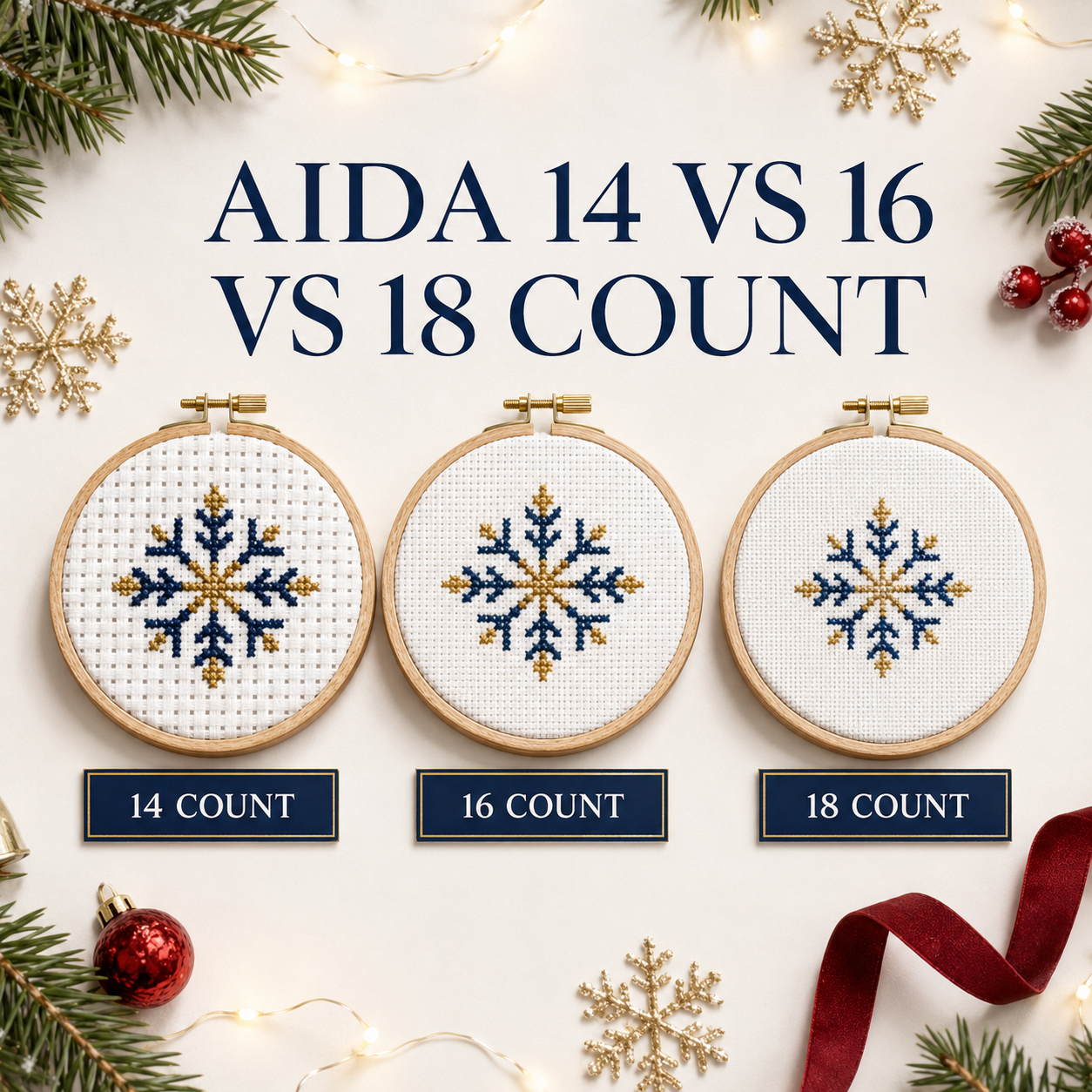
The fabric count tells you how many squares or stitches fit into one inch of fabric.
| Fabric count | What it means | Beginner suitability |
|---|---|---|
| 11-count Aida | 11 stitches per inch | Large holes and a larger finished design |
| 14-count Aida | 14 stitches per inch | The most practical starting choice for many beginners |
| 16-count Aida | 16 stitches per inch | Smaller stitches and a slightly more detailed result |
| 18-count Aida | 18 stitches per inch | Smaller holes that may be harder to see |
For a first counted cross stitch project, 14-count Aida is a simple and versatile choice.
Remember that fabric count changes the finished size. The same pattern will be larger on 11-count Aida and smaller on 18-count Aida.
Do not buy a piece of fabric that is exactly the same size as the stitched design. You need additional fabric around all four sides for holding, framing and finishing.
Use our free cross stitch fabric calculator to calculate the fabric size before cutting or ordering.
3. Embroidery Floss
Most cross stitch designs use six-strand cotton embroidery floss. One length of floss contains six thin strands twisted together.
You usually separate the required number of strands before threading the needle.
For example, a pattern may ask you to stitch with:
- two strands for full cross stitches;
- one strand for backstitch;
- a different number of strands for special effects.
Two strands are common on 14-count Aida, but this is not a universal rule. Always check the pattern instructions.
Our guide to choosing the number of floss strands explains how fabric count and desired coverage affect this decision.
How Much Floss Should You Buy?
Check the pattern’s colour key first. It should list the required floss colours and may also estimate the number of skeins.
The amount of floss depends on:
- the number of stitches;
- the fabric count;
- the number of strands used;
- thread tails and starting methods;
- mistakes and restitching;
- whether the design contains half stitches or backstitch.
Use the free cross stitch thread calculator when planning a complete project.
If you want to check whether the floss already in your collection is enough for one colour, use the floss usage calculator.
Do not mix floss brands or substitute colours without checking them carefully. Colour numbers are not universal. If your preferred brand is unavailable, use the cross stitch floss converter to find a close alternative.
4. A Blunt Tapestry Needle
Cross stitch is normally worked with a tapestry needle. This needle has:
- a blunt tip;
- a large eye for embroidery floss;
- a smooth surface that passes easily through the fabric.
The blunt tip helps the needle enter an existing hole instead of splitting the fabric threads.
| Fabric | Common tapestry needle size |
|---|---|
| 11-count Aida | Size 22 |
| 14-count Aida | Size 24 |
| 16-count Aida | Size 26 |
| 18-count Aida | Size 26 or 28 |
These sizes are useful starting points, not strict rules. Choose a needle that passes comfortably through the fabric without stretching the holes.
Replace a needle if it:
- becomes bent;
- develops rust;
- has a rough eye that damages the floss;
- feels uncomfortable to hold;
- leaves unusually large holes in the fabric.
5. Small Embroidery Scissors
Small, sharp scissors make it easier to cut floss cleanly and trim thread ends.
Use embroidery scissors only for thread. Do not use the same small scissors to cut paper, cardboard or large pieces of fabric because this may make the blades dull.
You do not need an expensive pair for your first project. Look for:
- sharp blades;
- comfortable handles;
- a protective cover;
- a size that fits safely in your project bag.
Never cut a thread extremely close to the front of your finished stitches.
6. A Hoop or Frame
A hoop or frame can hold the fabric while you stitch. It may help you keep the fabric steady and see the holes more clearly.
Common options include:
- wooden embroidery hoops;
- plastic hoops;
- snap frames;
- scroll frames;
- tabletop or floor stands.
A simple 5–7 inch hoop is enough for many beginner projects. It should hold the fabric securely without sharp edges or rough wood that could damage it.
The fabric should be comfortably firm, but it does not need to be stretched as tightly as a drum.
A hoop is helpful, not compulsory. Some stitchers prefer to hold the fabric in their hands. Try both methods and use the one that feels most comfortable.
Remove or loosen the hoop when you stop stitching for a long time, especially if it sits over completed stitches.
Helpful Cross Stitch Tools That Are Optional
The following accessories can make stitching more comfortable, but you do not need to buy all of them before your first project.
Thread Organiser or Floss Bobbins
A thread organiser keeps colours separated and easy to identify.
You can use:
- labelled cardboard bobbins;
- plastic bobbins;
- floss drops;
- project cards with numbered holes;
- small labelled bags.
Always write the floss number on the organiser. Two similar colours can be difficult to identify after their labels are removed.
Needle Minder
A needle minder is a small magnetic accessory that holds your needle when you are not using it. It helps prevent lost needles in sofas, carpets and project bags.
Keep strong magnets away from small children, pets and sensitive electronic or medical devices.
Needle Threader
A needle threader helps pull floss through the needle’s eye. It can be useful for children, beginners or anyone who finds threading difficult.
Choose one that fits the eye of your tapestry needle. Do not force a thick threader through a small eye.
Good Lighting
Good lighting makes fabric holes and chart symbols easier to see. It may also help you notice mistakes earlier.
A basic desk lamp may be enough. Position the light so that your hand does not cast a shadow over the stitching area.
A magnifying lamp can be useful for small fabric counts or limited vision, but most beginners do not need one for 14-count Aida.
Washable Fabric Marker or Gridding Thread
Some stitchers mark a grid on blank fabric to make large counted patterns easier to follow.
Only use a marker specifically designed for fabric, and test it on a spare corner first. Never use a permanent pen, pencil or ordinary highlighter on your project.
Follow the marker manufacturer’s washing instructions. Do not add or remove markings from stamped fabric unless the kit instructions say it is safe.
Project Bag and Storage Box
A simple zip bag can protect a work in progress from dust, moisture and pets.
A storage box can hold:
- floss;
- needles;
- scissors;
- fabric;
- charts;
- finished small projects.
Keep needles in a secure container and count them before and after stitching, especially when children or pets are nearby.
Stitching Stand
A stand holds the hoop or frame so that both hands are free. It can be helpful for large projects or long stitching sessions.
A stand is not essential for a beginner. Try a simple hoop first before investing in a floor or tabletop stand.
Cross Stitch Supplies You Do Not Need to Buy Yet
It is easy to spend too much money before completing your first design.
A new stitcher usually does not need:
- every available floss colour;
- several different hoop sizes;
- an expensive floor stand;
- a large magnifying lamp;
- a professional storage cabinet;
- specialty linen;
- metallic and decorative threads;
- many types of scissors;
- complicated finishing equipment.
Start with one manageable project. After you have stitched for a while, you will understand which tools genuinely make the hobby easier for you.
How to Recognise Good Cross Stitch Supplies
Expensive does not always mean better. Look for materials that work reliably and feel comfortable.
Good Fabric
Good cross stitch fabric should have:
- evenly spaced holes;
- a consistent weave;
- no unexplained stains;
- enough fabric around the design;
- a count suitable for the pattern.
Good Embroidery Floss
Good floss should:
- separate into strands without excessive fraying;
- pass smoothly through the fabric;
- match the colour required by the pattern;
- remain consistent throughout the skein.
If you plan to wash the finished work, check whether the floss is colourfast.
A Good Needle
A suitable needle should:
- pass through the fabric without force;
- have a smooth eye;
- hold the required number of strands;
- feel comfortable in your hand;
- avoid leaving large visible holes.
A Good Hoop
A hoop should:
- close securely;
- have no sharp or rough edges;
- hold the fabric evenly;
- be comfortable to grip;
- allow easy tension adjustment.
A Simple Beginner Cross Stitch Setup
If you want the easiest possible start, prepare:
- one small pattern or complete kit;
- 14-count Aida;
- the required floss colours;
- one size 24 tapestry needle;
- small embroidery scissors;
- one 5–7 inch hoop;
- a simple thread organiser;
- a bright working light;
- a secure bag for the project.
If you buy a kit, check its contents before purchasing extra supplies. Fabric, floss and needles may already be included.
If you buy a digital pattern, you will normally need to supply all physical materials yourself.
Cross Stitch Supplies Checklist
Use this checklist before starting your project.
Essential
- Cross stitch pattern or kit
- Correct fabric type and count
- Enough fabric for the design and finishing margin
- Required floss colours
- Correct number of floss strands
- Tapestry needle
- Small embroidery scissors
Helpful but Optional
- Hoop or frame
- Thread organiser
- Needle minder
- Needle threader
- Good lamp
- Washable marker or gridding thread
- Project bag
- Storage box
- Magnifier or stitching stand
Common Beginner Supply Mistakes
Buying Fabric That Is Too Small
The stitched area is not the same as the fabric cutting size. Always add a finishing margin around the design.
Using All Six Floss Strands
Embroidery floss usually contains six separable strands. Most patterns use only part of the bundle at one time.
Using a Sharp Sewing Needle
A sharp needle can split fabric threads. A blunt tapestry needle is usually better for Aida.
Ignoring the Pattern Key
Do not guess the fabric count, floss colours or number of strands. Check the pattern instructions first.
Buying Too Many Accessories
A beautiful project does not depend on owning every available tool. Begin with the essentials and add accessories only when you understand what you need.
Washing Stamped Fabric Too Early
Do not wash stamped fabric before finishing the design unless the manufacturer specifically instructs you to do so. The printed symbols may disappear.
Choosing a First Project That Is Too Difficult
A very large design with many colours, fractional stitches and metallic floss may feel overwhelming. Start with clear symbols, larger fabric holes and a manageable design.
Cross Stitch Supplies for Children
Cross stitch can be a rewarding craft for older children who can count, follow a simple chart and work carefully.
For a child’s first project, choose:
- 11-count or 14-count Aida;
- a small design;
- a blunt tapestry needle;
- clearly separated floss colours;
- short stitching sessions;
- simple full cross stitches.
Needles, scissors and small magnetic accessories can cause injuries or be swallowed. A responsible adult should supervise children and store all tools safely after each session.
Where to Find Beginner Cross Stitch Projects
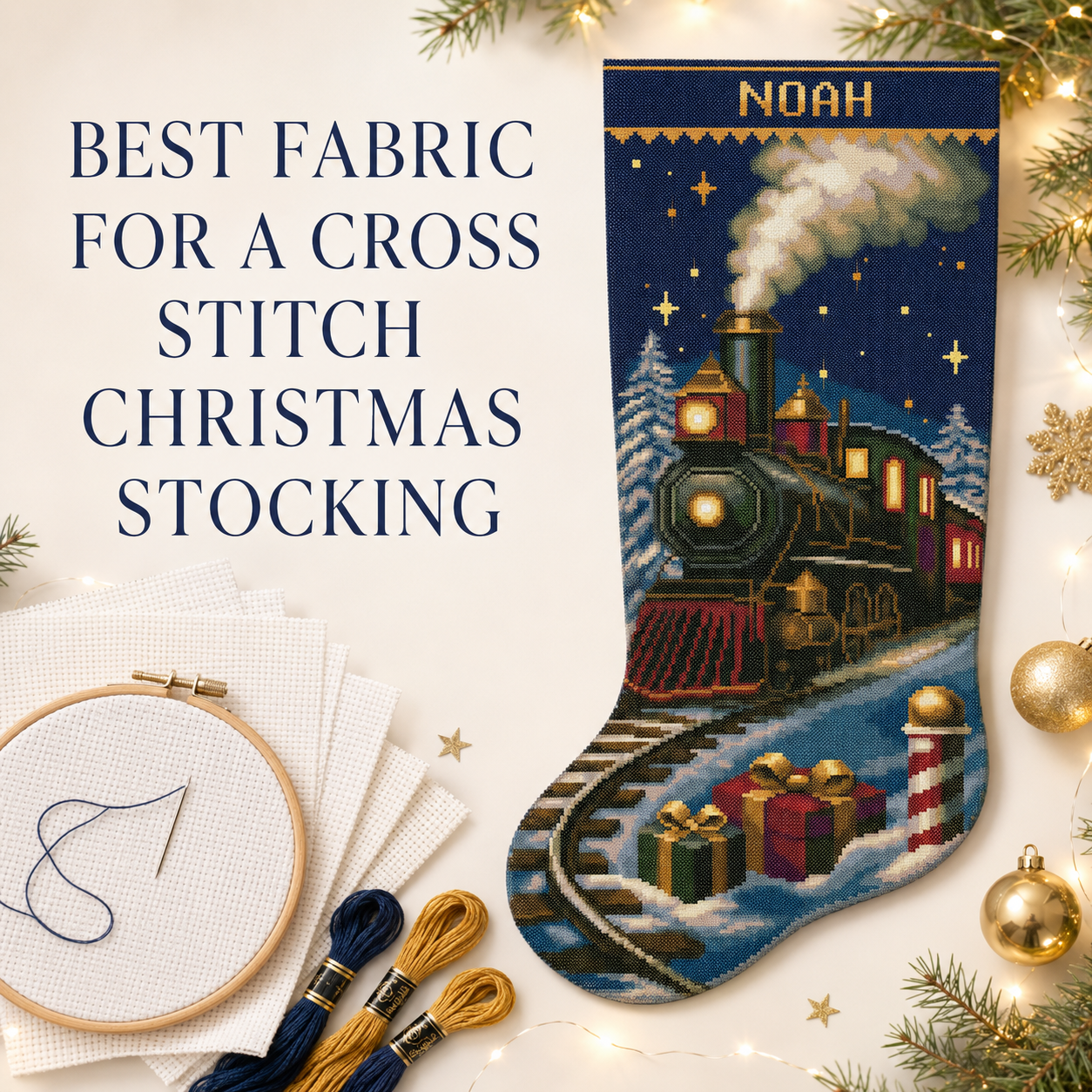
A complete kit is a practical choice when you want the main project materials selected for you. Browse our Christmas stocking cross stitch kits to compare stamped and counted options.
Choose a stamped Christmas stocking kit if you prefer to follow symbols printed directly on the fabric.
Choose a 2-in-1 cross stitch kit if you want the flexibility to work with printed or blank 14-count Aida.
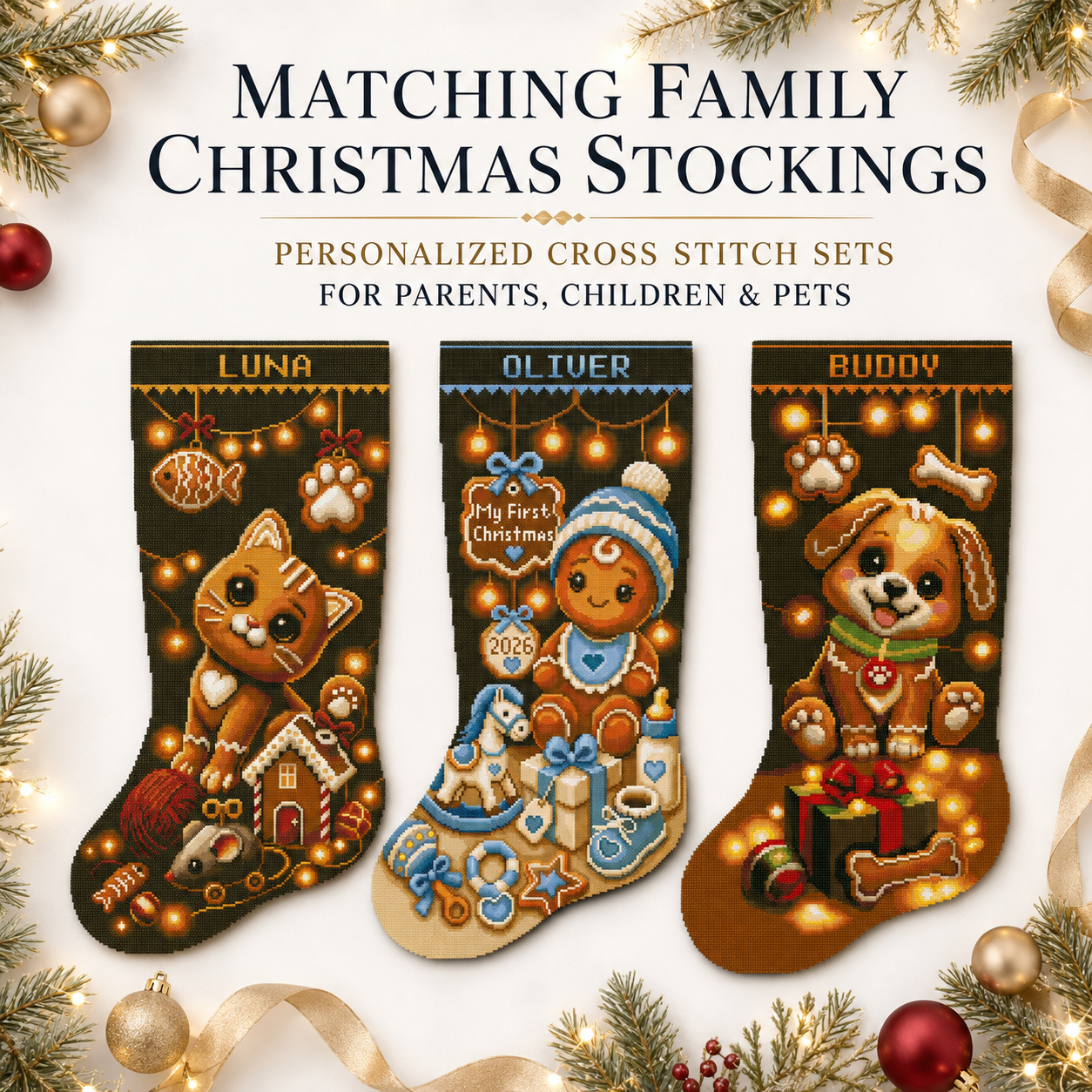
If you already own fabric and floss, explore our digital cross stitch patterns or choose a personalised design from the Christmas stocking cross stitch pattern collection.
Frequently Asked Questions
What are the five essential supplies for cross stitch?
You need a pattern, evenly woven fabric, embroidery floss, a blunt tapestry needle and small scissors. A hoop is useful but not compulsory.
What is the best cross stitch fabric for beginners?
Fourteen-count Aida is a practical first choice because its holes are easy to see and it works with many beginner patterns. Eleven-count Aida has even larger holes.
What needle should I use for 14-count Aida?
A size 24 tapestry needle is a common choice for 14-count Aida. Personal preference and the number of floss strands may affect the best size for you.
Do I need a hoop for cross stitch?
No. You can stitch while holding the fabric in your hand. However, a hoop or frame may make the fabric easier to control.
How many strands of floss should a beginner use?
Many patterns use two strands for full cross stitches on 14-count Aida, but you should always follow the instructions supplied with your pattern.
Are expensive cross stitch tools better?
Not automatically. A beginner needs reliable fabric, smooth floss, a suitable needle and sharp scissors. Comfort and correct sizing are more important than brand name or price.
Is a cross stitch kit better than buying supplies separately?
A kit is often easier for a first project because the main materials are selected for one design. Buying supplies separately gives you more choice but requires more planning.
Can a ten-year-old learn cross stitch?
Many ten-year-old children can learn with a simple pattern, large fabric holes and adult supervision. Needles, scissors and magnets must always be handled and stored safely.
Start with the Essentials
You do not need a perfect craft room or an expensive collection of tools to begin cross stitching.
Choose one pattern you enjoy, prepare the correct fabric and floss, use a comfortable tapestry needle and take your time. Add optional tools only when they solve a real problem for you.
If you are ready to begin, select a complete cross stitch kit or browse our downloadable cross stitch patterns and create a project that is truly your own.