Cross stitch can create a quiet pause in a busy day. You choose one symbol, make one X, and repeat. The project grows slowly, while your attention stays on a small task that is clear and manageable.
That does not make cross stitch a medical treatment, and it will not feel relaxing in every situation. A difficult chart, poor lighting, tangled floss or a strict deadline can turn the same hobby into frustration. The key is to choose the right project and create a stitching routine that feels supportive rather than demanding.
This practical guide explains how to use cross stitch for relaxation, how to prepare a comfortable session and how to avoid the common problems that make stitching stressful.
Can Cross Stitch Help You Relax?
Many stitchers describe crafting as calming because it combines repetitive hand movements, focused attention and visible progress. Cross stitch also gives you a clear next step: find the symbol, choose the correct color and complete one stitch at a time.
Research on crafts and well-being is encouraging but not conclusive. A 2025 systematic review of craft-based interventions found some evidence of benefits for mental health and well-being, while also emphasizing that stronger research and longer follow-up are still needed. A panel study involving 3,725 adults found that more time spent on arts and crafts was associated with greater life satisfaction, but it did not prove that crafting treats anxiety, depression or other health conditions.
The most accurate way to describe cross stitch is this: it can be a meaningful leisure activity that may help some people slow down, focus and enjoy a sense of progress.
Why Cross Stitch Can Feel Calming
It Gives Your Attention One Small Job
A cross stitch chart breaks a large picture into individual squares. Instead of thinking about the entire project, you can focus on the next stitch or the next small color section.
This narrow focus can provide a temporary break from multitasking. You do not need to solve the whole day while you stitch. You only need to decide where the next X belongs.
The Movements Are Repetitive and Predictable
Most full cross stitches use the same two diagonal movements. Once you understand the pattern, repeating those movements can feel steady and familiar.
Consistency matters more than speed. Rushing to complete more stitches can create tight tension, mistakes and physical discomfort—the opposite of a relaxing session.
Progress Is Visible
Even a short session leaves a visible result. A completed row, color block or small motif creates a natural stopping point and a sense that something has been finished.
It Can Be a Screen-Free Activity
If you use a printed chart, cross stitch can give your eyes and attention a break from messages, social media and constant notifications. A tablet chart is also useful, but turn off unnecessary alerts and use only the tools needed for the project.
It Can Connect You with Other People
Cross stitch can be solitary, but it does not have to be isolating. Stitching groups, friends, family members and online communities can provide encouragement, practical help and shared progress.
Choose a Project That Is Actually Relaxing
The wrong project can create more tension than calm. Before starting, check the chart, materials and estimated workload.
Look for a Clear, Readable Pattern
A relaxing pattern should have:
- symbols that are easy to distinguish;
- a readable color key;
- clearly marked page overlaps or boundaries;
- the design width and height in stitches;
- an accurate DMC or other floss list;
- instructions for special stitches;
- a chart format that works for print, tablet or both.
Use the quality cross stitch pattern checklist before buying a PDF chart.
Match the Difficulty to Your Current Energy
Do not choose only according to your technical ability. Also consider how much concentration you have available.
On a busy or tiring week, a small project with clear color blocks may feel better than a large full-coverage design with many isolated stitches. You can save the complex pattern for a time when you want a challenge.
Choose Fabric You Can See Comfortably
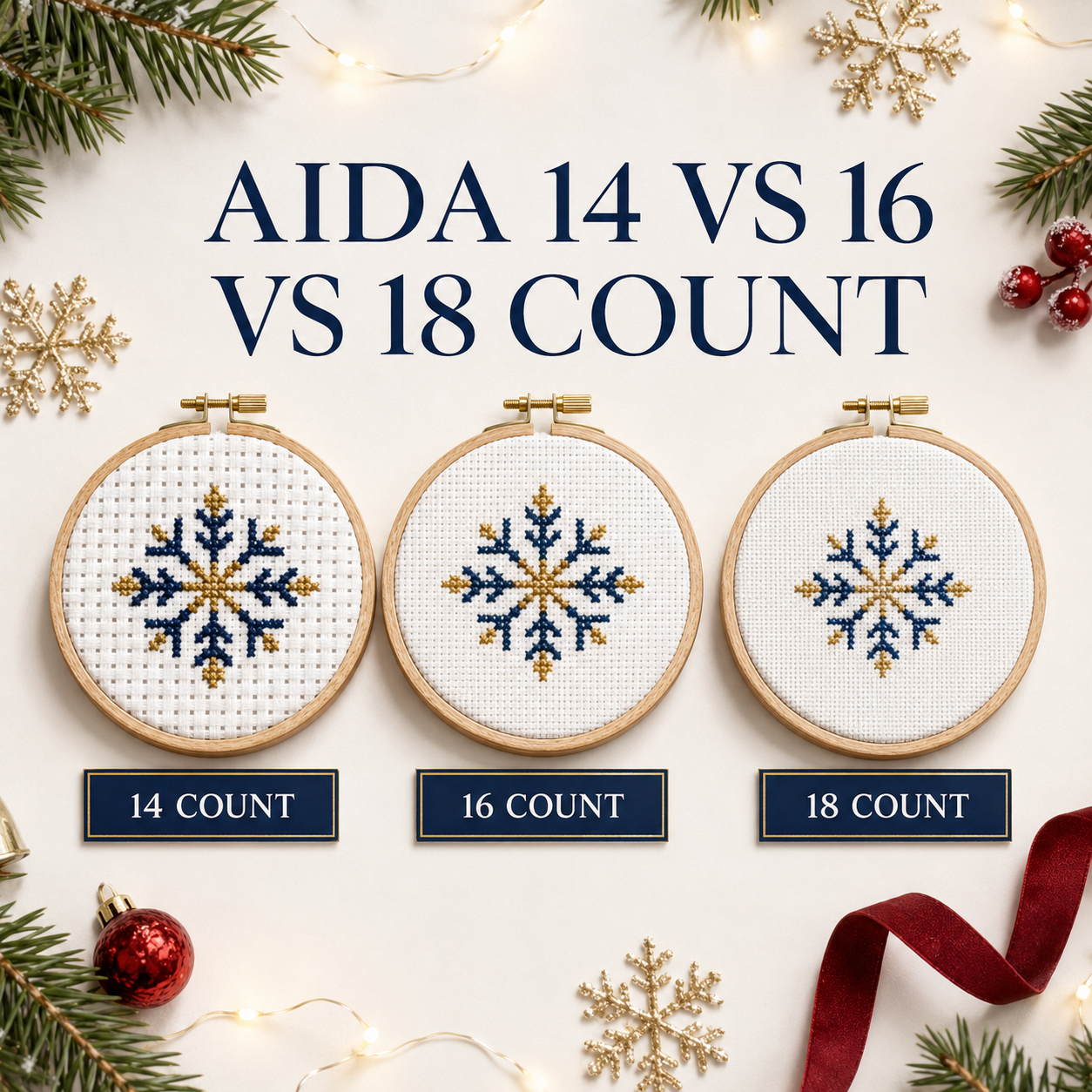
For many beginners, light-colored 14-count Aida is a comfortable starting point because its square blocks and holes are easy to identify. Very high counts, dark fabric and fine linen may require stronger lighting and more concentration.
Use the cross stitch fabric types guide to compare Aida, evenweave, linen and temporary canvases before choosing.
Limit Unnecessary Friction
A project is easier to enjoy when you already have:
- the correct fabric size;
- all required floss colors;
- one or two suitable needles;
- a readable chart;
- a hoop or frame, if preferred;
- a simple way to store the project between sessions.
Preparation prevents a quiet stitching session from becoming a search for missing supplies.
Stamped or Counted Cross Stitch for Relaxation?
Neither method is automatically more relaxing. The better choice depends on which kind of attention you enjoy.
Stamped Cross Stitch May Suit You If:
- you want the symbols printed directly on the fabric;
- frequent counting feels tiring;
- you prefer a clearly guided project;
- you are learning the basic stitch;
- you want to see where each color belongs immediately.
Counted Cross Stitch May Suit You If:
- you enjoy following a separate chart;
- counting helps you concentrate;
- you prefer stitching on blank fabric;
- you like marking completed areas;
- accuracy and planning feel satisfying rather than stressful.
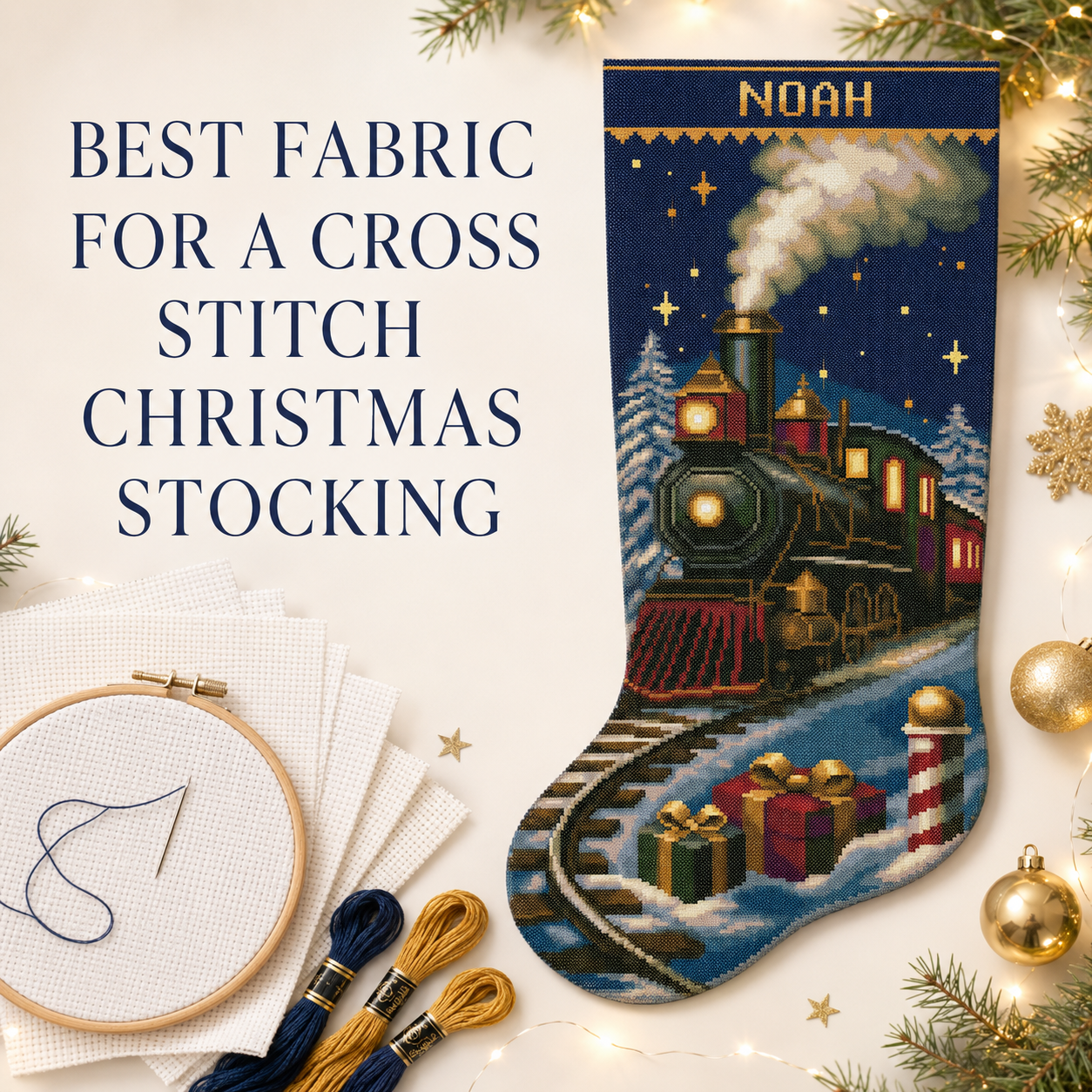
If you are unsure, a 2-in-1 kit lets you choose. CrossStitchStyleArte Christmas stocking kits include a stamped option and white 14-count Aida for counted stitching. Compare both methods in the stamped vs counted cross stitch guide.
Create a Comfortable Stitching Space
You do not need a dedicated craft room. A chair, suitable light and a stable place for your supplies are enough.
Use Direct, Even Lighting
Place the light so it reaches the fabric without creating a strong shadow from your hand. A lamp with adjustable position is more useful than a decorative lamp that leaves the chart in darkness.
If you stitch on dark fabric or a high count, stronger task lighting may be necessary. Stop if you are squinting or leaning very close to the work.
Support Your Back and Arms
Sit with your back supported and both feet stable. Keep your shoulders relaxed rather than lifted. If you hold a hoop, rest your forearms or use a cushion so your hands are not carrying the full weight for a long period.
There is no perfect posture that must be held without moving. Change position and take regular breaks.
Keep the Chart Near Eye Level
A chart placed flat on your lap can make you repeatedly bend your neck. Use a board, stand or tablet holder when practical. Enlarge the chart rather than forcing yourself to read tiny symbols.
Prepare Only What You Need
For one short session, place the following within reach:
- the current floss color;
- a needle;
- small scissors;
- the chart;
- a washable marker or highlighter if your chart system uses one;
- a container for thread ends;
- water or another drink placed safely away from the fabric.
A crowded table creates visual noise and makes it easier to lose tools.
A Simple 20-Minute Mindful Stitching Routine
This routine is intentionally short. You can extend it when you feel comfortable, but you do not need a long session to make progress.
Minutes 1–2: Set Up
Choose one small section of the pattern. Prepare the fabric, chart, needle and one floss color. Silence unnecessary notifications.
Do not begin by reorganizing your entire collection. Prepare only what this session requires.
Minute 3: Release Unnecessary Tension
Place both feet comfortably, lower your shoulders and loosen your grip on the hoop. Take a few ordinary, unforced breaths. The goal is simply to notice whether you are already holding tension in your hands, jaw or shoulders.
Minutes 4–16: Stitch One Small Area
Work at your natural pace. Let every lower leg of the cross face the same direction, then complete the upper leg consistently.
When your mind wanders, return to three simple checks:
- Is this the correct symbol?
- Is this the correct floss color?
- Is the next stitch in the correct square?
If you make a mistake, decide whether it affects the design. Fix it calmly when necessary. Do not treat one misplaced stitch as a failed session.
Minutes 17–18: Stop at a Clear Point
Finish the current short length of floss or complete a small group of stitches. Avoid starting a complicated new section when the session is nearly over.
Mark your position on the chart so you can restart without searching.
Minutes 19–20: Store the Project
Secure the needle safely, collect loose thread ends and place the fabric somewhere clean and dry. Write one short note if the next step is not obvious, such as “continue blue section from the left edge.”
Ending clearly makes the next session easier to begin.
How to Avoid Turning Cross Stitch into Another Obligation
Do Not Measure Every Session by Stitch Count
Some sections are slow because they contain color changes, backstitch or mistakes that need correcting. Ten careful stitches can be valid progress.
Keep Deadlines Realistic
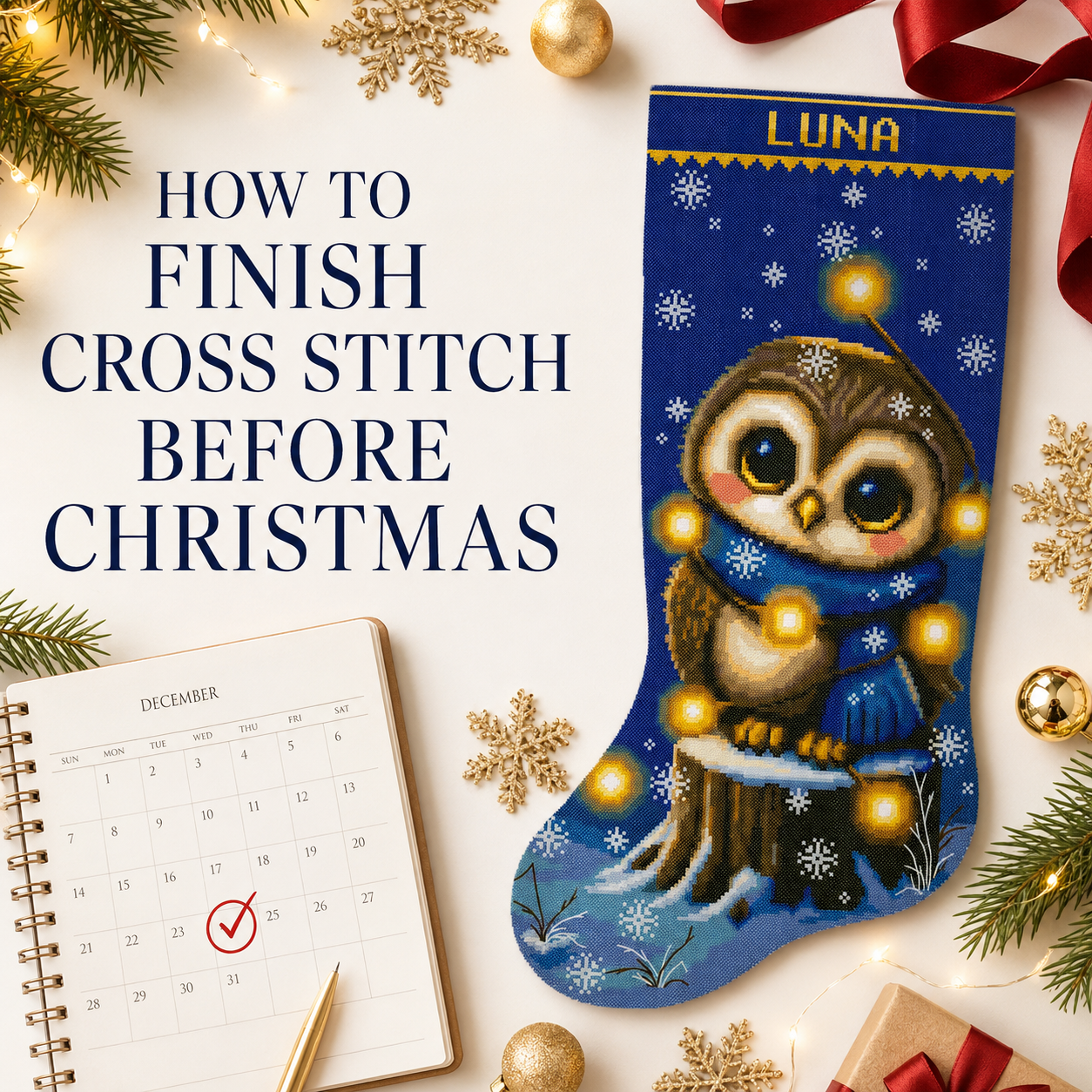
A Christmas stocking or handmade gift needs planning, but an impossible schedule can remove the enjoyment. Estimate the project before promising a completion date.
The free Cross Stitch Time Calculator and Project Planner can estimate stitching hours and create a schedule. For a relaxation project, use the result as information—not as a reason to force yourself to stitch when you are tired.
Allow Yourself to Change Projects
It is acceptable to pause a difficult pattern and work on something simpler. Store the paused project with its chart, key and floss so it can be restarted later.
Do Not Compare Your Speed with Other Stitchers
Stitching speed changes with experience, fabric count, pattern complexity, lighting, interruptions and physical comfort. A faster stitcher is not automatically a better stitcher.
Accept Small Imperfections
Correct mistakes that affect alignment, readability or the final shape. A harmless variation hidden inside a large design may not need hours of unpicking. Decide based on the finished result, not on perfection for its own sake.
Common Reasons a Stitching Session Feels Stressful
| Problem | Practical solution |
|---|---|
| Symbols look too similar | Enlarge the chart or use a high-contrast black-and-white version |
| You repeatedly lose your place | Mark completed stitches or use a magnetic chart board |
| Floss becomes tangled | Use shorter lengths and separate strands before threading |
| Stitches look uneven | Loosen your grip and avoid pulling each stitch too tightly |
| The fabric is difficult to see | Improve lighting or choose a lower count and lighter color |
| Too many color changes | Work a simpler section or select a pattern with larger color blocks |
| The project feels endless | Divide it into small motifs, pages or percentage milestones |
| Your hand or neck hurts | Stop, change position and take a break; do not stitch through pain |
| You are worried about finishing on time | Recalculate the schedule or remove the deadline |
Protect Your Eyes, Hands and Neck
Relaxation should not require ignoring physical discomfort.
- Look away from close work regularly and focus on something farther away.
- Blink normally; intense concentration can make people blink less often.
- Change hand and body position instead of remaining fixed for hours.
- Keep scissors closed and needles secured when not in use.
- Stop if you experience persistent pain, tingling, numbness, dizziness or significant eye discomfort.
- Seek appropriate professional advice when symptoms continue or interfere with normal activities.
Cross stitch may support relaxation, but it is not a substitute for medical or mental-health care. If stress, anxiety or low mood is persistent, severe or affecting daily life, contact a qualified healthcare professional.
A Low-Pressure Weekly Stitching Plan
You do not need to stitch every day. A realistic starting routine could be:
- Tuesday: 20 minutes on one simple color section;
- Thursday: 20 minutes continuing the same section;
- Sunday: 30 minutes, including organizing floss for the next week.
This provides regular creative time without creating a daily obligation. Adjust the schedule to your energy, responsibilities and comfort.
Keep the project visible but protected—a closed project bag near your usual chair is often enough. If starting requires finding six separate boxes, you are less likely to begin.
Best Cross Stitch Projects for Relaxation
A relaxing project is personal, but these features often make stitching easier to continue:
- a subject you genuinely like;
- clear symbols and a readable key;
- a manageable number of colors;
- visible blocks of the same color;
- fabric holes you can see comfortably;
- few complicated specialty stitches;
- no urgent deadline;
- a useful or meaningful finished object.
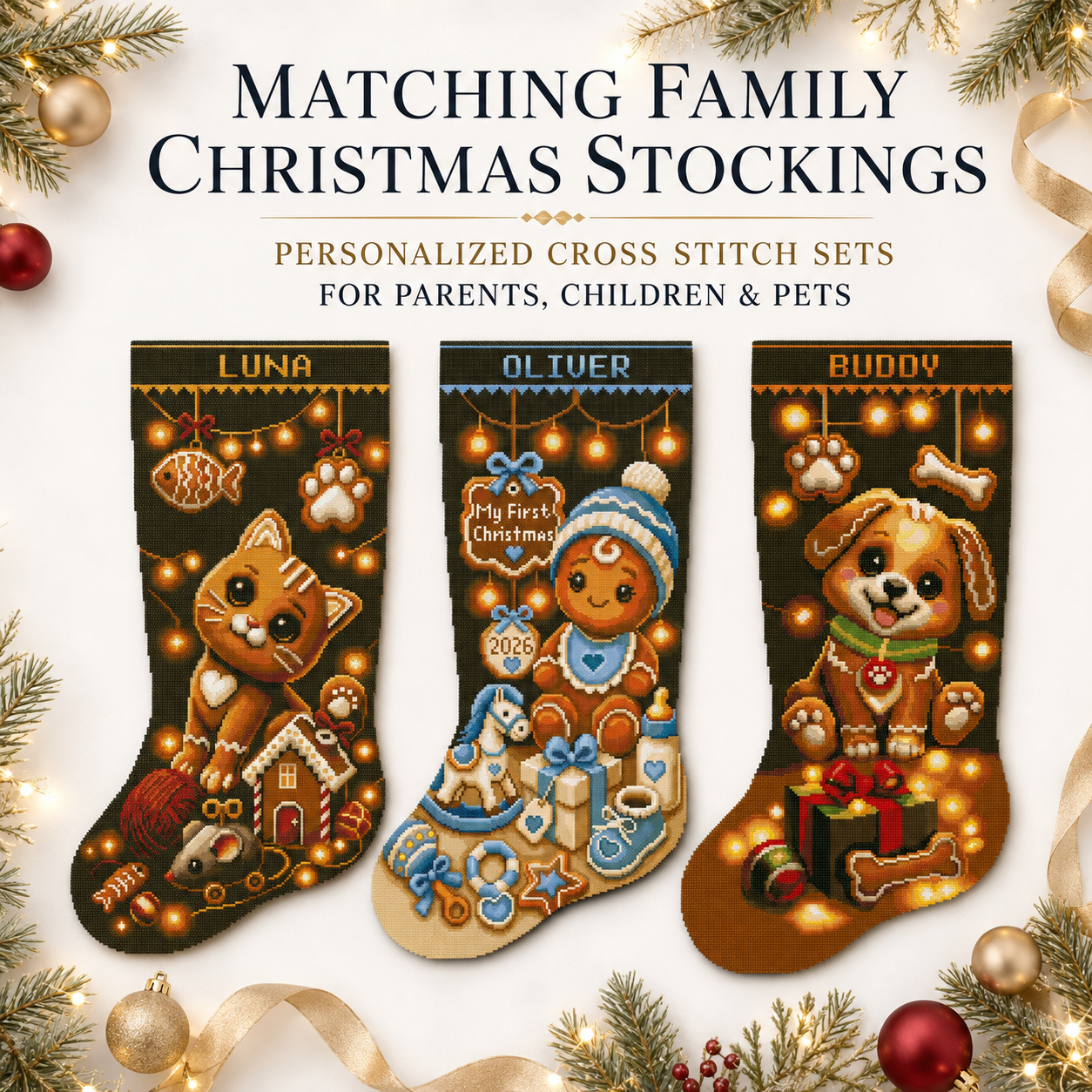
Personalized Christmas stockings can work well because the project has a clear purpose and becomes a reusable family keepsake. Smaller digital patterns are convenient when you want to start immediately and already own the materials.
Explore CrossStitchStyleArte digital cross stitch patterns to find a design that matches your preferred difficulty and stitching method.
Make Cross Stitch Work for You
Cross stitch for relaxation is not about completing the largest pattern or producing the most perfect back. It is about creating a manageable period of focused activity that you want to return to.
Choose a readable pattern. Use fabric you can see comfortably. Prepare your supplies before sitting down. Work for a short period without rushing, and stop before discomfort replaces enjoyment.
One quiet session will not solve every source of stress. It can, however, give you twenty minutes with a clear task, visible progress and something meaningful growing in your hands.
Frequently Asked Questions
Is cross stitch good for relaxation?
Many people find the repetition, concentration and visible progress calming. Research on craft activities suggests possible benefits for well-being, but results vary and cross stitch should not be presented as a treatment for a health condition.
Is stamped or counted cross stitch more relaxing?
Stamped cross stitch requires less chart counting because the guide is printed on the fabric. Counted cross stitch may feel more satisfying to people who enjoy precision and following a separate chart. The better option is the one that creates less frustration for you.
How long should a relaxing stitching session last?
Start with 15–20 minutes. Continue only if your eyes, hands, neck and shoulders remain comfortable. Short, repeatable sessions are often easier to maintain than occasional sessions lasting several hours.
What is the easiest fabric for a relaxing project?
Light-colored 14-count Aida is a practical choice for many beginners because the square blocks and holes are easy to see. Choose 11-count Aida if you need larger holes.
What type of pattern should a beginner choose?
Look for clear symbols, a readable color key, manageable dimensions, larger blocks of color and complete instructions. Avoid starting with a huge full-coverage pattern simply because the finished picture looks impressive.
Can cross stitch replace professional help for anxiety or stress?
No. Cross stitch is a leisure activity, not a medical or psychological treatment. Seek qualified professional support when stress, anxiety or low mood is severe, persistent or interfering with daily life.
How can I stop losing my place on the chart?
Mark completed stitches, use a magnetic chart board or work from a compatible digital chart. Stop at a clear point and leave a short note showing where to restart.
Research Referenced in This Article
- The effects of crafts-based interventions on mental health and well-being: A systematic review
- Creative leisure activities, mental health and well-being during five months of the COVID-19 pandemic